
CDC’s Website Sparks Outrage: What Shocking Vaccine Claims Could Endanger Your Child?

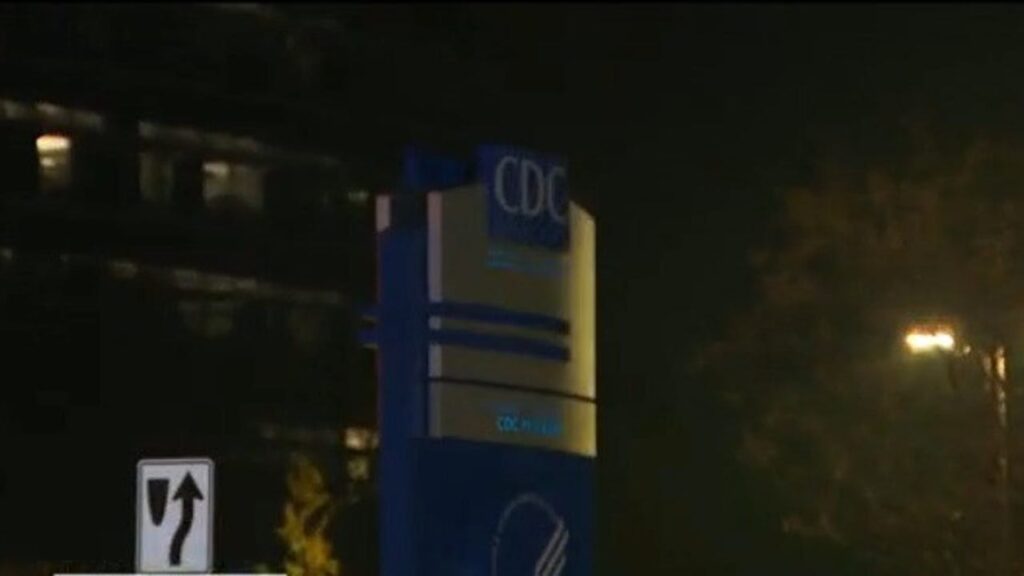
ATLANTA - The Centers for Disease Control and Prevention (CDC) is under intense scrutiny following recent changes to its website regarding the relationship between vaccines and autism. Critics, including prominent medical professionals, argue that the new wording could mislead the public and exacerbate fears about vaccination, which, in turn, may jeopardize public health.
The revised CDC page asserts that vaccines do not cause autism. However, just above this clear statement, the agency introduces a controversial note, stating that the assertion "vaccines do not cause autism" is not an "evidence-based claim because studies have not ruled out the possibility that infant vaccines cause autism." This contradiction has raised alarm among health experts who warn that it could sow confusion among parents and potentially hinder vaccination efforts.
Significantly, the CDC has not cited any new research to substantiate this shift in language. This comes at a time when vaccination rates among Georgia kindergartners are declining. In the 2019-2020 school year, approximately 93.6% of students received the mumps-measles-rubella vaccine, but this rate dropped to 88.4% for the 2023-2024 school year, highlighting an alarming trend that could lead to increased disease outbreaks.
Medical professionals have voiced their concerns about the CDC's new language. Dr. Robin Dretler, an infectious disease specialist at Emory-Decatur Hospital and a board member of the Infectious Disease Society of America, expressed his dismay, stating he was "shocked and appalled" by the wording change. "It’s clearly dangerous," Dretler said, emphasizing that it contradicts decades of scientific research that has established that vaccines do not cause autism and are essential for preventing illness. "The data is very clear; vaccines don’t cause autism and do save lives."
Dr. Robert Wiskind, a past president of the Georgia Chapter of the American Academy of Pediatrics, highlighted the extensive evidence supporting the safety of vaccines. Since 1998, more than 40 studies have been conducted in seven countries, involving over 5.6 million children, all concluding that there is no link between vaccines and autism. Wiskind warned that the CDC's revised message could further erode vaccine confidence among parents and policymakers alike.
The concerns extend beyond individual practitioners. Yolanda Jacobs, president of AFGE Local 2883, representing over 2,000 CDC employees, voiced her frustration, stating that the new language is “misleading” and “confusing to the public.” She criticized CDC leadership for being out of touch with its own scientists, noting that no CDC researchers specializing in autism were involved in the decision to change the wording. Jacobs added, "That’s very disturbing. We will have children unnecessarily getting sick and potentially dying."
In response to the backlash, a spokesman for the U.S. Department of Health and Human Services indicated that the agency is conducting a comprehensive assessment of the causes of autism and is committed to updating the CDC website to reflect "gold-standard, evidence-based science." However, the lack of clarity and consistency in the CDC's messaging may already be impacting public perceptions of vaccines.
As vaccine hesitancy rises and vaccination rates fall, the stakes have never been higher. The CDC's responsibility to communicate accurate, evidence-based information is critical to public health. With diseases like measles making a resurgence in the U.S., understanding the safety and efficacy of vaccines is essential for protecting children and communities alike. The health community must advocate for clear, unequivocal messaging to reassure parents and ensure that vaccination remains a priority for public health.
Bezos' Shocking AI Moves: Is He About to Revolutionize Your Job? Discover the Hidden Risks!

Women Are Missing Out: The Shocking Fiber Deficiency That's Hurting Your Health—8 Snacks to the Rescue!

You Won't Believe What Happens When the Bills Face Off Against the Texans—A Shocking Twist Awaits!

Local Governments Are Slapping on Shocking New Taxes—Are You Prepared for the $1,200 Hit?
You Won't Believe What Happens When You Try to Access This Page—Thousands Are Already Affected!

Bitcoin Crashes Amid AI Panic – Are You Ready for the $20,000 Meltdown?
You might also like: