
CDC's Shocking New Claim About Vaccines & Autism Will Leave You Speechless—Find Out Why!

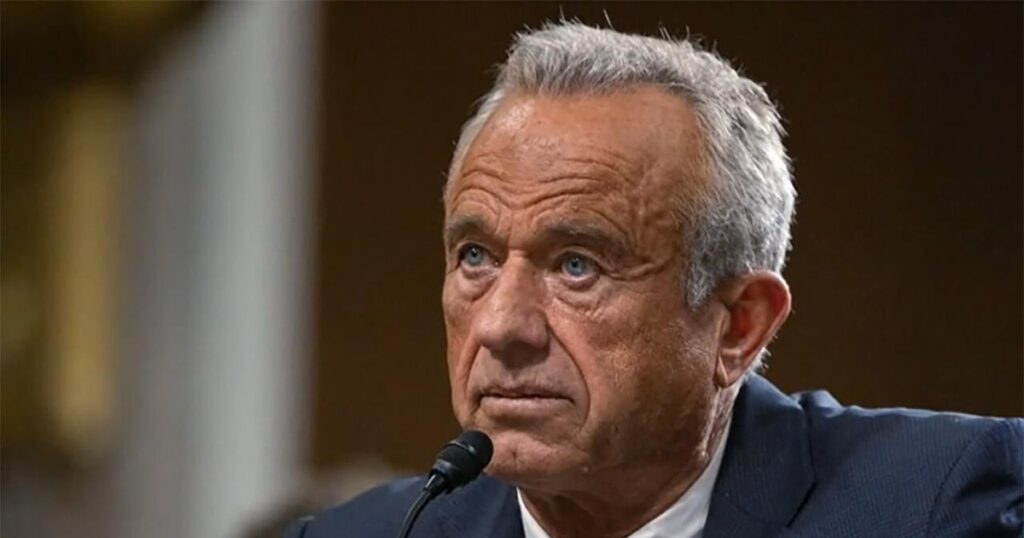
A recent change to the Centers for Disease Control and Prevention's (CDC) website has ignited controversy over the longstanding debate regarding vaccines and autism. On Thursday, the CDC's webpage, which previously asserted that "no links have been found between any vaccine ingredients and Autism spectrum disorder," was altered to state, "'Vaccines do not cause autism' is not an evidence-based claim." This change, attributed to political appointees within the Department of Health and Human Services (HHS), has raised alarms among health experts and advocacy groups who argue it undermines scientific consensus.
Sources from within the CDC indicated that the modification was made without consultation from relevant agency staff, a departure from previous practices where changes were vetted by experts from the National Center on Birth Defects and Developmental Disabilities and the National Center for Immunization and Respiratory Diseases. Health and Human Services Secretary Robert F. Kennedy Jr., known for his critical stance on vaccines, confirmed in an interview with The New York Times that he personally ordered the revision.
The Autism Science Foundation has condemned the updated statement as "misinformation," emphasizing that it contradicts extensive scientific research. Multiple studies, including over 40 high-quality investigations involving more than 5.6 million participants across seven countries, have consistently found no evidence linking vaccines to autism. Susan Kressly, president of the American Academy of Pediatrics (AAP), reiterated this point, stating, "We are at a very dangerous moment for the health of America's children."
Historically, the misconception that the measles, mumps, and rubella (MMR) vaccine causes autism stems from a discredited 1998 study that was retracted due to fraudulent findings. Despite this, vaccine safety remains a contentious issue, especially among some political figures. Dr. Sean O'Leary, chair of the AAP's Committee on Infectious Diseases, expressed concern that the CDC's website changes may "scare parents and further stigmatize" individuals with autism.
Dr. Mandy Cohen, a former CDC director, criticized the revision as damaging to the agency's scientific integrity, potentially jeopardizing vaccination rates and putting children at risk for preventable diseases such as measles and whooping cough. She stated, "There is overwhelming evidence that vaccines do not cause autism."
In response to the backlash, HHS communications director Andrew Nixon defended the change, labeling it a "common-sense update" that aligns with their commitment to transparency. He claimed the previous assertion lacked comprehensive evidence and suggested that some studies supporting a link between vaccines and autism had been ignored by health authorities. However, this stance has drawn significant criticism from leading autism advocacy groups, which argue that an abundance of research has exonerated vaccines as a cause of autism.
Despite the updated language, a header stating that "Vaccines do not cause autism" remains on the CDC website, accompanied by an asterisk. This was included due to an agreement with Louisiana Republican Senator Bill Cassidy, who has publicly backed Kennedy. Cassidy, a physician, took to social media to affirm that vaccines are "safe and effective" and called any contrary statement "wrong, irresponsible, and actively makes Americans sicker." He also highlighted recent outbreaks of whooping cough and measles, urging for more research into the actual causes of autism rather than perpetuating baseless fears.
The recent alterations to the CDC's messaging raise broader questions about the intersection of politics and public health. Experts warn that the revival of debunked theories could undermine decades of scientific work aimed at understanding autism and ensuring public safety through vaccination. Dr. Fiona Havers, a former CDC official, remarked that the agency should be driven by data and science, not ideology, to avoid rhetoric that could harm families.
As the debate unfolds, it is clear that the implications of this change extend far beyond the CDC's website. The conversation around vaccines and autism remains a pivotal issue in public health, one that continues to evoke strong emotions and differing perspectives. With rising autism diagnoses attributed to factors like increased awareness and evolving diagnostic criteria, many professionals advocate for a focus on proven risk factors rather than discredited theories. As the public becomes more aware of the nuances in this discussion, the role of trusted health organizations in conveying accurate information becomes increasingly vital.
Shocking Upsets Ahead: Which Power Conference Champion Could Face Total Collapse?

Why This Indian Man Gave Up a $150K JPMorgan Job for a Startup—and Lost 70% of His Pay!

Is SharpLink Gaming (SBET) About to Skyrocket? Discover Shocking Sales Secrets Behind Their Profit Surge!
Is Your Child's Health at Risk? Shocking Findings on Home Influenza Vaccines Revealed!

Is Your Small Town Hiding a Diabetes Epidemic? Shocking Stats Revealed for National Diabetes Month!

NFL's Shocking Decision on Travis Kelce: Will He Face Major Suspension After Broncos Incident?
You might also like: