
Can You Really Afford Culture in 2025? Shocking Prices for Art, Music, Film & Fashion Revealed!


“Do people realize the amount we have to pay for concert tickets is not normal?” This tweet, which gained traction recently, aptly captures the growing anxiety around escalating costs associated with cultural events. Ticket prices for concerts and museums have surged, creating a divide that raises questions about who can truly afford to participate in the arts today. According to industry trade magazine Pollstar, the average concert ticket in the U.S. now costs about $136, reflecting a 41% increase from $96.17 in 2019. Meanwhile, museum tickets, once priced at a few dollars, now range from $40 to $50, as noted in the 2024 Annual Survey of Museum-Goers from the American Alliance of Museums (AAM) and Wilkening Consulting.
As ticket prices climb, cultural participation is increasingly viewed as a luxury. The AAM survey indicates that the expense of admission is now the leading reason occasional museum-goers refrain from visiting more frequently. Furthermore, the 2024 Arts Funding Snapshot from Grantmakers in the Arts reveals a troubling trend: public arts funding dropped to just $3.94 per person in 2023, down 43% from the previous year when adjusted for inflation. This decline in funding underscores a growing mismatch between cultural offerings and community demand, prompting urgent questions: Who can still afford to engage with the arts, and what can be done to bridge this gap?
The Pew Research Center suggests one possible solution: the internet. A staggering 96% of U.S. adults now use the internet, with 79% having broadband at home. Over 2,000 museums, galleries, and cultural institutions can now be explored virtually via Google Arts & Culture. The Association of Science and Technology Centers has documented a sustained interest in digital engagement, noting that many museums continue to invest in hybrid and virtual experiences post-pandemic. This digital shift may not signal the decline of culture but rather its migration to more accessible online platforms.
The Costs of Cultural Participation
Participating in cultural activities in 2025 comes with a hefty price tag. Pollstar's analysis estimates the average cost of concert tickets for the top 100 touring artists in North America to be $136.45, not accounting for additional expenses like service fees, merchandise, and travel. This phenomenon is echoed in museum admissions, where the AAM reported in 2024 that adult admission averages about $27, with major institutions charging between $40 and $50.
The economic barriers extend beyond concerts and museums; fashion events like New York Fashion Week can cost between $1,000 and $10,000 for travel, accommodations, and access to shows—many of which are invitation-only. These prices starkly contrast with the pace of household income growth. The Bureau of Labor Statistics (BLS) reported that while average annual incomes have increased since 2019, they have not kept pace with inflation-adjusted entertainment spending. Between 2019 and 2023, spending on entertainment rose over 25%, while average annual household income grew by only 17%.
The disparity in access to cultural experiences is further compounded by geography. Urban centers typically offer a wealth of cultural opportunities, while rural and low-income neighborhoods often lack access. The NEA’s Arts in Neighborhood Choice report reveals that individuals prioritizing proximity to arts and cultural events often face higher housing costs, with 35% of households saying that living near cultural activities is “very” important, reporting rents of over $1,500 per month.
Despite these challenges, the rise of virtual platforms such as Decentraland demonstrates an innovative solution. Virtual worlds are gaining traction as accessible venues for cultural participation. Events such as art exhibitions and concerts can now reach audiences across the globe without the physical constraints of distance or financial barriers.
Since the pandemic, digital participation has surged. The NEA found that 82% of U.S. adults engaged in some form of digital arts activity between 2021 and 2022, from livestreamed concerts to online museum tours. A notable 30% reported participating in these activities more frequently than the previous year, indicating a fundamental behavioral change rather than a temporary shift due to pandemic restrictions. In a recent poll, 3 in 5 Americans expressed a preference for streaming at home rather than attending the cinema, primarily due to cost and convenience.
However, it’s crucial to note that digital participation is not without its own barriers. Access still relies heavily on quality equipment and internet service, with the average U.S. household internet bill at approximately $72.58 per month. This translates to nearly $870 annually, a significant cost that can deter participation in virtual cultural experiences. Additionally, the Benton Institute for Broadband & Society reports that around 1 in 7 U.S. households lacks a computer, relying solely on smartphones, which limits their ability to engage fully with online content.
As traditional cultural experiences evolve, virtual worlds are emerging as a third space in the cultural economy. Platforms like Fortnite and Roblox host free concerts and interactive events, democratizing access to cultural participation without the traditional barriers. These digital experiences not only serve as entertainment but also fulfill social needs, making cultural engagement possible for those sidelined by geographical or financial constraints.
The ongoing shift toward virtual culture indicates a potential future where access to the arts is defined less by physical space and more by digital connectivity. As we navigate these changes, the challenge remains: ensuring that the beauty and richness of cultural experiences are available to all, regardless of their economic circumstances.
You Won't Believe What Happens When Access to This Page is Denied—Shocking Consequences Await!
Unbelievable Upset: How Wiley’s Soccer Team Shocked Everyone Before Facing Tennessee!
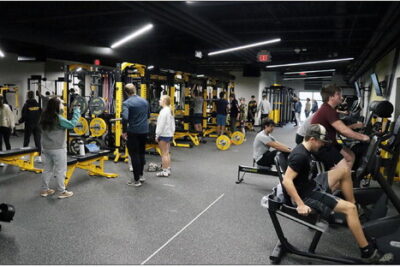
You Won't Believe What This Fitness Center is Doing to Transform Our Community—Shocking Results Inside!
City of Delta’s Community Grants Program is BACK! Here’s what YOU could lose if you miss out!

Shocking Upsets and Hidden Gems: Will Your Favorite Team Survive the 2025 NCAA DI Women's Soccer Tournament?

Stop! Your Oven Is RUINING Sweet Potatoes—Discover This 3-Minute Technique That Will Change Everything!
You might also like: