
Can Khaleda Zia’s Son Really Revive Her Political Empire? Shocking Secrets Uncovered!

Dhaka, Bangladesh – On December 31, 2025, the atmosphere around Evercare Hospital in Dhaka was heavy with grief as news broke of the death of Khaleda Zia, a three-time prime minister and the long-standing leader of the Bangladesh Nationalist Party (BNP). Khaleda had been receiving medical treatment at the facility since the night of November 23.
As supporters, party leaders, and ordinary citizens gathered outside the hospital, the emotional impact was palpable. Many stood in silence, wiping away tears and offering prayers. “The news made it impossible for us to stay at home,” said BNP activist Riyadul Islam. “Since there is no opportunity to see her, everyone is waiting outside. There are tears in everyone’s eyes.”
Khaleda Zia's funeral on January 1, 2026, at Dhaka’s Manik Mia Avenue drew tens of thousands of mourners, including not only BNP supporters but also leaders from other political parties, interim government head Muhammad Yunus, and foreign diplomats. This massive turnout underscored the significant impact Khaleda had throughout her political career, extending beyond the borders of Bangladesh.
While the nation mourns, political analysts are quick to point out that Khaleda's passing marks a crucial turning point for the BNP, especially with national elections set for February 12, 2026. The party now faces the challenge of campaigning without the figure who had become its ultimate symbol of unity, even during her years of illness and political inactivity.
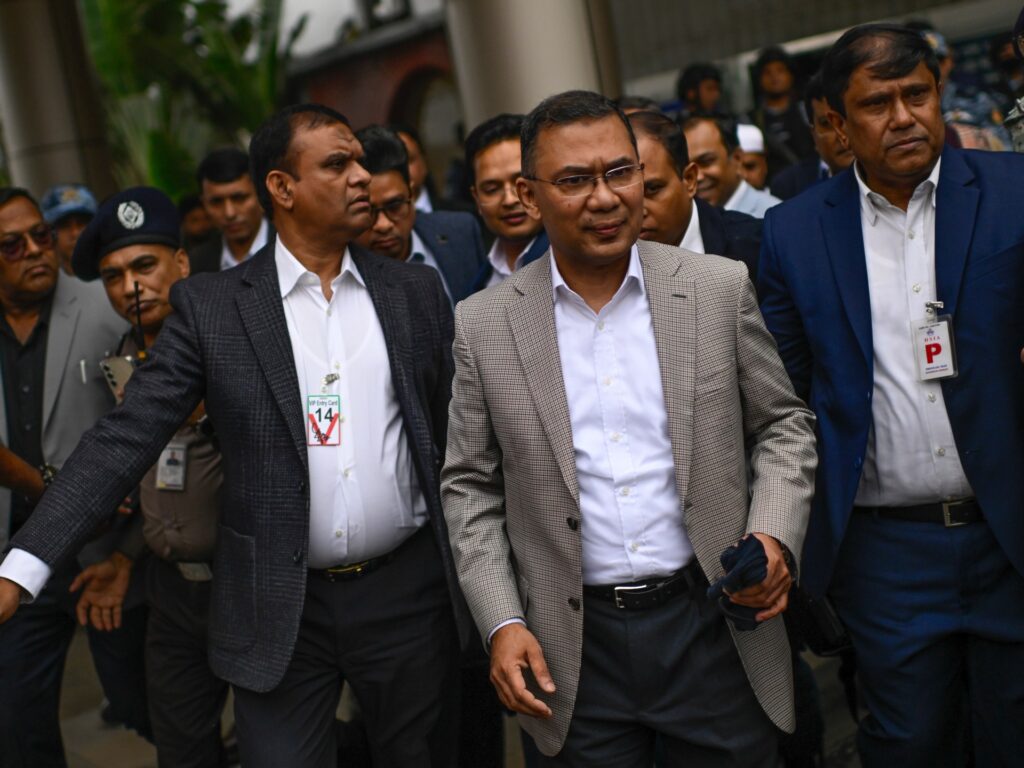
This shift thrusts the focus onto her son, Tarique Rahman, who is now the acting chairperson of the BNP. The party must consolidate its base and navigate a transformed political landscape following significant upheaval in July 2024 and the subsequent banning of the Awami League's political activities.
Legacy as Anchor, Absence as Test
Throughout her decades-long career, Khaleda Zia’s influence extended far beyond formal leadership roles. Even during periods when she stepped back from frontline politics, she served as the party’s moral compass and final authority, helping to manage internal factionalism. Her advisor, Mahdi Amin, described her as a “true guardian,” a unifying symbol of sovereignty, independence, and democracy.
Amin emphasized that the BNP is committed to carrying forth Khaleda's legacy through its policies and governance priorities if they are successful in the upcoming elections. “The hallmark of her politics was a strong parliamentary democracy—rule of law, human rights, and freedom of expression,” he stated, adding that the BNP aims to restore institutions and rights that they claim have been eroded during the Awami League’s 15-year rule from 2009 to 2024, under then Prime Minister Sheikh Hasina, Khaleda's longtime rival.
However, analysts suggest that Khaleda’s absence creates a gap in symbolic authority that has, until now, helped to stabilize the BNP's internal politics. Political analyst Mohiuddin Ahmed noted that Khaleda’s personal charisma played a pivotal role in energizing and unifying the party. “That rhythm will be disrupted,” he warned. “Tarique Rahman now has to prove his leadership through a process. His leadership remains untested.”
The upcoming February election could prove to be a defining moment for Tarique, as success would validate his leadership, while failure could intensify scrutiny and skepticism surrounding his capability to lead the party effectively.
The BNP’s challenges are compounded by a rapidly shifting political landscape. For over three decades, the political scene in Bangladesh has been dominated by a rivalry between the BNP and the Awami League. However, with the Awami League now banned from political activities, the BNP is forced to compete in a more fragmented political arena that includes new alliances, notably with the Jamaat-e-Islami, Bangladesh’s largest Islamist force. This coalition includes the National Citizen Party, formed by youth leaders active in the July 2024 protests that led to Hasina's ousting.
“This will not be easy for BNP,” Ahmed observed, highlighting that post-2024 politics have shifted the dynamics significantly. New polarizations are emerging that challenge the historical two-party dominance.
Amid these political uncertainties remain questions regarding the election logistics: Will it be held on time? Will it be peaceful? And can major parties secure public confidence in the electoral process?
Dilara Choudhury, a political scientist familiar with Khaleda and her husband, believes that Khaleda Zia acted as a stabilizing figure for not only the BNP but for the country as a whole. Her death represents a significant loss of experienced leadership in Bangladesh politics. Tarique, who returned to the country from exile on December 25, 2025, has attempted to reassure supporters about the BNP's ideological continuity through recent speeches.
Yet, while leadership transitions can often be smooth, challenges are anticipated. Senior BNP leaders acknowledge that legacy alone will not dictate the party's future. Allegations of misconduct among some party members continue to surface, although Amin insists that these claims are often exaggerated. The BNP plans to address these issues through stricter internal controls.
Kamal Uddin, a senior joint secretary in the BNP’s youth wing, underscored the reality of potential internal challenges as the party moves forward under Tarique’s leadership. “It would be unrealistic to say there will be no difficulties,” he noted, reflecting on past disagreements that could complicate decision-making.
As the BNP prepares for the critical polls, analysts assert that the party's ability to maintain discipline, project reform, and contribute to a peaceful electoral process will itself be a test of Tarique's leadership. Khaleda Zia’s legacy will undoubtedly loom large, but it is the future that remains uncertain for both the party and the nation at large.
Why 87% of Startup Founders Are Dropping Out of College in the AI Revolution—Shocking Insights!
You Won't Believe What Happens When You Try to Access These 5 Forbidden Websites!
Arkansas Governor Shocks Everyone with Bold New Corrections Appointments—What This Means for You!

Measles Alert: Polk County Child Sparks Health Alarm—What You MUST Know NOW!

Renee Hardman's Shocking Victory: 4 Unbelievable Lessons That Could Change Your Life Forever!

Ohio State vs. Miami: Will One Shocking Play Change the Course of the College Football Playoff?
You might also like: