
Can Flagging Just ONE Post Slash Misinformation by 50%? Find Out the Shocking Truth!


In an era where scrolling through social media often feels like navigating a treacherous swamp of misinformation, a glimmer of hope has emerged from a recent study published in the esteemed journal PNAS. The research underscores the potential of crowd-sourced fact-checking to combat the rampant spread of falsehoods on platforms like X (formerly Twitter).
As false narratives and shocking claims continue to go viral, the effectiveness of traditional fact-checking methods has come under scrutiny. Social media companies have recently scaled back on their fact-checking resources, leading to a surge in misleading content. Yet, researchers from Yale have put forth a novel approach that could change the game.
“We’ve known for a while that rumors and falsehoods travel faster and farther than the truth,” stated Johan Ugander, an associate professor of statistics and data science at Yale University and co-author of the study. “Flagging such content seems like a good idea. But what we didn’t know was if and when such interventions are actually effective in keeping it from spreading.”
The crux of the study revolves around a feature called Community Notes, designed to empower users to flag potentially misleading posts. This system allows regular users to propose notes that offer context to such posts, thereby democratizing the fact-checking process. Using a sophisticated “bridging-based” algorithm, a note is only promoted if users with differing opinions both find it helpful.
The Impact of Community Notes
To gauge the effectiveness of this initiative, researchers, led by Ugander and Isaac Slaughter, analyzed 40,078 posts that had a Community Note proposed between March and June 2023. Out of these, 6,757 posts had a note successfully attached, creating what the researchers termed the “treatment group,” while the remaining posts formed the “donor pool.”
Employing a “synthetic control method,” the team created a “digital twin” of each post that received a note, simulating what its engagement would have looked like without the note. The results were striking: once a note was attached, the post’s engagement metrics took a significant hit. Reposts and likes plummeted by 40%, while views dropped by 13%. “When misinformation gets labeled, it stops going as deep,” Ugander elaborated. “It’s like a bush that grows wider, but not higher.”
The study also highlighted that the timing of these notes plays a crucial role in their effectiveness. Notes that were attached within 12 hours of a post’s publication reduced future reposts by an estimated 24.9%. In stark contrast, notes added more than 48 hours after a post’s initial engagement had minimal impact—and sometimes even backfired, increasing the post’s views and replies. “Labeling seems to have a significant effect, but time is of the essence,” Ugander asserted. “Faster labeling should be a top priority for platforms.”
While the study emphasizes the power of the “wisdom of the crowd,” it also notes limitations in this approach. Community Notes can be manipulated or misused, yet the overall findings suggest that this method can significantly aid in battling misinformation.
As misinformation continues to proliferate across social media platforms, the implications of this study are profound. Empowering users to act as fact-checkers could establish a new paradigm in the fight against false information. With the stakes this high, it’s apparent that innovative solutions like Community Notes will be vital in reconstructing the integrity of online discourse.
This research not only sheds light on the mechanisms of misinformation but also highlights a path forward in the collective responsibility of maintaining truth in the digital age. As we grapple with issues of trust and credibility online, the role of users in policing content becomes more crucial than ever.
You Won't Believe How Local Stars Are Shaping This Year's College Football Bowl Season!
You Won’t Believe What Rob Reiner Revealed About His Most Heart-Wrenching Film! 5 Secrets Inside!
You Won't Believe What Happened When FDR Dressed as Julius Caesar at a Secret White House Party!

You Won't Believe What This Governor Discovered After Watching a Children's Film on Climate Change!
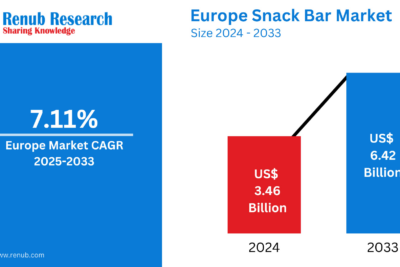
Why the Europe Snack Bar Market Could Skyrocket to $12 Billion by 2033—Are You Missing Out?

Is Google’s Shocking New Experiment About to Crush Your Favorite Search Portals? Find Out Now!
You might also like: