
Britain's $10 Billion Tech Deal with the US on the Brink—What Happens Next?

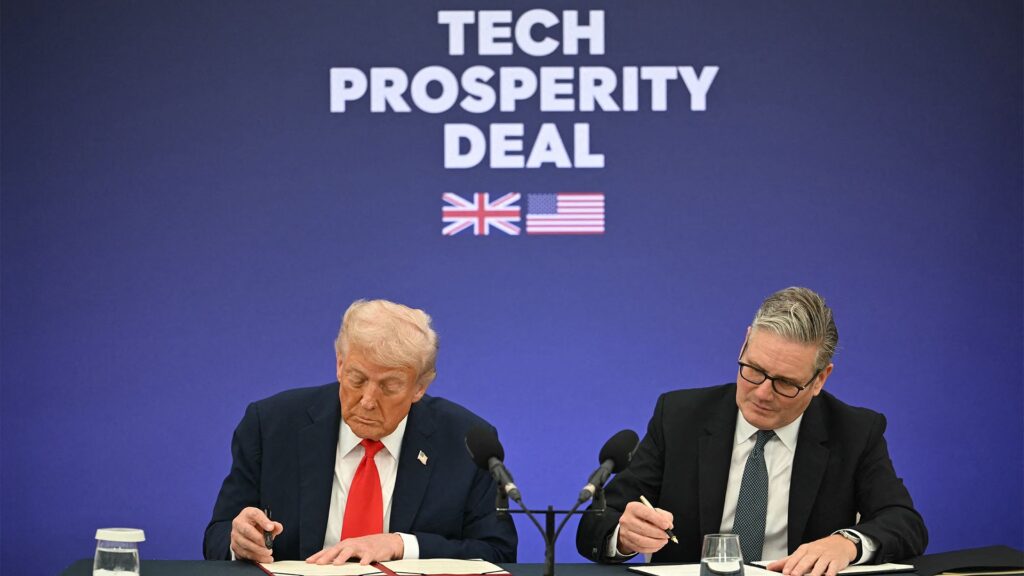
The future of the UK-US Tech Prosperity Deal hangs in the balance as recent reports indicate that the United States may have withdrawn from negotiations. Initially signed in September, this agreement aimed to bolster joint research and development (R&D) while advancing "pro-innovation AI policy frameworks." The ambitious plan included collaborations not only in artificial intelligence but also in quantum computing and nuclear energy—sectors critical to both nations’ technological advancements.
Former President Donald Trump heralded the deal as a pathway for the two countries to "lead the next great technological revolution side by side." However, the New York Times has reported that discussions have stalled due to broader disagreements, primarily stemming from the UK's Digital Services Tax, which imposes a 2% levy on major US tech companies like Google, Amazon, and Apple. This tax reportedly raises around £800 million annually and has drawn ire from US officials.
Trump has also made his discontent known regarding the UK's Online Safety Act, which mandates that tech firms take measures to protect users from harmful content. These concerns reflect a growing unease within the US about perceived trade barriers affecting various sectors, including cars, pharmaceuticals, and steel.
The Economic Prosperity Deal, signed in May, served as a foundational pillar for the Tech Prosperity Deal. According to reports, the Memorandum of Understanding (MOU) for the Tech Prosperity Deal made its future contingent upon "substantive progress" on the Economic Prosperity Deal, highlighting the interconnectedness of these agreements. Trump's science adviser, Michael Kratsios, implied on social media that the US hopes to resume negotiations once the UK demonstrates tangible progress toward its commitments under the economic framework.
"In line with Section III of the US-UK Technology Prosperity Deal, we hope to resume work with the United Kingdom once the UK has made substantial progress in implementing its commitments under the Economic Prosperity Deal,"
Reports from the BBC, however, indicate that the deal is still alive. The UK Prime Minister’s office has asserted that discussions are ongoing with US counterparts at all government levels, signaling a commitment to continue negotiations despite the current impasse.
The Stakes of the Tech Prosperity Deal
The Tech Prosperity Deal is generally regarded as being more beneficial to the US. Experts from ITPro have characterized the agreement as a "strikingly unequal partnership," allowing major tech companies to expand their presence in the UK without adequate oversight. This has raised alarms among advocacy groups like Global Justice Now, which caution against further concessions that may undermine the UK's ability to regulate and tax US corporate giants.
"For Trump, collaboration on trade and investment only appears possible if other countries give US corporate giants free reign over their economies – and give up their democratic right to regulate and tax them,"
Tim Bierley, policy and campaigns manager at Global Justice Now, warned that yielding to pressures from the US could lead to more extensive demands from corporate America. His remarks underscore the delicate balance the UK must maintain in navigating these negotiations.
On the other hand, not all voices are critical of the Tech Prosperity Deal. The Computer & Communications Industry Association (CCIA) has advocated for the repeal of the Digital Services Tax, asserting that it hampers investment and innovation in both countries. CCIA senior director Matthew Sinclair noted that while the technology deal was initially a positive step, the lack of progress in broader trade issues has hindered its implementation.
"The technology deal was good news for investment and innovation in both countries, and it is unfortunate that lack of progress in broader trade issues resulted in its implementation being suspended,"
Sinclair added that the UK should work toward addressing trade barriers, especially in digital services, to foster a more conducive environment for collaboration with US companies.
The unfolding saga of the UK-US Tech Prosperity Deal highlights the intricate dynamics of international trade negotiations in the tech realm. As both nations grapple with conflicting interests, the outcome of these discussions could shape the future of technological collaboration and regulation, ultimately influencing the landscape of innovation in both the UK and the US.
Is Hyrox the Fitness Sponsorship Revolution Everyone’s Talking About? Here’s What You’re Missing!

Steelers Shock Fans by Drafting Unknown QB as Rodgers's Replacement – What Happens Next Will Blow Your Mind!

You Won't Believe What Ankar's Shocking £15M Series A Could Mean for AI Startups!

Ryan Seacrest’s Hometown Just Made a Stunning Move—You Won’t Believe How Fans Are Reacting!
You Won't Believe What Happens When 1,000 People Get Access Denied—The Shocking Consequences Unveiled!
RFK Jr. and Trump Team Up: Is This the Game-Changer Healthcare Needs? Shocking Polls Inside!
You might also like: