
Bitcoin's Surprising Stability: Is Now the Last Chance to Invest Before a Market Meltdown?

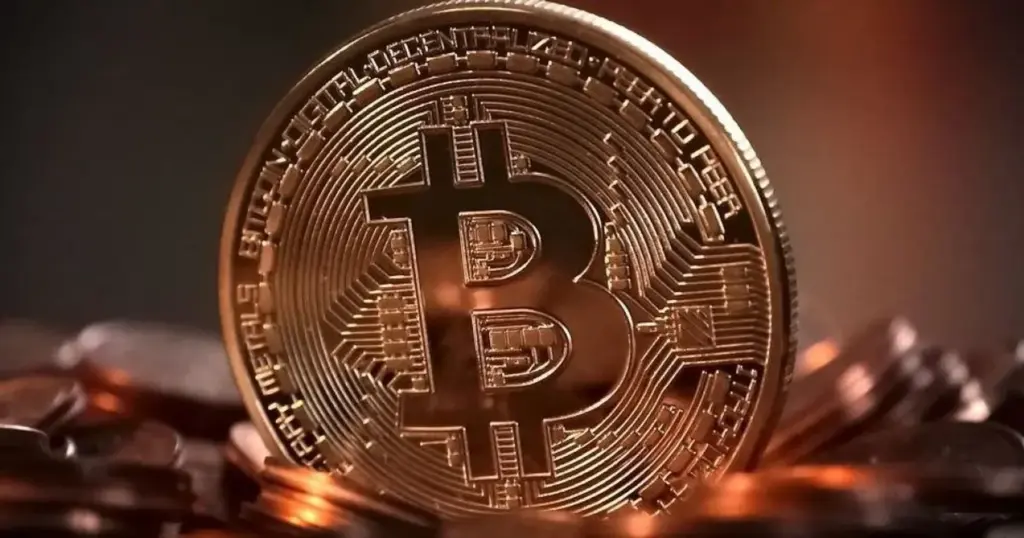
Bitcoin is showing tentative signs of recovery following a recent decline, but experts are cautioning against premature optimism. The cryptocurrency market continues to be sensitive to global risks, particularly military conflicts, as noted by financier Viktor Halchynskyi in an interview with UNN.
While there has been a slight uptick in Bitcoin's exchange rate, Halchynskyi emphasizes that this should not be mistaken for stable growth. Instead, he describes the current fluctuations as a balancing act between demand and supply rather than a definitive upward trend. "Currently, this is not growth, but stabilization," Halchynskyi remarked. "The range of $68,000-72,000 is, conditionally, restraint and counterweights. There are those who enter and those who exit. If Bitcoin breaks $80,000 and continues to $90,000, then we can talk about real growth."
Historically, Bitcoin has reached significantly higher values, peaking at around $120,000, indicating that current figures remain far from those heights. "Therefore, current figures are still far from the peak," he added.
📰 Table of Contents
The Impact of Global Conflicts on Investor Behavior
Global military conflicts, particularly those in the Middle East, have a direct impact on the cryptocurrency market. Halchynskyi explains that during periods of escalation, investors often flee risky assets like Bitcoin, only to return later in search of alternative ways to preserve their funds. Bitcoin, at times, is viewed as "digital gold," although Halchynskyi points out that this perception is not stable.
Initially, many exited the asset during rising tensions, but now some are seeking a "safe haven" and cautiously returning. "The problem is that this haven is not quiet," he explained, illustrating the tenuous nature of Bitcoin's appeal during tumultuous times.
Unlike traditional assets that offer a physical form of value, cryptocurrencies come with unique risks that can be exacerbated during global instability. Bitcoin, for instance, is heavily reliant on electricity, data center infrastructure, and internet connectivity—elements that can be compromised during wartime. "Bitcoin depends on electricity, on data centers, on infrastructure. It is not a physical asset that can simply be taken and stored. And in conditions of war, these risks only increase," Halchynskyi warned.
The High-Risk Nature of Cryptocurrency Investment
Halchynskyi emphasizes the high-risk nature of the crypto market and the necessity for investors to have a clear understanding of their financial capabilities. "This is a high-risk story. If you enter Bitcoin, then only with the money that you are willing to write off if something goes wrong. If you understand this as a game, then yes, you can enter," he advised.
Despite the numerous risks associated with Bitcoin, it continues to attract interest. Some investors utilize it for transactions, especially where speed or anonymity is crucial, while others view it as a means of preserving their assets during uncertain times. "There are those who enter Bitcoin as a way to preserve funds, and there are those who use it for transactions. This forms the demand, which currently partially balances the market," Halchynskyi summarized.
As it stands, the recent fluctuations in Bitcoin's value represent a stabilization rather than the commencement of a new boom. The future dynamics of the cryptocurrency will largely depend on global security conditions and investors' willingness to take risks amid uncertainty. The question remains: will Bitcoin regain its former heights, or is the current trend merely a temporary reprieve?
Experts Warn: White House's AI Guidance Could Endanger Your Free Speech—Find Out How!

Is Your Team Ready? Shocking NFL Draft Predictions That Could Change Everything in Just 30 Days!

Shocking Replica of Controversial Baltimore Statue Appears Near White House—What Happens Next?

Sina Ruppenthal's Shocking Guinness Record: How She Defied All Odds by Throwing 10 Men!
Access Denied: The Shocking Truth About What Happened to 1,000 Users Last Night!

You Won't Believe What Matt Eley Revealed About Language and Memory – A Shocking Truth Awaits!
You might also like: