
Big Tech’s Green Revolution Crashes: How AI Data Centers Are Sabotaging Climate Goals!

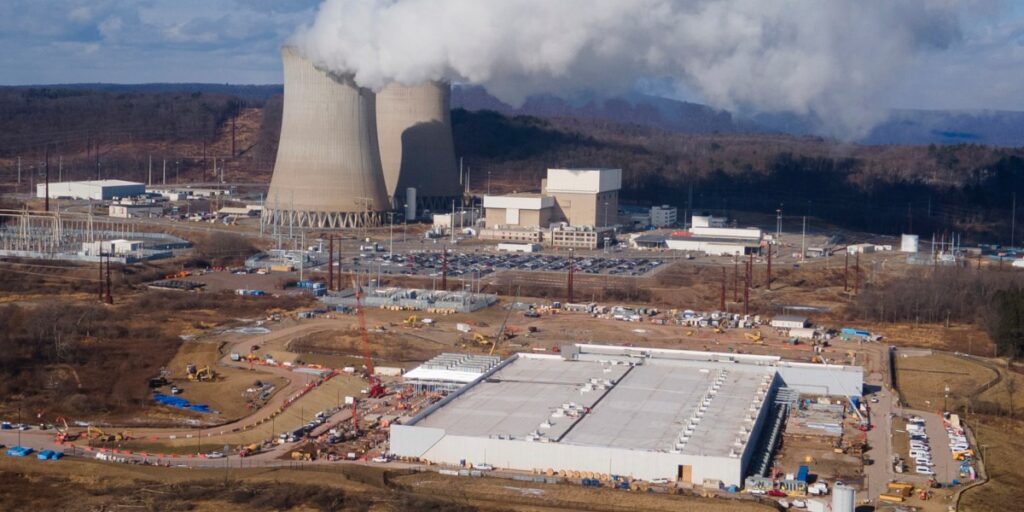
Six years ago, tech giants like Google and Microsoft set ambitious goals to transition to 100% clean energy by 2030, aiming to power their operations entirely with wind and solar energy. However, as the urgency to deploy artificial intelligence (AI) intensifies, these commitments are being reevaluated. Google now refers to its clean energy targets as a “moonshot,” while Microsoft describes its ambition to remove more carbon than it emits as “a marathon, not a sprint.”
The rapid expansion of AI technology has complicated these climate commitments, particularly as tech companies scramble to build expansive data centers that can consume more electricity than entire cities. “Even if they haven’t officially revised their goals, they are starting to acknowledge that, ‘Yeah, we’re maybe not on track,’” noted Patrick Huang, a senior analyst at Wood Mackenzie.
Despite purchasing record amounts of clean energy in 2024 and 2025, data from sustainability reports reveal that total emissions from these tech companies have increased significantly in the five years since they set their climate goals. Specifically, Google’s emissions rose nearly 50%, while Amazon’s increased by 33%, Microsoft’s by over 23%, and Meta’s by more than 60%.
Data centers accounted for approximately 4.6% of total U.S. electricity use in 2024, a number that could nearly triple by 2028, according to government estimates. Some analysts predict that nationwide electricity use could rise by as much as 20% over the next decade, with data centers playing a significant role in that increase.
A backlog of proposed renewable energy projects awaiting approval and the policies of the previous Trump administration, which sidelined renewable energy development, are complicating tech companies’ climate goals and prolonging their reliance on fossil fuels. “Each of these alone could be real challenges,” said Julie McNamara, associate policy director at the Union of Concerned Scientists’ Climate & Energy program. “Together, it’s just creating a real near-term crunch on the system.”
📰 Table of Contents
Natural Gas Use Surges Amid AI Growth
While tech companies assert they’ve made significant strides in reducing emissions through energy efficiency and purchasing renewable energy credits, the reality paints a different picture. In 2024, natural gas accounted for over 40% of the electricity powering U.S. data centers, and globally, coal supplied 30% of electricity, according to the International Energy Agency. The trend toward natural gas appears to be accelerating; utilities are planning new gas plants to support data centers, and some tech companies are even considering on-site gas plants solely dedicated to these operations.
“Companies are scrambling to try to get as much power as they can as quickly as possible,” stated Lori Bird, director of the U.S. Energy Program at the World Resources Institute. “It’s a mad rush and a lot of competition for resources.”
Despite these challenges, Microsoft President Brad Smith expressed confidence that the company can meet its 2030 goal by investing in various carbon-free energy sources, including nuclear, solar, and hydropower. In Wisconsin, for instance, new natural gas plants will help power a Microsoft data center, while the company also invests in solar projects in the state. Similarly, Meta has planned three natural gas plants to support a data center in rural Louisiana while investing in solar energy elsewhere.
Google is also pursuing a mix of energy sources, investing in wind, hydropower, battery storage, and advanced nuclear energy. However, the company still relies on natural gas to meet its power needs, including purchasing electricity from a natural gas plant at the Archer Daniels Midland corn processing facility in Decatur, Illinois, where carbon emissions are slated for capture and underground storage.
To achieve their clean energy goals, tech companies often rely on power purchase agreements and renewable energy certificates, but upcoming changes to greenhouse gas reporting could complicate this process. Proposed regulations may require that energy sources be located in the same region as a company’s data center and that they match operational hours, which could limit the use of solar credits to daytime hours only.
While some new gas plants will replace older, dirtier coal plants, the long-term investment recovery of such plants—approximately 30 years—means a potential delay in the transition to clean energy. This delay is critical, especially as the United Nations Environment Programme warns that high-emitting countries are unlikely to meet their own greenhouse gas reduction targets. A study by the Rhodium Group indicated that AI is partly responsible for a 2.4% increase in U.S. fossil fuel emissions last year.
“It is only because of these data centers that these gas plants are being built,” McNamara concluded. “There are no two ways about it.”
Policy Challenges and Future Implications
Even before the Trump administration's efforts to undermine renewable energy, tech companies faced challenges in securing sufficient electricity. Trump canceled grants and permits for solar and wind projects and tax incentives for renewable energy, arguing that such initiatives are costly and unreliable. The elimination of these federal tax credits, expected to end in July, poses further risks to the clean energy goals set by many tech companies.
Advocates argue that renewable energy can be developed more quickly and cheaply than natural gas or nuclear plants. “All technology should be on a level playing field,” said Rich Powell, CEO of the Clean Energy Buyers Association. “We’re putting both energy affordability and reliability at risk if we don’t do that.”
Despite current challenges, some industry leaders believe that AI could ultimately lead to more efficient electricity use. Josh Parker, sustainability chief for Nvidia, suggested that advanced AI technologies could result in lower overall energy consumption in the long run. “Our perspective is that we need an all-of-the-above approach to energy,” he remarked.
As the tech landscape continues to evolve, many companies may find themselves reevaluating their timelines for emissions goals. A 2025 survey from the Uptime Institute revealed a 12% decrease in the number of operators confident in meeting carbon-neutral targets by 2030. McNamara emphasized that the surge in electricity demand from data centers has transformed a challenge into an “outright crisis,” highlighting how tech companies are inadvertently increasing their reliance on fossil fuels.
These 3 College Football Programs Are Spending Millions on NIL—But Is Their Future Doomed?

3 Florida Beach Towns Set to EXPLODE in Real Estate: Are You Ready to Lose Out?

You Won't Believe What Baton Rouge is Offering: Free Vaccines, Hidden Art Treasures, and a Shocking Strawberry Market!

Is Cameron Boozer the Secret Weapon the Kings Desperately Need to Avoid Disaster? Find Out Now!

14-Year-Old's SHOCKING Plan to Overthrow Vermont's Governor: Will He Succeed or Fail Miserably?

The Shocking 2026 Draft Picks That Could Transform the Buccaneers – Don’t Miss This!
You might also like: