
Barnes' Shocking Utility Rate Overhaul: Will Your Bill Soar or Drop? Discover the Truth Now!

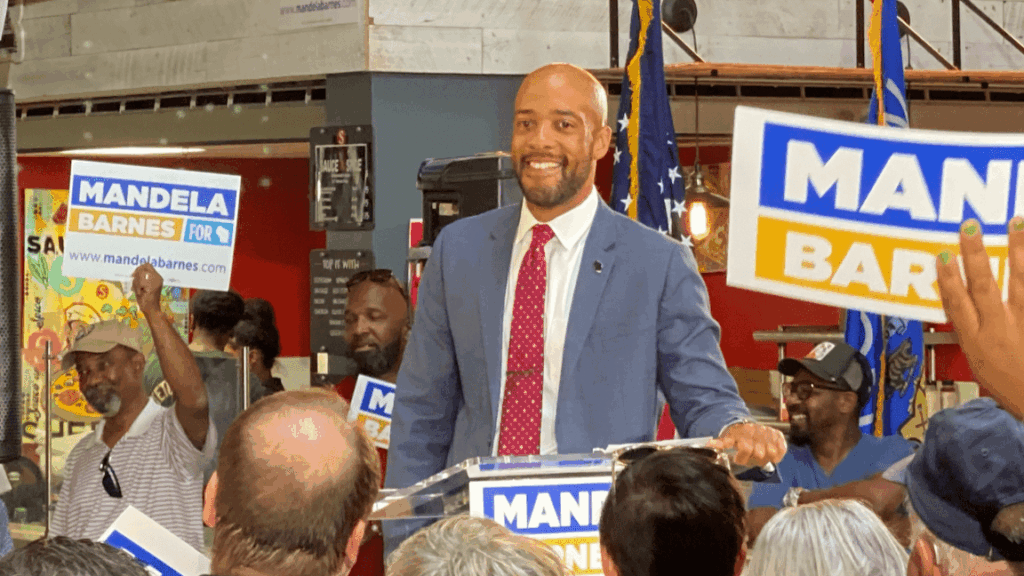
In a bold move aimed at addressing the rising cost of utility services, Democratic gubernatorial candidate Mandela Barnes has announced a plan that emphasizes consumer protection and corporate accountability. Barnes is pledging to appoint only members to the Public Service Commission (PSC) who would commit to freezing utility rates, a promise that could reshape the economic landscape for many Wisconsinites struggling with high costs. His proposal comes in the context of a growing national conversation about utility rates, which have seen significant increases in recent years.
“Utility companies have rigged the system to boost their profits and pay for the massive salaries of wealthy executives while Wisconsinites have had to cut back on essentials like food and prescriptions to keep the heat on,” Barnes stated, highlighting the stark economic choices many families face.
Reports indicate that under the current administration of Governor Tony Evers, PSC appointments have led to $2.2 billion in rate increases. This has prompted calls for a reevaluation of how utility rates are set, as state law mandates that the PSC approve rates that provide utilities with a reasonable opportunity to cover their costs and earn a profit. However, Barnes' campaign asserts that utilities can generate profits without imposing heavy burdens on ratepayers.
In addition to the rate freeze, Barnes is also advocating for legislative changes that would cap the salaries of utility executives. His initiative includes a ban on the use of ratepayer funds for lobbying and political activities, aiming to prevent utilities from using consumer money to influence public policy that may not align with consumer interests.
Part of Barnes’ comprehensive approach involves measures designed to alleviate the financial pressures on residents. Key components of his plan include:
- Banning utilities from requiring ratepayers to cover debts associated with closed power plants, which could alleviate the projected $1 billion in “stranded assets” Wisconsinites will own by the end of the year.
- Promoting the development of more renewable energy sources to provide sustainable alternatives.
- Implementing tax cuts to assist property owners with energy efficiency improvements.
- Eliminating reconnection fees for low-income households, making utility services more accessible.
However, Barnes’ proposal has not gone unchallenged. Anika Rickard, a spokesperson for the state GOP, criticized the plan, stating that prices have risen dramatically during Barnes' tenure as lieutenant governor. “Barnes’ fingerprints are all over the current price increases we’re seeing,” she asserted, suggesting that his pledge to freeze rates fails to address the issues that led to the current high costs.
If Barnes secures a victory in the upcoming election, he would have the opportunity to implement his plan immediately after taking office. The current PSC consists of three commissioners, with only Summer Strand confirmed by the GOP-controlled state Senate until March 2029. The other two commissioners—Marcus Hawkins and Kristy Nieto—were appointed by Evers but have not yet received Senate confirmation, leaving the door open for a potential shake-up should Barnes take the governorship.
As utility rates continue to be a pressing concern for many Americans, Barnes’ plan could signal a significant shift in the way utilities operate in Wisconsin. By focusing on freezing rates and imposing limits on executive salaries, he aims to ensure that the financial burdens faced by consumers are alleviated, rather than exacerbated by corporate interests.
As the election approaches, the viability of Barnes’ proposals and their potential impact on both consumers and utility companies will be closely scrutinized, determining the direction of energy policy in Wisconsin and possibly setting a precedent for similar movements across the country.
Your Browser Might Be Putting Your Privacy at Risk—Find Out How 90% of Users Are Unknowingly Exposed!
Iranian Women’s Soccer Team in Crisis: 10 More Players Risk Everything for Freedom!

You Won't Believe Which SEC Towns Are the Hidden Gems and Total Duds! Find Out Now!

Oil Prices Are on the Edge of Chaos—Are You Prepared for the Shocking Fallout?

NYC’s First Infrared Yoga Studio Promises Shocking Weight Loss Results—Find Out How!
Only 24 Hours Left: Local Vaccination Site Extended Hours—Are You Prepared for What's Coming?
You might also like: