Baja California's Governor Drops Bombshell: Is Her Ex-Husband Linked to Corruption Scandal?

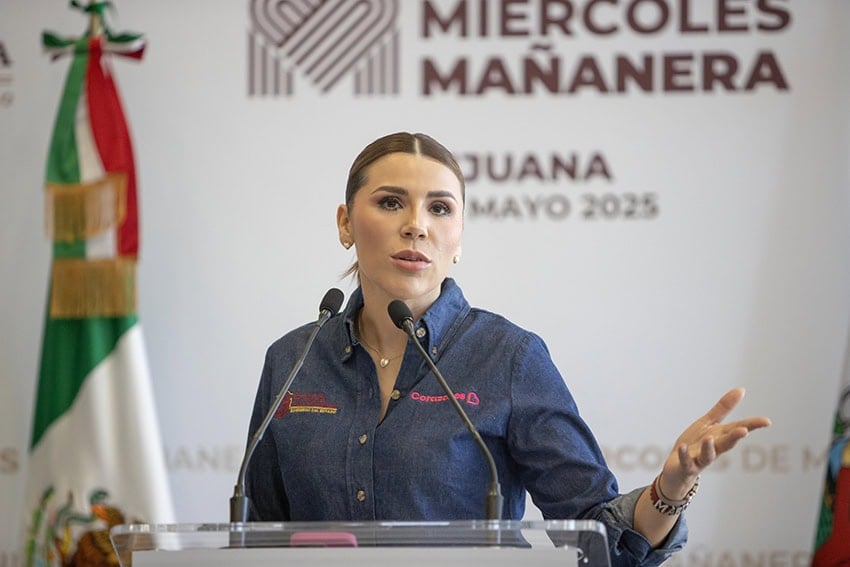
In a developing story from Baja California, the Federal Attorney General’s Office (FGR) has launched an investigation into Carlos Torres, the former first gentleman of the state, for serious crimes including arms trafficking, drug trafficking, and money laundering. This revelation comes amid allegations that Torres was involved in a scheme to facilitate operations for a faction of the notorious Sinaloa Cartel within the region.
Baja California's current governor, Marina del Pilar Ávila, publicly confirmed the investigation on Wednesday, stating that it originated from an anonymous complaint implicating her ex-husband. In a statement issued by Torres, he vehemently denied the allegations, referring to them as “slanderous.” Ávila expressed her confidence in the FGR's capacity to conduct a thorough investigation, asserting that the truth would eventually come to light.
The situation escalated last year when the U.S. government revoked both the governor's and Torres’ tourist visas. Ávila remarked at the time that the visa denial was “neither an accusation nor an investigation,” yet it marked a significant moment, as it was the first instance of a sitting Mexican official facing such repercussions from U.S. authorities. This action reflected the wider crackdown on Mexican officials, particularly during the Trump administration, which saw a notable increase in visa revocations.
According to reports from N+, the news division of Grupo Televisa-Univision, the investigation gained traction after a complaint was filed on June 11, 2025. The complaint accused Torres of receiving monthly payments of US $150,000 from Pedro Ariel Mendivil García, the former security minister for the Mexicali City Council. These payments were allegedly made in exchange for allowing the Los Rusos Cartel to operate freely in Baja California. Following these events, Torres stepped down from his honorary positions, and by October, divorce proceedings between him and Ávila commenced.
N+ further identified Luis Alfonso Torres, Carlos' brother, as the suspected leader of the criminal network under investigation. This network is alleged to have facilitated extortion through the seizure of goods and demanding significant ransoms for their release at state customs offices. It is reported that the illicit funds were funneled through various companies and used to support political campaigns in Mexico, raising questions about the potential complicity of other high-ranking officials.
The investigation is not limited to Torres alone; several prominent figures are also under scrutiny, including high-ranking officials from Mexico’s Tax Administration Service (SAT) and Customs, municipal leaders, and even Senator Armando Ayala Robles, the former mayor of Ensenada, Baja California. The breadth of the investigation highlights the intricate ties between politics and organized crime in the region.
Carlos Torres has had a long political career, previously serving as a member of the National Action Party (PAN) for two decades. His political trajectory includes terms as a state congressman from 2016 to 2019, an unsuccessful bid for mayor of Tijuana in 2010, and service as a federal deputy from 2006 to 2009. Notably, in February 2025, Torres switched allegiance from PAN to Morena, the ruling party in Mexico, a move that raised eyebrows given the context of the ongoing investigation.
This unfolding narrative underscores the persistent challenges facing governance in Mexico, particularly in areas heavily influenced by organized crime. As the FGR proceeds with its investigation, the implications extend beyond Torres and the immediate allegations, suggesting a deeper entanglement of political figures with criminal enterprises in Baja California.
The outcome of this investigation will be closely watched, not only for its potential impact on those directly involved but also for its broader implications regarding the integrity of political institutions in Mexico.
Utah's Shocking Decision: Is Android About to Become the State’s Official Smartphone OS? Here's What You Need to Know!
Your Browser is OUTDATED: 7 Shocking Reasons You MUST Upgrade NOW or Risk Losing Everything!

Carson Beck's NFL Draft: Will He Land His Dream Team or Face Career-Ending Disaster?

You Won’t Believe What These 5 New Gyms in Frisco Are Hiding – Join Now or Regret It!
Georgia’s Shocking Election Twist: Could QR Code Ban Cost Thousands Their Votes?

You Won't Believe What Happened at This Year's Shocking Cola Rosé Shower for Women's Health!
You might also like: