Australia's Shocking Move: Social Media Ban for Under-16s Starts Now—What Parents Need to Know!

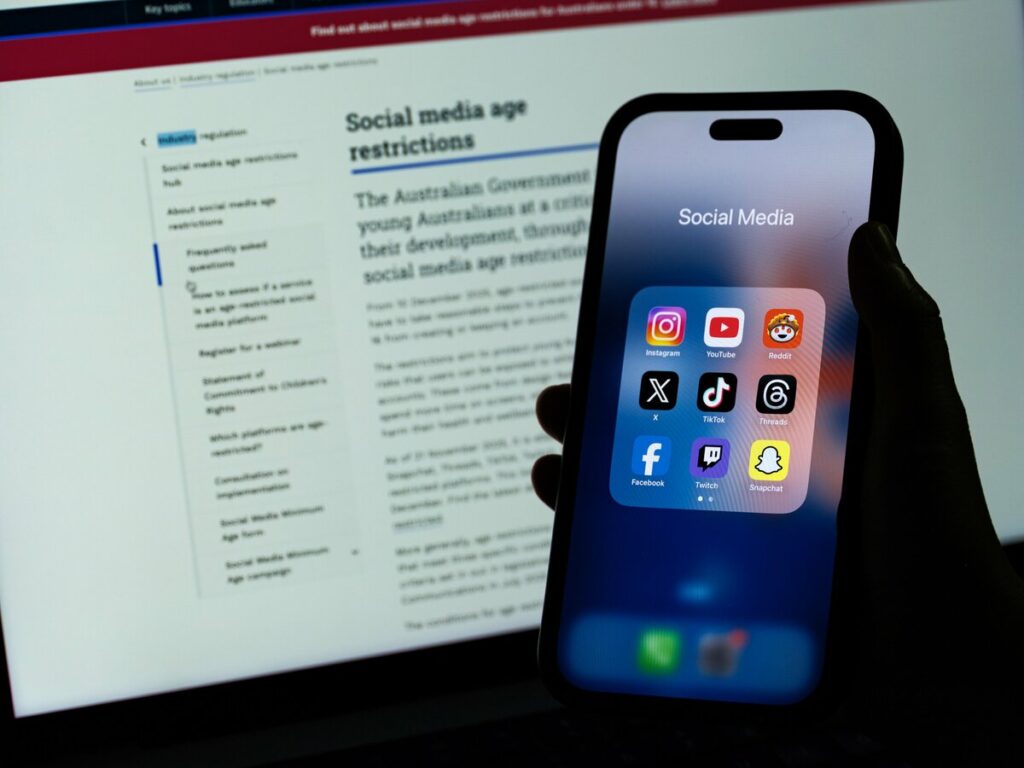
SYDNEY - A groundbreaking social media ban for children under 16 took effect in Australia on Wednesday, prohibiting young users from creating or holding accounts on platforms such as Instagram, TikTok, and Snapchat. This legislation is the first of its kind in the world, marking a significant step towards protecting youth from the mental and physical health risks associated with social media.
The new law, which was fast-tracked through parliament last year amid broad public support, aims to mitigate potential harm to young people using these platforms. In addition to the platforms mentioned, the ban also applies to others such as Facebook, Kick, Reddit, Threads, Twitch, X, and YouTube. However, messaging services like Facebook Messenger and WhatsApp, along with gaming sites like Roblox and Discord, will not be affected by these restrictions.
According to the legislation, social media companies are required to take "reasonable steps" to ensure that users under 16 do not have accounts. These companies could face fines of up to AU$49.5 million (approximately $32.9 million) for non-compliance. Measures include deactivating existing accounts for users under 16, preventing the creation of new accounts, and blocking any workarounds that minors might use to bypass these restrictions.
Interestingly, neither children nor parents will be penalized for violating this law; the responsibility for compliance lies solely with the tech companies. Various methods for age verification are being employed by these platforms, although government-issued IDs cannot be the only means used for this verification. For instance, Snapchat has prompted some users to verify their age by linking an Australian bank account, providing a government-issued ID, or uploading a selfie for analysis through facial age-estimation technology.
The landmark legislation has garnered mixed reactions from experts. Some have praised the potential benefits of the ban, while others express concerns about data privacy and the possibility of increased social isolation for certain young individuals. Susanne Schweizer, an associate professor of psychology at the University of New South Wales, cautioned that children from minority groups or remote areas might "lose a lifeline" to peer connections through online platforms. However, she also conveyed cautious optimism that, if paired with substantial investment in education about safe online interactions, the ban could provide young users with valuable time away from social media.
Among the advocates for this ban is Robb Evans, a 57-year-old father whose daughter, Liv, tragically died by suicide in 2023 at the age of 15 after struggling with an eating disorder exacerbated by harmful social media content. Evans expressed his belief that the legislation could "save lives," underscoring its critical importance even if it is not a perfect solution.
Conversely, some young people, like 15-year-old Kiera Compagnucci from Sydney, oppose the ban. She argues that decisions around social media usage should remain with parents rather than the government. "I think it'll have a negative impact on young people, because they won't be able to know how to use social media, and they won't be as connected to the world," she said, noting that many of her friends are already searching for alternative platforms to maintain their connections.
The Australian online safety watchdog has indicated that they may expand the list of banned platforms in the future, as new services emerge or current usage patterns evolve. This initiative mirrors actions taken in other countries as well; for instance, nations like Denmark, Malaysia, and Norway are also considering stricter age restrictions for social media. Furthermore, the European Parliament passed a nonbinding resolution in November calling for a minimum age of 16 for accessing social media across the European Union.
As the global conversation around the safety of youth in digital spaces continues, Australia’s pioneering legislation may serve as a crucial point of reference for other nations grappling with the same issues.
Bruce Blakeman's Shocking NY Governor Bid: Will He Topple Stefanik's Empire? Find Out NOW!

Gene Simmons’ SHOCKING Endorsement of Trump: What He Revealed Will Leave You Speechless!

Unlock the Mystery: 5 Phone Terms You're Using Wrong—#3 Will Shock You!

Fed Meeting Kicks Off: Will the Dow Plunge 500 Points or Soar? Discover the Shocking Predictions!
You Won't Believe What Juneau's Legislators Revealed at the Shocking Holiday Open House!
KBC's Shocking €100M Fund: Will Your Startup Survive or Thrive? Don't Miss Out!
You might also like: