
Arizona's Shocking Election Bill: Could This Change Your Vote Forever? Find Out Now!

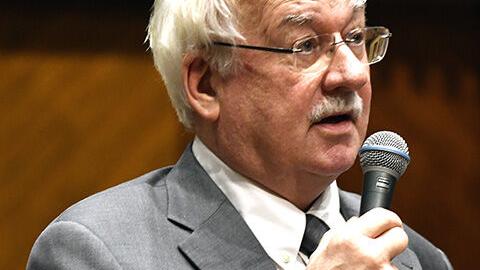
PHOENIX — A brewing crisis around election certification in Arizona has prompted legislative action following a dramatic standoff involving county supervisors and the law. Two Republican supervisors in Cochise County, Tom Crosby and Peggy Judd, faced potential jail time after refusing to certify election results due to concerns over the accuracy of voting machines. This conflict highlights a critical tension between electoral integrity and the pressures faced by local election officials, a concern that state Senator John Kavanagh is addressing with new legislation.
Current Arizona law mandates that county supervisors must "canvass" election results after each election. This obligation means certifying the results as accurate, with legal repercussions for those who refuse. Kavanagh argues that this requirement places unfair pressure on officials who may not have the requisite knowledge to confirm the results' validity. "To force election officials, under threat of being arrested, to say 'this is a good election, I certify it,' is absurd," Kavanagh stated, drawing on his own experience as a former town council member.
To address these concerns, Kavanagh's proposed legislation, known as SB 1003, aims to change how election results are acknowledged. Instead of requiring certification, it would allow supervisors to "acknowledge without prejudice" the results reported to them. This would permit officials to state that they are presenting the results as given, without vouching for their accuracy. "We'll let them say what we know," Kavanagh explained, emphasizing the need for a more realistic approach given that many officials lack direct involvement in election processes.
The push for this change follows significant events during the 2022 election cycle when Crosby and Judd refused to canvass the results despite state assurances that the voting machines were compliant with legal standards. Their actions culminated in a court order mandating compliance, which Judd ultimately followed, but Crosby did not. This led to their indictment on felony charges for failing to complete the canvass and interfering with an election officer, resulting in Judd pleading guilty to a misdemeanor charge and being placed on probation.
Meanwhile, a separate incident involving the Mohave County supervisors also raised alarms when they considered counting votes by hand due to similar concerns over equipment accuracy. They abandoned this plan only after being warned of potential legal consequences by Attorney General Kris Mayes.
Kavanagh's SB 1003 seeks to mitigate the chaos that ensued in Cochise County and prevent similar situations in the future. The legislation would enable supervisors to comply with the legal obligation to canvass while protecting them from the implication that they are endorsing potentially flawed results. “It simply says that 'I am acknowledging that these are the results that were given to me,'” Kavanagh elaborated, noting that this acknowledgment would not imply a guarantee of correctness.
However, the proposal is not without its critics. Current Secretary of State Adrian Fontes has expressed concerns that the legislation could enable officials to propagate misinformation about election integrity without facing accountability. "Our office views SB 1003 as nothing more than an attempt to give elected officials that want the ability to spread misinformation about elections — but not be held accountable — a free pass," said Calli Jones, Fontes' press aide. She emphasized that certified tabulation machines meet both state and federal legal standards, and allowing officials to disclaim accuracy could fuel conspiracy theories.
Kavanagh counters that his legislation is not about denying election results or promoting falsehoods but about ensuring that officials are not coerced into certifying outcomes they do not fully understand. "This is simply saying it's not right to make people basically swear that these are correct results when they have no idea if they're correct or not. They're probably correct, but they don't know," he asserted.
The move to revise the law is part of a broader trend in Arizona politics where election certification has become a contentious issue, especially among Republican officials. Last year, a related bill crafted by Representative Rachel Keshel sought to protect county supervisors from legal repercussions if they hesitated to certify results based on a good faith belief that there were significant irregularities. However, the measure was vetoed by Governor Katie Hobbs, who emphasized the importance of upholding the law for the sake of voters.
This ongoing debate in Arizona reflects a national conversation about election integrity, transparency, and the responsibilities of public officials. As state lawmakers navigate these complex issues, the balance between accountability and the right to question the electoral process remains a crucial focus for the future of democracy in Arizona and beyond.
Why Thousands are Panic Searching for Answers to a Shocking Request Refusal – Find Out Now!
Is Wall Street's 2026 Stock Market the Most Dangerous in 155 Years? Here's Why You Could Lose Everything!
White House's Shocking Move: New Website Exposes Media Bias! What They're Hiding Will Leave You Speechless!

Apple's Shocking Move: How Their New Design Could Wipe Out Competitors in 2024!

You Won't Believe What Happened in Beverley Square West: A Shocking Standalone Story Unfolds!
Elections in Turmoil: 80% of Results Overturned—What Happens Next Will Shock You!
You might also like: