
Are Millionaire 'Free Riders' Sabotaging Our Planet? Shocking Facts You Need to Know!

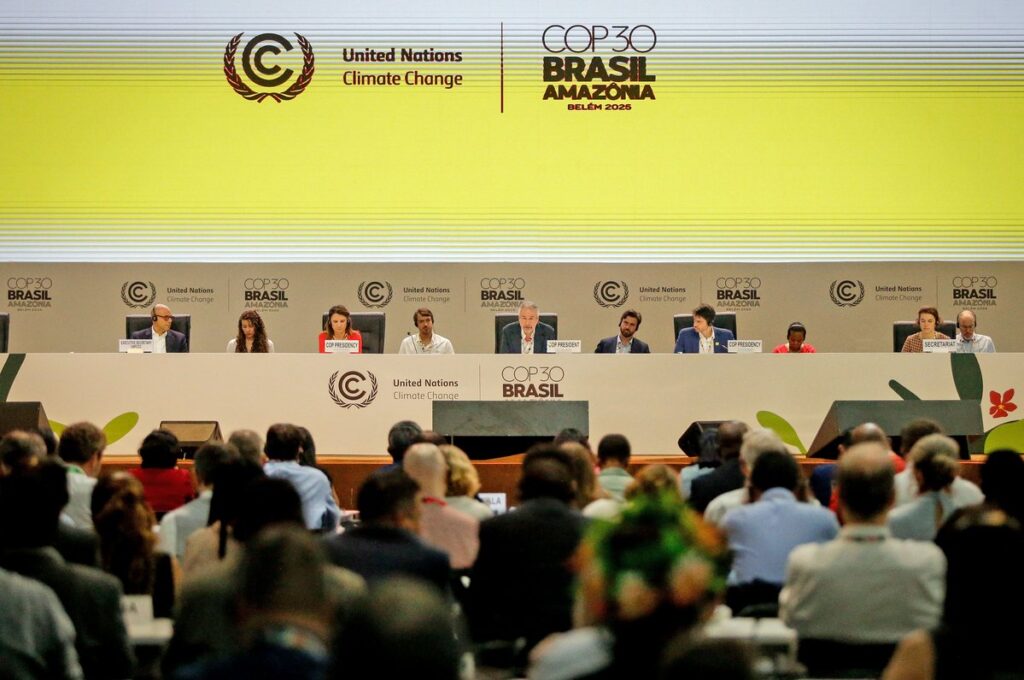
As climate change continues to escalate, the expectation is that increasing natural disasters will galvanize people into action. However, a recent study led by Manfred Milinski from the Max Planck Institute for Evolutionary Biology and Stefania Innocenti from the University of Oxford casts doubt on this assumption. Their research reveals that even in the face of repeated climate events, collective action often falters, undermined by a behavioral strategy that exploits cooperation.
In a carefully designed laboratory experiment involving groups of six participants, researchers conducted what they termed a “climate game.” Each participant began with a starting budget and was tasked with deciding how much to contribute—be it nothing, a medium amount, or a higher sum—to a shared climate fund across ten rounds. The goal was clear: if the group reached a predetermined target sum by the end, they could retain their remaining money. Conversely, failure to meet the target would result in a significant financial loss for all, simulating the consequences of a climate catastrophe.
To simulate the urgency of climate action, some groups faced repeated extreme events, which imposed financial losses contingent on inadequate prior investment. In one scenario, these losses were minimal, while in another, they escalated sharply over time. Interestingly, while groups temporarily increased their contributions before critical rounds, that heightened activity did not translate into sustained cooperation. Once the immediate threat subsided, contributions rapidly declined.
The Dynamics of Cooperation
The crux of the study emphasized the importance of group dynamics over sheer disaster frequency. The researchers identified two primary behaviors among participants. A portion acted consistently cooperative, reliably contributing their fair share. However, a significant segment, approximately 40%, adopted an “extortionate” strategy, contributing minimally while expecting others to compensate for their lack of participation. This behavior was not only rational from their perspective but also often successful—the free riders frequently ended up with more money than their cooperative counterparts.
This phenomenon poses a stark problem for climate action. The study reveals that when a substantial number of individuals refrain from contributing, the burden falls disproportionately on the cooperative members. As such, when the committed participants can no longer cover the shortfall, the entire group suffers the consequences, including those who contributed little or nothing. This "extortionist" dynamic mirrors real-world scenarios, pointing to a troubling trend where a minority undermines collective efforts.
The findings underscore a sobering truth: expecting natural disasters to automatically enhance cooperation may lead to disappointment. Simply put, damage and risk alone do not guarantee collective action, especially when a significant portion of participants consistently shirks responsibility. The researchers advocate for establishing binding rules and political tools to support collaborative efforts and mitigate free riding, emphasizing that merely hoping for insight in the wake of disasters is insufficient.
This research serves as a clarion call for policymakers and environmental advocates alike. Without robust strategies to encourage cooperation and penalize free riding behaviors, the path to effective climate action will remain fraught with obstacles. As climate-related disasters become increasingly common, understanding the underlying dynamics of human behavior may be crucial in crafting solutions that ensure collective progress.
Real Madrid in Shocking 'NBA Europe' Deal Talks—What This Means for European Basketball!

4.7 Million Accounts Wiped Out Overnight: What Australia’s Shocking New Ban Means for Teens!
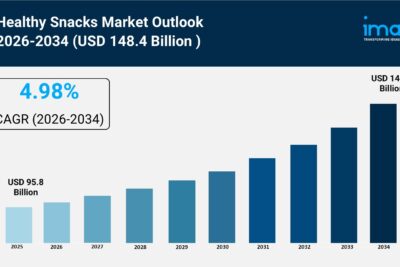
The Shocking Truth: Healthy Snacks Will Skyrocket to $148 Billion—Are You Ready to Miss Out?

This Secret Trillion-Dollar Stock Could Skyrocket 300% by January 2026—Are You In or Out?

OpenAI's Shocking $100M Bet on Sam Altman's BCI Startup: What You NEED to Know NOW!

Netflix's Shocking $1 Billion Deal with Sony: What This Means for Your Favorite Movies!
You might also like: