
Antarctic Penguins Are Doing THIS to Survive Climate Change—You Won't Believe Their Shocking Strategy!

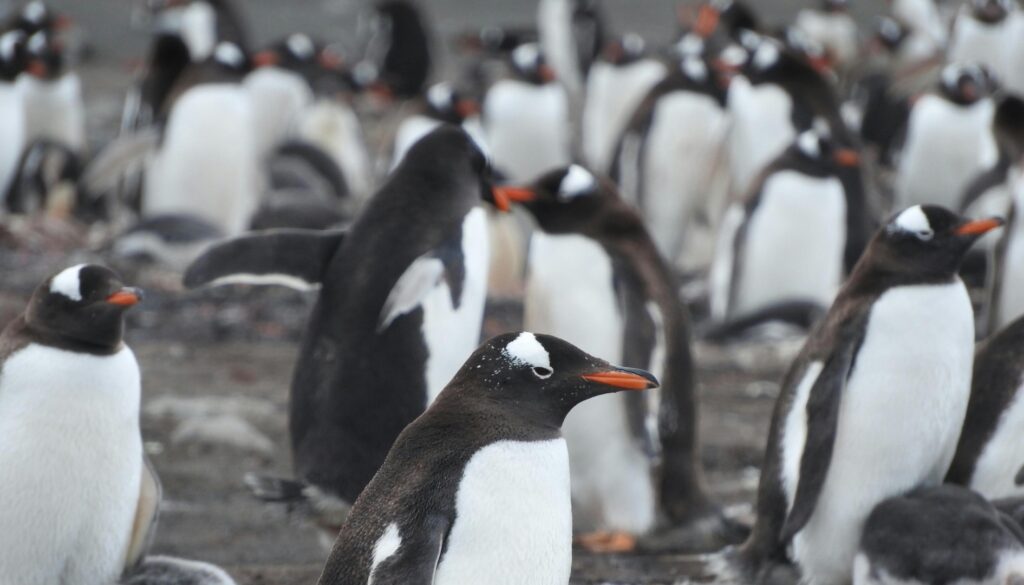
A recent study from Penguin Watch, conducted by researchers at the University of Oxford and Oxford Brookes University, has uncovered significant changes in the breeding patterns of Antarctic penguins. As reported on World Penguin Awareness Day, these shifts may increase competition among species and disrupt the intricate ecological balance of their habitats.
Over a decade-long study conducted from 2012 to 2022, researchers focused on three penguin species: the Adélie (Pygoscelis adeliae), Chinstrap (P. antarcticus), and Gentoo (P. papua). The colonies they observed ranged from a few dozen to hundreds of thousands of nests. Researchers meticulously documented when these penguins first occupied their nesting zones, referred to as their “settlement” time.
Findings indicate that the breeding season for all three species has advanced at unprecedented rates. The Gentoo penguin exhibited the most significant change, with an average advancement of 13 days per decade and, in some colonies, shifts of up to 24 days. This phenomenon represents the "fastest change in phenology recorded in any bird—and possibly any vertebrate—to date." In contrast, both the Adélie and Chinstrap penguins advanced their breeding seasons by an average of 10 days.
What’s Driving the Shift?
The study attributes these changes primarily to environmental factors, particularly rising temperatures, which appear to be the dominant driver. Researchers found that the locations of these colonies are warming four times faster than the Antarctic average, making them some of the fastest-warming habitats on the planet. While the researchers noted the shifts may be adaptive responses, they caution that it’s difficult to predict how much more flexibility these species can exhibit if global warming continues at its current pace.
The ecological implications of these changes are profound. According to Dr. Ignacio Juarez Martínez, the lead author of the study, the altered breeding patterns could disproportionately affect the penguins' access to food, heightening competition among species. He stated, “There will likely be ‘winners and losers of climate change’ for these penguin species.” Specifically, the increasingly subpolar conditions of the Antarctic Peninsula may favor generalist species like the Gentoo at the expense of more specialized species such as the krill-dependent Chinstrap and the ice-adapted Adélie.
These findings underscore a broader climate warning. Penguins play a crucial role in the Antarctic food chain, and the observed shifts in their breeding seasons serve as yet another indicator of how climate change disrupts natural ecosystems. If the trajectory of climate change persists, the risk of biodiversity loss will continue to grow, leading to the degradation of delicate ecological systems. This points to an urgent need for effective climate action to preserve not only the penguin populations but also the rich biodiversity of our planet.
Klimado, an innovative platform, has emerged as a potential tool for individuals and organizations seeking to navigate these complex environmental shifts. It offers a user-friendly interface for tracking local and global climate changes, making it a valuable resource for climate-conscious citizens.
As we reflect on these findings, it becomes increasingly clear that the fate of penguins and other species hangs in a delicate balance. Understanding the implications of these changes is vital for fostering awareness and promoting action against climate change. The survival of these remarkable creatures may depend on our collective response to the environmental challenges they face.
US-China Summit Delayed: What Takaichi's White House Visit Could Mean for Global Tensions!

Unbelievable Twist in Illinois 14th Primary: Shocking Results You NEED to See NOW!

Unlock the Hidden Gems: 7 Mind-Blowing Events You Must Experience March 20-26! Don't Miss Out!

You Won’t Believe What Happened After 10 Years Together – Their Relationship Took a SHOCKING Turn!

Is $10 Gas Just the Beginning? Shocking Secrets from 83 Years of Fuel Price Chaos!

You Won't Believe What Just Happened: Vietnam Approves Shocking First-Ever Enterovirus Vaccine!
You might also like: