
Is Your Smartphone Photography Obsolete? OPPO Reveals Shocking AI Secrets That Will Change Everything!

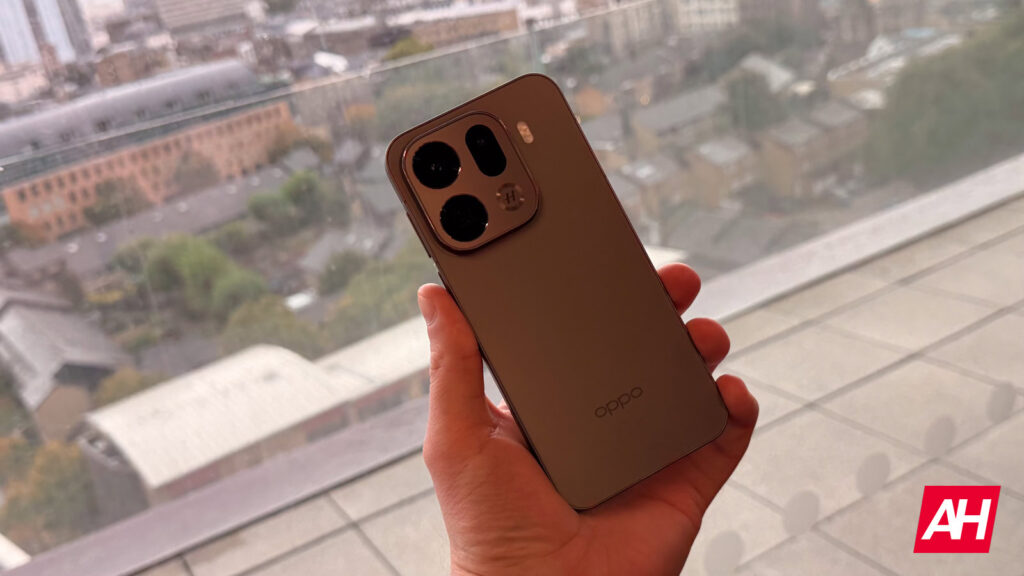
As smartphone photography continues to evolve, the integration of artificial intelligence (AI) is transforming the landscape. While compact smartphone cameras lack the large sensors found in dedicated devices like mirrorless cameras or DSLRs, companies are leveraging innovative software solutions to bridge this gap. OPPO, a key player in the smartphone market, believes that AI is the future of smartphone photography.
In a recent interview with India Today Tech, Simon Liu, the Global Imaging Director at OPPO, discussed the role of AI in photography. Liu emphasizes that AI should be viewed as a neutral tool, akin to a knife or a gun, where the intent behind its use determines its ethical implications. “Yes, as long as intentions are good, basically, I don’t think there are any limits for AI," Liu asserts. Conversely, he warns that even a small amount of AI could lead to significant issues if misused.
Liu's remarks delve into an intriguing perspective on the nature of reality in photography. He contends that “most of the time we do not want to see ‘reality’ in our photos,” suggesting that people often have a preconceived notion of how they wish to appear in images. Capturing the essence of a moment often requires an understanding that exceeds mere factual representation. As he puts it, “the main gap here is understanding what the human mind actually wants.”
This raises a critical question: Are Liu's assertions accurate? To a degree, they resonate with many. The disparity between what we observe with our eyes and what is captured through a lens is a common experience. For instance, the moon may appear vast and luminous in the night sky, yet when photographed, it often resembles a mere dot. If AI can enhance these moments and make them more true-to-life, its application seems justified.
However, the integration of AI in photography is not universally embraced. Just last week, a viral thread on Reddit highlighted concerns from several Google Pixel users who feel that excessive AI processing diminishes the photographic experience, leading to images that appear overly stylized or unnatural. This backlash underscores the delicate balance that must be struck in using AI: while it can improve image quality, there is a risk of producing results that stray too far from what users desire.
Liu acknowledges this complexity, stating, “Until now, I don’t think the hardware has actually really peaked... We are still far away from the peak at the moment.” His comments suggest that both hardware advancements and AI capabilities are still in development, leaving room for refinement in how these technologies intersect.
The implications of AI in photography extend beyond aesthetics; they touch on broader trends in technology and consumer expectations. As smartphone manufacturers like OPPO continue to innovate, the challenge will be to meet the nuanced desires of users seeking both authenticity and enhancement in their photographic experiences. The future of smartphone photography, propelled by AI, promises to be a fascinating blend of technology and human intention.
You Won't Believe What Trump & Melania's Christmas Portrait Reveals About Their Marriage!

You Won't Believe Which NBA Superstars Are Missing on Christmas Day—Shocking Details Inside!

Ripple Token Holders: Discover How to Earn Massive Yields NOW Without Selling—Don't Miss Out!

You Won’t Believe Which Titans Rookie Just Made Pro Bowl History—The Shocking Stats That Shocked Everyone!

Is a Major Market Crash Looming? S&P 500 and Nasdaq React to Shocking GDP Growth—Find Out What This Means for Your Investments!

What If I Told You a $1,000 Bitcoin Investment in 2010 Could Mean Millions Today? Find Out!
You might also like: