Is the White House About to Face a $10 Billion Tariff Refund Nightmare? You Won't Believe the Consequences!

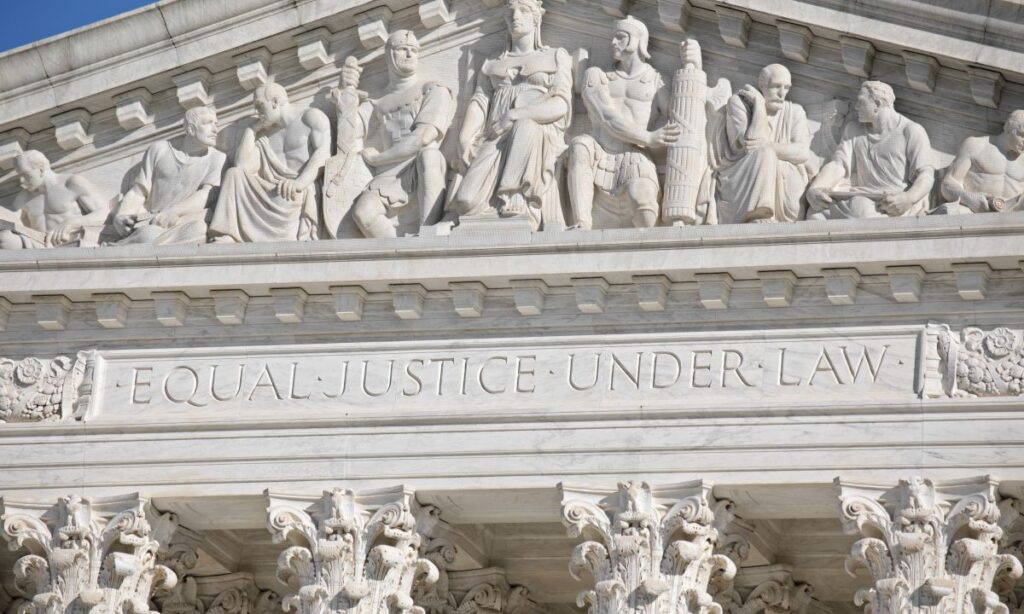
The Supreme Court's upcoming decision on tariffs could have significant implications for the Trump administration and American businesses. In a recent interview on CBS News' "Face the Nation," Kevin Hassett, director of the National Economic Council, expressed confidence that the justices would side with the administration. However, he acknowledged that a ruling against the government might complicate matters, especially regarding potential refunds for duties already collected.
Hassett stated, “We really expect the Supreme Court is going to find with us,” but he added that if the court were to rule against the administration, it would be “pretty unlikely that they’re going to call for widespread refunds because it would be an administrative problem to get those refunds out there.” This comment underscores the complexity of reversing such financial decisions and the potential administrative burden it would place on the government.
The challenge before the Supreme Court stems from a lawsuit filed by a coalition of a dozen states, a wine importer, and an educational toy manufacturer, all of whom argue that the tariffs imposed by the Trump administration are unlawful. Hundreds of small businesses have also joined amicus filings, contending that these tariffs have forced them to raise prices and cut staff, placing additional strain on operations.
President Trump has justified the tariffs under the 1977 International Emergency Economic Powers Act (IEEPA), which grants the executive branch authority to “regulate” the “importation” of goods in response to perceived threats to national security, foreign policy, or the economy. This legal framework has been a cornerstone of the administration's trade policy, but it has faced scrutiny from both liberal and conservative justices during oral arguments.
Many justices expressed skepticism about the administration's rationale for the tariffs, questioning whether they align with the intent of the IEEPA. If the court were to mandate refunds, Hassett noted that the importers—typically the ones who initially pay the tariffs—would likely be responsible for issuing those refunds. He reiterated, “But I really, really don’t think that’s going to happen; it’d be very complicated.”
The ramifications of the tariffs extend beyond legal battles. A recent report from PYMNTS highlighted how these tariffs have evolved from a temporary measure into a structural force influencing how middle-market Chief Financial Officers (CFOs) plan for the future. The study, titled “Revising the Roadmap: How Tariffs Are Transforming CFOs’ Strategic Planning,” surveyed 60 CFOs and revealed a divided landscape among firms. Goods-oriented companies are scaling back investments and reassessing their supply chains, while service-oriented firms are focusing on technology upgrades and talent development.
The findings are telling: nearly 3 in 4 CFOs have adjusted their investment strategy in 2023, with goods firms being 46% more likely than services firms to adopt a cautious approach. Alarmingly, 34% of companies significantly impacted by tariffs have canceled planned investments altogether. This divergence in strategy illustrates how tariffs are reshaping the financial landscape for businesses across the U.S.
The potential Supreme Court ruling could thus not only affect the legal standing of tariffs but also impact the economic strategies of countless businesses. As uncertainty surrounding trade policy continues, companies are being forced to adapt their budgeting and growth plans, raising the stakes for all involved. The upcoming decision could serve as a pivotal moment in shaping the future of American trade policy and its effects on everyday businesses and consumers.
America's Health Crisis: 50% of Adults Ignoring This Shocking Warning—Are You at Risk?

Colorado Governor’s SHOCKING Ultimatum: Is Trump’s “Political Game” Costing Lives After Recent Disasters?

Colorado Governor's SHOCKING Accusation: Is Trump Playing Political Games with Disaster Aid? Find Out NOW!
Half of Americans are already preparing for 2028! What shocking poll results are driving this frenzy?
Why Top ND Lawmakers Are Risking It All for Rural Health: Shocking Revelations Inside!
White House Threatens Smithsonian: Could $1 Billion in Federal Funds Hang in the Balance?
You might also like: