
Visa-Free Travel is Changing Forever: Are You Prepared for These Shocking New Rules?

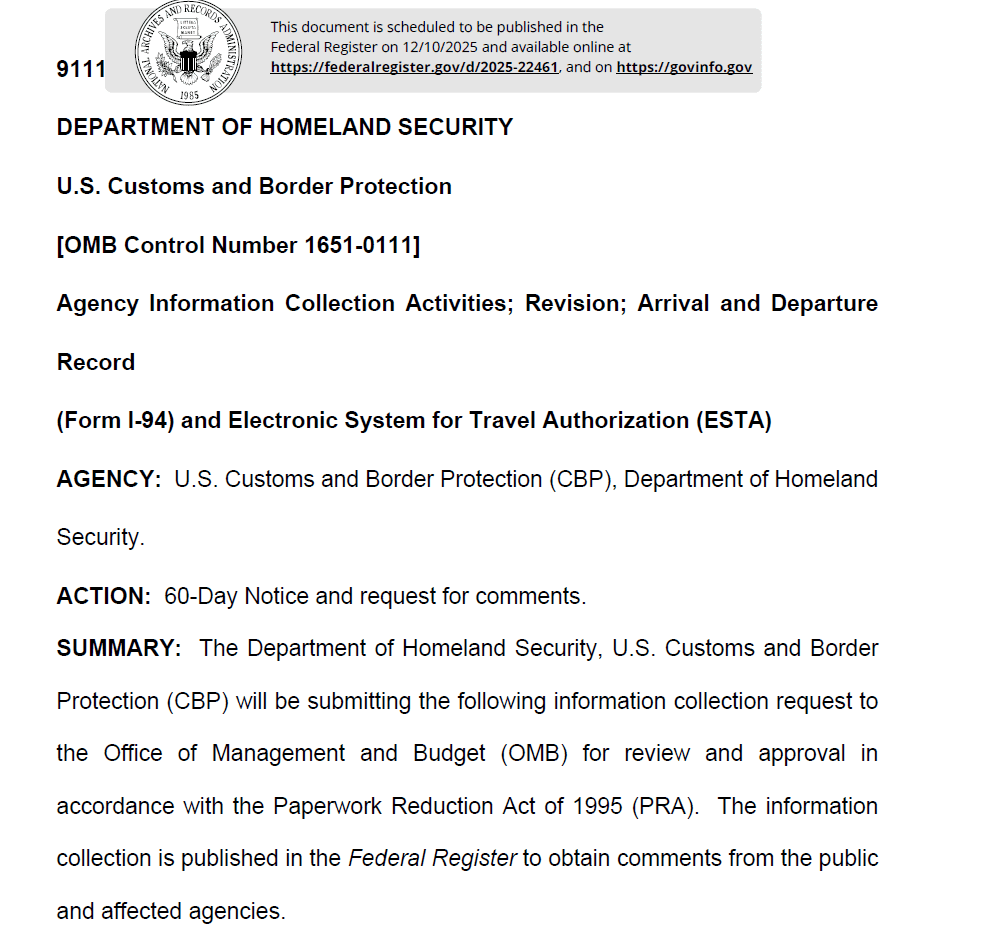
U.S. Customs and Border Protection (CBP) has announced significant changes to the Electronic System for Travel Authorization (ESTA), expanding the personal information required from millions of foreign visitors seeking visa-free entry into the United States. This new proposal, revealed in a Federal Register notice on December 10, includes mandatory social media disclosures and a shift to a mobile-only application process.
Under the new rules, travelers from 42 countries participating in the Visa Waiver Program will be required to provide their social media accounts used over the past five years. This marks a notable shift from the previous system, where such disclosures were optional and could not negatively impact an applicant’s chances of approval. The proposal stems from Executive Order 14161, issued in January 2025, which aims to enhance security measures and vetting standards for individuals seeking entry into the U.S. The order is titled “Protecting the United States From Foreign Terrorists and Other National Security and Public Safety Threats.”
CBP defends these revisions as crucial for identity verification and national security screening. They argue that this additional information will assist in determining whether granting entry poses a security threat to the U.S. In addition to the social media requirement, CBP plans to incorporate several “high value data fields” into ESTA applications. These fields may include:
- Telephone numbers used in the past five years
- Email addresses used in the past ten years
- IP addresses and metadata from electronically submitted photos
- Family member names, including parents, spouse, siblings, and children
- Family members’ telephone numbers used in the past five years
- Family members’ dates of birth, places of birth, and residences
- Business telephone numbers used in the past five years
- Business email addresses used in the past ten years
- Biometric information, including face, fingerprint, DNA, and iris scans
Among these additions, the inclusion of DNA as a data element has raised particular alarm among privacy advocates and immigration experts, who express concerns regarding the implications for individual privacy and data security.
An additional shift involves decommissioning the ESTA website for new applications, transitioning entirely to the ESTA Mobile application. While the website will still function as a resource for checking application statuses, it will no longer accept new submissions. The mobile application is designed to enhance security through features such as liveness detection, facial recognition, and Near Field Communication-based passport scanning. These technologies validate the authenticity of electronic chips in passports and can automatically deny applications that fail to meet security standards.
In a related initiative, CBP has introduced the Voluntary Self-Reported Exit (VSRE) pilot program through the CBP Home mobile application. This program allows foreign nationals subject to I-94 requirements to voluntarily provide evidence of their departure from the United States. Launched earlier in 2025, participation in the program is optional, although submitting a facial image is mandatory for travelers who wish to take part. CBP will employ geolocation services to confirm that the traveler is outside the U.S. and will utilize liveness detection software to ensure that the submitted selfie is a genuine, live photo.
Confirmed departures will be documented in the Arrival and Departure Information System maintained by CBP, providing travelers with proof of their departure, which can be particularly beneficial at land borders and for resolving alleged overstays or missing exit records.
The public now has 60 days from the December 10 Federal Register publication to submit comments on these proposed changes, with the deadline set for February 9, 2026. Feedback must reference OMB Control Number 1651-0111 and be sent to [email protected].
As these changes unfold, they highlight the ongoing tension between national security measures and the privacy rights of individuals. The increased scrutiny of travelers' personal information raises essential questions about the balance of security and civil liberties, particularly as the world becomes more interconnected and reliant on digital communication. American citizens and visitors alike will need to navigate this evolving landscape of travel regulations carefully.
Bitcoin ETFs Just Raked in $237M—Is a 2026 Boom Imminent? Grayscale’s Shocking Prediction Inside!

Florida Families Face $10,000 Health Care Dilemma—Will You Be Next?

Heisman Winner Fernando Mendoza: Will He Go No. 1 in a Shocking 2026 NFL Draft Upset?

Trump's Shocking White House Confession at 79: What He Revealed Will Leave You Speechless!

Muny’s 2026 Lineup: Are These Shocking New Hits About to Outshine Classics? Find Out Now!

7 Shocking Signs You're Close to a Genius – #3 Will Leave You Speechless!
You might also like: