
Are You Ready to Pay $100+ for Streaming? Shocking Price Hikes Revealed!

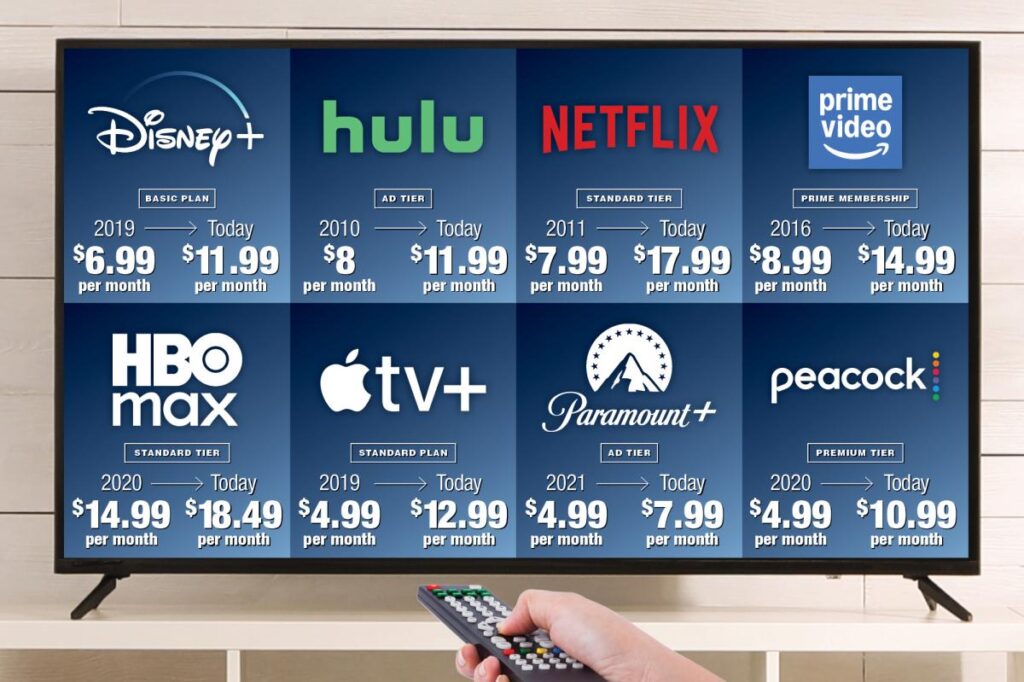
With streaming services like Netflix and Disney+ hiking their prices, the dream of "cutting the cord" and saving money may soon become a distant memory for many American households. According to Wallethub analyst Chip Lupo, the average American household now spends about $70 a month on streaming services, a cost that rivals traditional cable prices. “You’re probably paying just as much for all those combined as you were paying for cable,” Lupo observed in an interview with The Post.
As these platforms continue to raise their prices, experts warn that consumers may not even notice the incremental increases. “Most people tend not to notice these incremental increases, which is how it works,” Lupo explained. “At some point, you’ll be paying twice as much as you were originally. A lot of people directly pay their streaming services, so they don’t usually notice.”
Industry analysts are observing an "arms race" within the streaming sector. Dan Ives, Global Head of Tech Research at Wedbush Securities, noted, “Netflix has continued to raise prices as the churn from increases has been negligible with consumers given Netflix is the hearts and lungs of consumer content on a daily basis. Content is king, and Netflix is at the top of the mountain.”
While streaming platforms justify these price hikes citing “rising production costs,” it's clear that creating hit shows like “Severance,” “House of the Dragon,” and “Stranger Things” requires substantial investment. Additionally, the rising expenses of sports packages, such as the ESPN bundle affecting Disney’s prices, exacerbate this trend. Netflix, as a publicly traded company, faces added pressure to maintain profitability.
However, as viewers start to notice these price increases—especially when the quality of content doesn't align with rising costs—there is concern that a tipping point may be on the horizon. Lupo cautioned, “There will be a breaking point where people no longer invest in streaming services. Cable hit that bubble a few years ago. I don’t think it’s that far off [that people flee streaming]. It’s feeling like cable all over again.”
Recent Price Trends Across Major Streaming Services
Here’s a closer look at the pricing trajectory for several major streaming platforms:
Disney+ debuted in November 2019 at $6.99 per month with no ads. The first price increase occurred in 2022, bringing the ad-tier to $7.99 and the ad-free option to $10.99. Most recently, Disney+ raised its prices to $11.99 for the ad-supported tier and $18.99 for the premium ad-free plan. If bundled with Hulu, subscribers now pay $12.99 for the ad-supported version, while the most extensive plan including Disney+, Hulu, and ESPN without ads costs a staggering $44.99 per month.
Hulu, which first launched in 2007, has experienced similar increases. Its ad-supported version started at $8 and has now risen to $11.99. The ad-free premium tier stands at $18.99. The live TV option has surged from $39.99 in 2017 to $88.99 today.
HBO Max began at $9.99 for the ad-supported tier in 2020, now priced at $10.99. The standard tier, which started at $14.99, is now $18.49 after several price hikes over the years.
Amazon Prime Video launched in 2016 at $8.99 per month, now costing $14.99 as part of an Amazon Prime membership. Adding an ad-free option comes at an extra $2.
Netflix’s standard plan currently sits at $17.99, while its premium tier is $24.49. The service's pricing has gradually escalated from $7.99 in its early days to the current rates.
Apple TV+ started at just $4.99 per month upon its launch in 2019. It has since raised its prices to $12.99, with an Apple One bundle available for $19.95.
Peacock, which launched in July 2020, initially offered a free tier. After several changes, its premium service now costs $10.99 per month, while the ad-free version is $16.99.
Lastly, Paramount+, which first launched in 2014 as CBS All Access, rebranded in 2021. Its ad-supported tier now costs $5.99, while the premium version is $12.99.
As Julie Clark, SVP of Media and Entertainment at TransUnion, stated, “Price hikes are rarely welcomed, but often tolerated when the content and experience continue to deliver value.” However, a recent TransUnion survey found that 38% of consumers canceled a subscription in the past six months due to price increases.
As the landscape continues to evolve, viewers find themselves at a crossroads: will they continue to invest in these platforms, or will they seek alternatives as subscription costs rise and the quality of offerings becomes more scrutinized? The streaming revolution may be at risk of facing its own reckoning, much like the cable industry did before it.
S&P 500 Futures Plummet: Are AI Spending Fears Triggering a Market Crash? Find Out NOW!

Shocking College Football Awards 2025: Who's Leading the Race and Who's Facing Disgrace?

Is Your Child Safe? NJ Ranks Among the Top 5 Most Dangerous States for Kids with Cell Phones!

Why AXIS Real Estate's Shocking New Services Could Save You THOUSANDS on Your Next Home!
New Jersey's Phil Murphy Reveals SHOCKING Plans for His Legacy—What He Didn’t Want You to Know!

7 Shocking Habits Boomers Have in Restaurants That Leave Servers Gasping—#3 Will Blow Your Mind!
You might also like: