
Startup Showdown: How a German-Korean Alliance Is About to Change Tech Forever—Are You Ready for the Shock?

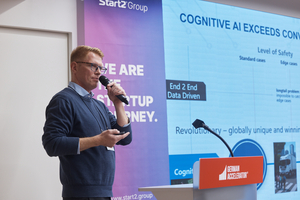
In a significant development for international startup collaboration, four of Germany's most promising early-stage startups showcased their innovations during the German-Korean Startup Night in Seoul. This event, held on December 11, 2025, was a part of the German Innovation Days and was hosted by the Embassy of the Federal Republic of Germany in Seoul, in partnership with Herald Media Group and Start2 Group, with support from the Korean-German Chamber of Commerce and Industry.
Jorn Beissert, the deputy ambassador of the German Embassy in Seoul, opened the event by emphasizing Germany's commitment to global innovation. “Germany is not only open for innovation, we actively invest in it,” he stated, referencing the EU Startup and Scale-up Strategy alongside the new Germany Fund and Future Fund, aimed at removing regulatory hurdles for startups. In 2024 alone, Germany attracted €7.4 billion (approximately $8.6 billion) in venture capital, underscoring its robust entrepreneurial ecosystem, which now includes over 21,000 active startups. “When we invest together in startups, we are investing in our future together,” Beissert added, highlighting the increasing significance of Korea in Germany's innovation strategy.
Felix Kalkowsky, vice president of the Korean-German Chamber of Commerce and Industry (KGCCI), noted the burgeoning momentum in bilateral startup relations. Earlier in 2025, more than 20 German startups visited Korea to explore market opportunities, while Korean companies have gained attention at major expos, including IFA Berlin. Looking ahead, Kalkowsky mentioned the Asia-Pacific Conference set for October 2026 in Korea, which will be the largest German business summit in the region and will feature a Korean startup in a regional pitch competition.
On the Korean side, Kim Ye-ji, a principal at Samyang Chemical Group, expressed her company’s ambition for global expansion, stating, “We will continue knocking on global doors, including Europe.” She highlighted their respect for Germany's startup ecosystem and robust Small and Medium-sized Enterprises (SME) centers.
The event spotlighted four standout German startups that are poised to make significant contributions across various tech sectors, including biotech, artificial intelligence, photonics, and autonomous mobility. Each company expressed a keen interest in developing research and commercialization partnerships with Korean firms.
Eversyn, a spinoff from the Max Planck Institute, introduced its cell-free manufacturing platform designed for advanced sugar and enzyme synthesis. The company is actively seeking partnerships with major Korean corporations such as Samsung Biologics, Celltrion, CJ CheilJedang, Amorepacific, and Lotte Biologics.
CogniBIT, based in Munich, showcased its AI-driven cognitive modeling technology aimed at enhancing autonomous driving capabilities. The company plans to initiate pilot programs in Korea with local simulation platform providers and Tier 1 auto suppliers.
Midel Photonics from Bonn presented its innovative beam-shaping laser technology, which targets the semiconductor, display, and battery sectors, expressing interest in collaborating with Samsung SDI, LG Energy Solution, and other local equipment firms.
Lastly, Stella AI, headquartered in Berlin, unveiled its real-time product recommendation engine tailored for beauty and retail brands. The company is already in discussions with Amorepacific, LG Household & Health Care, and Olive Young to customize solutions for the Korean consumer market.
More than just a networking event, the German-Korean Startup Night signaled a shift from traditional diplomatic engagement to a proactive, cross-border technological collaboration. This partnership underscores a shared vision between Seoul and Berlin, as both cities continue to coalesce their strengths in the global innovation landscape.
Is the New WHO Treaty a Hidden Weapon? 5 Shocking Secrets You MUST Know Before It's Too Late!

You Won't Believe Which Teams Are Set to Clash in the 2025-26 Bowl Games—Get the Shocking Schedule Inside!

Wegmans Snack Recall: Is Your Favorite Crunchy Treat Hiding a Dangerous Secret?
You Won't Believe What Lessenberry Discovered in the Election Vote Count – Shocking Integrity Issues EXPOSED!

Is Your Smartphone About to Cost You $500 Extra? The Shocking Tax That Could Leave You Behind!

Governor’s Jaw-Dropping Emergency Declaration: What Happens Next Will Shock You!
You might also like: