
Nvidia's CEO Drops a Mind-Blowing Truth at Cambridge: Is Your Strategy Costing You Millions?

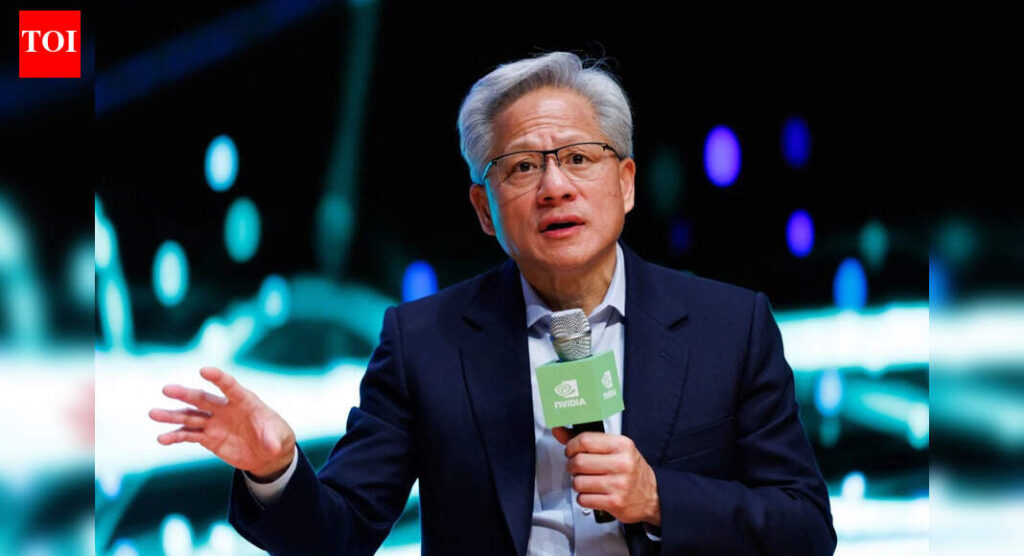
Nvidia CEO Jensen Huang shared valuable insights on leadership and innovation during a recent talk at the Cambridge Union Debating Center. He emphasized that true strategy is not only about what to pursue but also about understanding what to leave behind. Reflecting on the early days of Nvidia, Huang noted that he envisioned the company’s evolution long before it came to fruition, illustrating the power of conviction in navigating uncertainty. “Manifest your belief as deeply as you can,” he urged students, explaining how unwavering commitment helped him steer the company through challenging times while anchored by the principle, “We believe what we believe.”
Huang also underscored the importance of adaptability in entrepreneurship, admitting, “I am constantly learning through failure.” He encouraged students to remain flexible while striving for ambitious goals. Highlighting Nvidia’s groundbreaking contributions, he cited the invention of the GPU and CUDA accelerated computing, both of which are pivotal in igniting the AI industrial revolution.
Discussing the challenges of leadership, Huang described being a CEO as “a lifetime of sacrifice” aimed at creating opportunities for others. He noted that effective strategy involves making tough choices about what not to pursue. “It’s about sacrifice, determination, and the pain and suffering that go along with overcoming obstacles,” Huang said, dismissing the allure of fame and emphasizing the importance of inspiring others through example.
In recognition of his contributions to science and technology, Huang was honored with the prestigious Hawking Fellowship Award, named after the late physicist Stephen Hawking. This accolade reflects Huang’s impact on the tech industry and his ongoing commitment to advancing innovation.
Navigating the AI Bubble
In a related discussion, Huang addressed concerns about the potential for an AI bubble reminiscent of the dot-com crash. Speaking at the 2025 US-Saudi Investment Forum, he reframed the conversation around market valuations, suggesting that fears of a bubble may overshadow the significant technological shift underway in global computing.
Huang pointed out a critical constraint in computer science: the end of Moore’s Law, which has historically seen transistor density double every two years. He noted that this trend has plateaued, creating a disconnect between the soaring demand for computing power and the capacity of traditional chips to meet that demand. “This isn’t speculation—it’s a fundamental challenge driving the need for new computing paradigms,” Huang asserted, explaining why companies are committing substantial capital to AI infrastructure out of necessity rather than mere experimentation.
As businesses push the boundaries of technology, Huang’s insights serve as a reminder of the complexities involved in pioneering innovation. By embodying the principles of adaptability and strategic sacrifice, leaders like Huang are not only reshaping their companies but also influencing the broader tech landscape. Understanding these dynamics is crucial for investors, entrepreneurs, and anyone engaged in the rapidly evolving realm of artificial intelligence and computing.
You Won't Believe What Just Got Banned for Legal Reasons – The Shocking Truth Revealed!
Why Ohio State vs. Indiana 2025 Could Change the Future of College Football Forever—Don't Miss This Epic Showdown!

You Won’t Believe the Jaw-Dropping Prices of Piscataway’s 10 Most Expensive Homes Sold Last Week!

Stanford's Shocking Comeback: How They Stunned Their Rivals to Reach the College Cup Final!

You Won’t Believe What’s Next for Anywhere Real Estate After Compass Shocking $500M Acquisition!

Shocking Reasons 15 Countries Are Banning Social Media for Kids—What They Know That You Don't!
You might also like: