Ruben Amorim's Shocking Move: Why He’s Ditching Social Media to Save His Career!

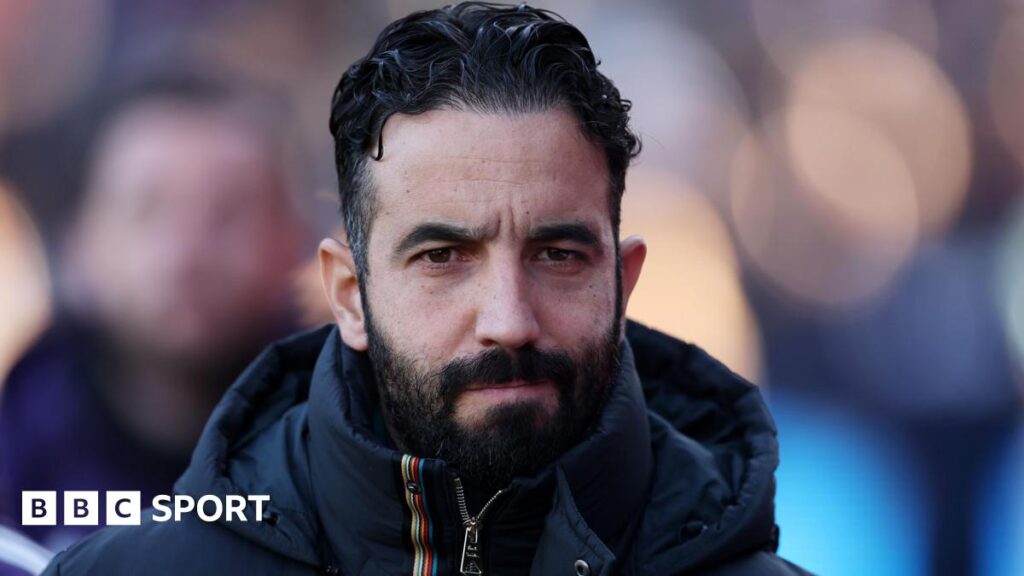
In a candid revelation about the current state of sports media and its impact on mental health, coaches and players alike are recognizing the need to protect themselves from the incessant negativity that often permeates discussions, particularly on social media platforms like X, formerly known as Twitter. One prominent voice in this conversation is coach Rúben Amorim, who openly admits to steering clear of media coverage related to his team, Manchester United. "I don't read it; I protect myself. I don't watch TV when they are talking about Manchester United, not because I don't agree—most of the times I do—but it's a way of me being healthy," he stated.
This self-imposed media blackout underscores a troubling trend identified in a recent investigation by the BBC, conducted in partnership with the data science company Signify. The research analyzed social media activity during ten Premier League matches and six Women's Super League (WSL) matches on November 8 and 9, revealing a shocking prevalence of abusive content. The investigation found messages filled with racist slurs, homophobia, and threats of violence, with coaches being targeted more frequently than players.
In fact, a staggering 82% of all abusive posts were generated on X. The data suggests that the climate of hostility is not only persistent but also increasing; 61% of the abusive messages originated from accounts in the UK and the Republic of Ireland. This alarming rise in online abuse has far-reaching consequences not only for the individuals targeted but also for the sport as a whole. "I lose money from sponsors," Amorim expressed, emphasizing the cost of this toxicity. He continued, "On Instagram, I could earn a lot of money, but for my protection of my family and living a normal life, it is not worth some more dollars or pounds." This sentiment echoes the experiences of many in the sport who feel that the financial benefits of social media engagement do not outweigh the risks involved.
Amorim’s perspective sheds light on a broader issue within sports culture today. The emotional toll of constant scrutiny and criticism is becoming increasingly evident. "Nobody can be tougher than me when we lose and when we don't play well," he said, acknowledging the pressures that come with coaching. Yet he also noted, "Nowadays, it's really normal to have that abuse, so it's the only way to survive in this world." This resignation to a toxic environment raises questions about the long-term sustainability of such a culture in sports.
The repercussions of this hostile online atmosphere become even more significant when examining the performance of teams like Manchester United. Last season, the club finished a disappointing 15th in the Premier League—a record low since their relegation in 1973-74. The team also faced defeat against Tottenham in the Europa League final, which meant missing out on European competition for the upcoming season. This current season has seen further struggles, including an early exit from the Carabao Cup at the hands of League Two side Grimsby Town and a seventh-place standing in the Premier League as they prepare for a crucial home game against West Ham.
As the landscape of sports media continues to evolve, with social media platforms playing an increasingly dominant role, the need for protective measures and mental health awareness becomes paramount. Coaches and players, like Amorim, are navigating a world where online vitriol can impact not only their professional lives but also their personal well-being. In a time where sports figures are more accessible than ever through social media, it is crucial to consider the implications of unchecked online behavior on those who entertain and inspire millions.
$87 Million Coach Shockingly Snubs Penn State—Find Out Why This Could Change Everything!

Democrats' SHOCKING Tennessee Election Loss: What They’re Hiding About Their Next Move!

What Shocking Homes Can $500K Buy in Pike County This Week—You Won't Believe #3!

You Won't Believe What Konami Just Did With CAF – Shocking Partnership Revealed!

UK Police Shockingly Arrest Man Over Legal US Firearms Photo—What He Didn't Expect Will Leave You Speechless!

Last Chance! JCC Closes Total Fitness Complex Access in February – What You MUST Know Before It's Gone!
You might also like: