
Why Did Millions Flee Climate Disasters? The Shocking Truth Behind COP30's Biggest Failure!

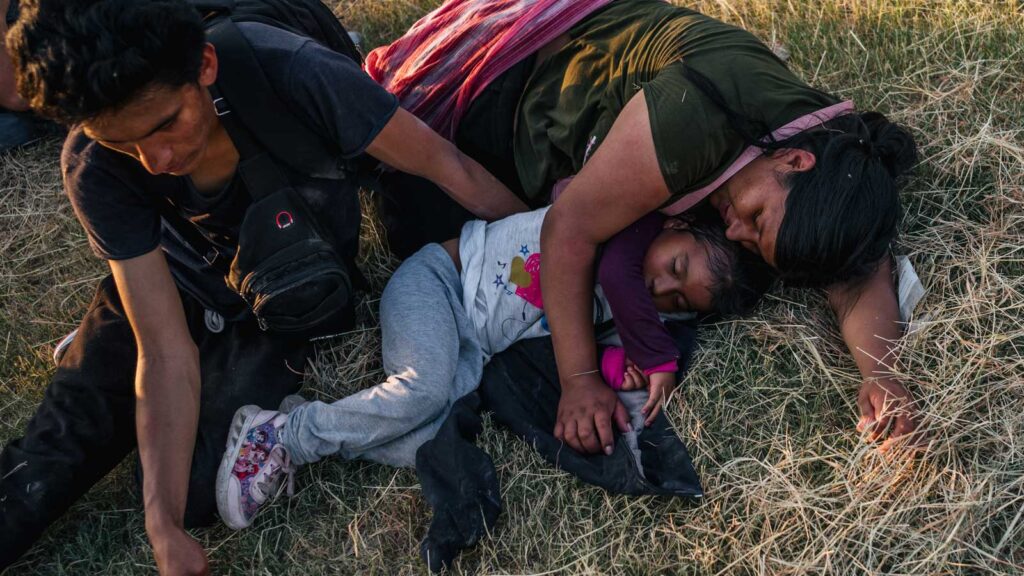
Vladimir Carrasco arrived in Belém, Brazil, three weeks ago with a clear mission: to amplify the voices of people displaced by extreme weather disasters. He was attending the annual international climate treaty negotiations known as COP30 for the first time. As climate justice director for L.A.’s Coalition for Humane Immigrant Rights (CHIRLA), Carrasco has witnessed firsthand how worsening climate change forces families abroad to flee to the United States. After the conference, he returned to L.A. disappointed. “There was minimal conversation about immigrants,” he said.
Immigrants, refugees, and climate-displaced individuals are among the groups most vulnerable to climate change, which is largely driven by pollution from the fossil fuel industry. According to a recent U.N. report, over the past decade, weather disasters have forced approximately 250 million people to search for new homes within their countries—an alarming rate of 70,000 people daily. These figures do not account for those who cross international borders.
Central American farmers, for instance, are being pushed into cities after prolonged droughts wipe out their crops. Families from the archipelago of Tuvalu in the Pacific are already relocating to neighboring Australia, as scientists predict that the islands will be mostly underwater by 2100 due to melting glaciers.
Despite the growing influence of climate change on migration patterns, the issue has largely been overlooked in U.N. climate talks. Negotiators have been hesitant to discuss migrants, perhaps influenced by rising xenophobia, suggests Jocelyn Perry, a senior advocate and program manager of the Refugees International Climate Displacement Program. Instead, world leaders have focused discussions on reducing emissions and adapting to a changing planet.
Under President Donald Trump, the United States has become a global leader in anti-immigrant sentiment, pouring billions into expanding Immigration and Customs Enforcement (ICE). However, the U.S. is not alone in this trend. The U.K. has shifted its asylum policies to expedite deportations and make refugee status temporary, while South Africa constructed a wall along its border with Mozambique last year, mirroring actions taken in the American Southwest.
“The anti-migrant and anti-refugee sentiment has always existed,” Perry remarked, noting that this ideology has been growing globally. “It’s hard to find champions for migrant and refugee inclusion in climate policy.” Yet advocates like Carrasco and Perry attended COP30 to ensure that governments do not forget about this vulnerable group. They walked away with some wins, as key texts included explicit mentions of migrants and displacement—no small feat in the often contentious negotiation environment.
“Negotiators at COP30 prevented wholesale backsliding in respect to migrants’ rights and climate change,” Perry stated. “However, little progress was made in recognizing other vulnerable groups, like internally displaced people and refugees, who often face additional challenges in adapting to and responding to climate change.”
Recognizing Climate Mobility
The U.N. framework invites participation from various key groups, including Indigenous peoples, youth, farmers, and women, but fails to include refugees, climate migrants, or climate-displaced individuals. The term “climate mobility” is increasingly being used by advocates to encompass the different ways global heating impacts human movement. This concept gained traction in 2015 during discussions leading up to COP21 in Paris, where negotiators debated the establishment of a climate change displacement coordination facility to provide emergency relief, assist with planned relocation, and coordinate compensation for those needing to relocate.
“I was really excited,” said Andrea C. Simonelli, a coordinator with the Environment and Climate Mobilities Network. “The facility seemed like a reasonable solution.” Unfortunately, just thirteen days later, negotiators removed that line from the text, and the proposal never made it to Paris.
While leaders signed the landmark Paris Agreement, which committed nations to cut greenhouse gas emissions, the issue of climate-displaced individuals remains inadequately addressed. The U.N. Framework Convention on Climate Change (UNFCCC) established the Task Force on Displacement in 2015, providing recommendations to the committee leading the Warsaw International Mechanism for Loss and Damage (WIM), which offers technical expertise to inform the U.N.’s climate reparations fund—established in 2022 to distribute funds from wealthier nations to lower-income countries bearing the brunt of climate change.
Despite the setbacks, advocates remain ambitious in their objectives. “A facility, or something like it, would not only address the needs of migrants and displaced people but also help stem the migration flows used to justify restrictionist border policies globally,” Simonelli argued.
Perry, who sits on the Task Force on Displacement, successfully lobbied for COP documents to explicitly mention displaced communities and migrants. She is pushing for community groups, not just governments, to have access to the climate reparations fund. “These inclusions recognize that people living in displacement often face significant losses and damages from climate change, and they must be included in solutions,” she said.
As nations consider adaptation—steps to keep their populations safe from climate disasters—it’s crucial to understand the factors affecting migrants’ abilities to adapt. Perry noted her satisfaction with COP30 negotiators including migrants in a key text, the Global Goal on Adaptation, which encourages nations to study this group. “If we’re measuring various adaptation indicators, knowing whether someone living in displacement is adapting as successfully as someone who’s not displaced would be really helpful in shaping equitable policy,” she added.
Carrasco attended COP30 as part of a delegation with the National Partnership for New Americans, an alliance of U.S. immigrant rights groups. Although they initially planned to bring climate-displaced individuals to the conference, many were either undocumented or still securing legal status.
As long as climate mobility remains a peripheral issue in climate negotiations, vulnerable populations will be at greater risk. Advocates believe that viewing migration as a solution, rather than a problem, could change this narrative. “When we have a society that is more welcoming and inclusive, we build a more resilient community,” said Gabriela Roque, climate and migration program manager at the National Partnership for New Americans.
The organization is training refugees, climate migrants, and climate-displaced people to become leaders who can tell their own stories to policymakers by educating them about the science behind climate change and the environmental shifts occurring in their home countries. “We’re trying to rethink how people view migration,” Roque explained. “Climate mobility isn’t just about people on the move; it’s also about protecting a person’s right to stay.”
“People do not want to leave the places they call home,” said Kamal Amakrane, managing director for the Global Centre for Climate Mobility. Adaptation often requires local solutions, many of which are far less costly than the $1.3 trillion that nations are currently negotiating over.
“No one talks about the community that needs $50,000 because they lost boats in recent flooding,” Amakrane noted, highlighting the overlooked impacts of climate change. “No one discusses the housing destroyed by landslides and the need to rebuild.”
Local governments must analyze community-specific displacement patterns to be prepared for the diverse impacts of extreme weather. Laura Serena Mosquera, a Colombian lawyer and climate mobility fellow, is working on a project to help a Colombian city understand its unique displacement patterns, the consequences of inaction, and the importance of keeping people safe, regardless of where they settle.
“This is not an issue you can just respond to; you have to prevent,” she insisted. Whether governments are discussing prevention or disaster recovery, funding is essential. They also need polluting industries to leave fossil fuels in the ground to avert a climate scenario that could lead to failure.
“Despite great suffering, community members choose to support each other and recover together,” Carrasco emphasized. “From California farmworkers to Indigenous leaders in Brazil, people are urgently calling for climate intervention and real solutions. While COP30 delegates negotiate half-hearted agreements, climate justice is not optional for communities enduring disaster.”
You Won't Believe How Tim Blake Nelson's 'Superhero' Slams the Marvel Empire—Is Hollywood Finally Waking Up?
Is Your Browser Putting You at Risk? Discover the Shocking Details—You Won't Believe What Happens Next!

Ex-G League Stars Are Now NCAA-Eligible—Find Out Why Coaches Are OUTRAGED!
Your Browser is Now a Danger Zone: 5 Shocking Reasons You Must Upgrade TODAY!
This One Browser Mistake Could Cost You $10,000—Is Yours Unsupported? Find Out NOW!

Why This Year’s College Football Playoff Will Change the Game Forever—Don’t Miss the Shocking Upsets!
You might also like: