
Why 20 CSB and SJU Students Are at the UN Climate Change Conference—And What They Could Uncover!

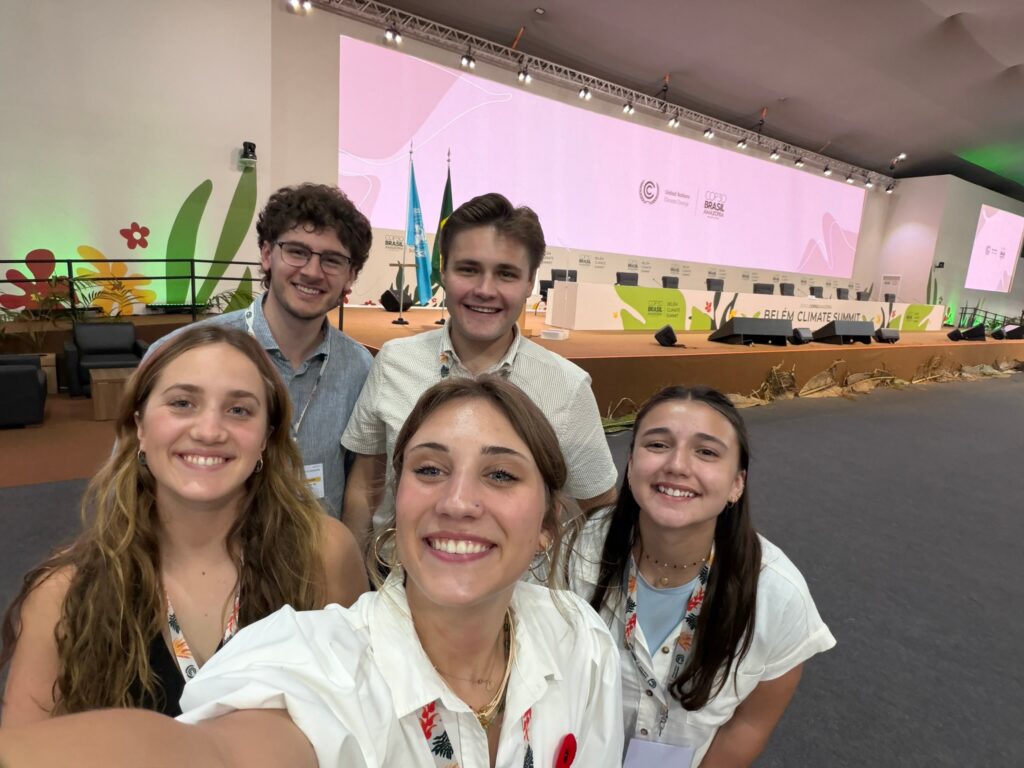
As the world grapples with climate change, a group of ten students from the College of Saint Benedict (CSB) and Saint John's University (SJU) recently gained invaluable firsthand experience at the United Nations Climate Change Conference (UNFCCC COP 30) held from November 10-21 in Belém, Brazil. This annual summit convenes leaders from around the globe to discuss strategies for combating the pressing environmental challenges facing our planet.
The involvement of CSB and SJU students at the conference dates back to 2009, with a significant milestone in 2015 when the schools were granted formal observer status. This status has allowed students to participate in the conference annually, except during the pandemic years of 2020 and 2021. This year, the students attended in two groups, with five participating in the first week and another five in the second week.
“It’s an opportunity you don’t find at too many other places,” said Troy Knight, an associate professor of environmental studies at CSB and SJU. He highlighted the rarity of undergraduate representation at such high-profile events, typically dominated by graduate students. To prepare for this experience, students engaged in extensive research projects that required them to conduct interviews with experts on their chosen topics, enriching their understanding and enhancing their skills.
For many students, the experience was transformative. Ella Chiroux, a junior at CSB, reflected on the confidence she gained while interviewing an expert on wildfires, stating, “During my first interview, I was talking with an expert on wildfires. And after my first question, they said they were really impressed. That made me feel a lot more comfortable about my own ability to have a conversation with people on that level.”
Jonah Seifert, a senior at SJU and environmental studies major, initially perceived the opportunity to attend COP as a routine event but soon realized its significance. “I signed up and applied to go, but once I was there, and I was interacting with all these researchers and delegates, I saw how amazed they were to see undergraduates. That’s when I realized the kind of access we have isn’t as normal as I thought it was,” he said.
CSB sophomore Abby Schunk, who is double majoring in biology and environmental studies, echoed this sentiment, noting, “Here we are at a small school in Central Minnesota, but we’re interacting with experts and leaders from around the world in a way that couldn’t happen anyplace else. It really does help broaden your perspective.”
The experience also offered students a unique perspective on global policy-making. Gabe Evenocheck, a junior at SJU, expressed his appreciation for witnessing climate policy being shaped in real time. “Being in Brazil and experiencing a completely different culture while watching global climate policy get made in real time – that alone was worth the trip,” he stated. He emphasized the value of attending negotiation sessions, which allowed him to see the UNFCCC process in action, stating, “It’s one thing to read about the UNFCCC process in a textbook, but watching it actually happen gives you a much better sense of how climate policy actually gets done.”
For students like Kobe Forbes, a senior from The Bahamas, the discussions around climate change hit particularly close to home. “The whole reason I became a physics major goes back to when I was first introduced to the effects of climate change after Hurricane Dorian caused destruction across our island,” he shared. Forbes reflected on the devastating impact of rising sea levels and the increasing severity of storms, highlighting the urgency of finding technological solutions to reduce emissions. “That’s why I was so glad to have the chance to be at a conference like this where those issues are being worked on by people from all over the world.”
The participation of CSB and SJU students at the UNFCCC COP 30 illustrates not just their commitment to understanding and addressing climate change, but also the unique opportunities afforded to them as undergraduates. With the experience and insights gained at the conference, these students are better equipped to contribute to the global dialogue on climate solutions, underscoring the importance of youth engagement in the climate movement.
What Happened After Influencer Stefanie P.'s Shocking Death? The Social Media Fallout Will Leave You Speechless!

You Won’t Believe These Cyber Monday Fitness Deals: 70% Off Smart Watches and Exclusive Gym Equipment!

Vanguard's Shocking Move: Bitcoin ETF Trading Starts Tomorrow—Will You Miss Out on Massive Gains?

You Won’t Believe How This Women’s Soccer Season Shattered Records – Find Out What Happens Next!

Ohio St. vs. Indiana: Which Unconventional Recruiting Strategy Will Shock the Big Ten? Find Out Now!

Shocking Study Reveals Kids Under 12 With Smartphones Face 80% Higher Health Risks—Find Out Why!
You might also like: