
Legendary Playwright Tom Stoppard, 88, Leaves Behind Shocking Secrets—You Won’t Believe What’s Next!

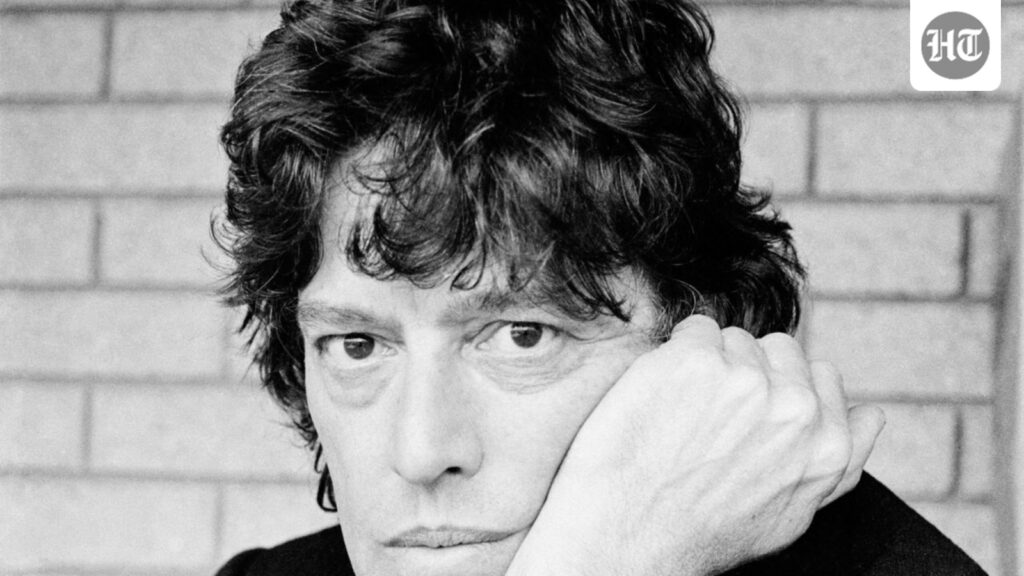
Sir Tom Stoppard, born Tomáš Sträussler on July 3, 1937, in Zlín, Czechoslovakia, emerged as one of the most celebrated playwrights of our time, known for his extraordinary ability to blend intellectual profundity with popular theatrical entertainment. His journey from a war refugee to a literary giant is a remarkable tale of resilience and creativity.
Stoppard's early life was marked by upheaval. When the Nazis invaded Czechoslovakia in 1939, his Jewish family fled to Singapore. However, even there, Stoppard faced the perils of war; during the Japanese advance in 1942, he recalls hiding under a table while bombs fell nearby. His father, a doctor serving in the British Army, died when his ship was bombed, leaving Stoppard and his family to navigate the chaos of war. His mother eventually remarried a British Army Major, adopting the surname Stoppard and relocating to England in 1946, where she concealed their Jewish heritage from her sons.
Stoppard's foray into journalism began at age 17, where he worked for the Western Daily Press and the Bristol Evening World. During this time, he developed a passion for theater, forming a friendship with the young actor Peter O’Toole. This connection led him to London, where he pursued playwriting full-time. His breakout work, “Rosencrantz and Guildenstern Are Dead,” premiered at the Edinburgh Festival Fringe in 1966, and quickly transferred to the National Theatre in London in 1967 before heading to Broadway in 1968. This clever reimagining of two minor characters from Shakespeare’s “Hamlet” not only earned him his first Tony Award but also introduced audiences to his signature blend of wordplay and existential inquiry.
The term “Stoppardian” was officially recognized in the Oxford English Dictionary in 1978, encapsulating his distinctive style marked by “elegant wit while addressing philosophical concerns.” His works often explore complex themes through entertaining narratives, a hallmark that has garnered him multiple accolades, including five Tony Awards for Best Play and two Laurence Olivier Awards for Best New Play.
Stoppard's artistic evolution continued with plays like “The Real Thing” (1982), which marked a shift towards more personal storytelling. Although he maintained that it wasn't autobiographical, the narrative about a playwright's affair mirrored his own real-life relationship with actress Felicity Kendal. His exploration of personal themes continued with “Arcadia” in 1993, a play lauded for its intricate weaving of science, history, and literary intrigue.
Simultaneously, Stoppard carved out a successful career in Hollywood, co-writing the cult classic “Brazil” (1985), adapting “Empire of the Sun” for director Steven Spielberg, and working as an uncredited "script doctor" on numerous blockbuster films, including “Indiana Jones and the Last Crusade” and “Schindler’s List”. His involvement with “Shakespeare in Love” led to an Academy Award for Best Screenplay, despite tumultuous behind-the-scenes negotiations, including a battle over its ending with producer Harvey Weinstein.
Stoppard’s personal life, while often kept under wraps, saw significant revelations later in life. In 1993, a cousin disclosed his Jewish heritage, leading him to write “Leopoldstadt,” a poignant exploration of a Jewish family in Vienna amidst the rise of Nazism. The play premiered in London’s West End in 2020 and won him his fifth Tony Award for Best Play, reaffirming his status as a titan of contemporary theater.
Despite his success, Stoppard was no stranger to criticism. He faced allegations of elitism when he suggested that he often had to “dumb down” his work for audiences. Yet, his contributions to theater remain unparalleled. Queen Elizabeth II knighted Stoppard in 1997 and awarded him the Order of Merit in 2000, cementing his legacy in the arts.
As of 2022, Stoppard expressed his desire to continue writing, demonstrating his undiminished passion for the craft. His impact on theater is immeasurable; actor Antony Sher once remarked that “the only modern playwright to present the same kind of challenges as Shakespeare is Stoppard.” Stoppard is survived by his wife, Sabrina Guinness, and four sons, leaving behind a rich legacy that continues to inspire new generations of playwrights and theatergoers alike.
White House Unveils Shocking Tracker: 10 Major Media Outlets Exposed for 'Offenses' You Won't Believe!

Is This Durham Startup Reviving North Carolina's Textile Industry or Just a Big Scam?

This 2026 Planner Will Transform Your Life—Busy Moms Are Raving! Are You Missing Out?

New Startups Unleashed: Will Pittsburgh Become the Next Silicon Valley? Shocking Stats Inside!

Texas Ranks Among the Worst for Health Care—Is Your Life at Risk? Shocking Stats Inside!

Indian-Origin xAI Leader’s Wild 36-Hour Shift Claim Shocks Elon Musk Fans—What’s Really Going On?
You might also like: