
You Won't Believe What This Intense Workout Did for People With Muscle Disease! 7 Life-Changing Results Revealed!

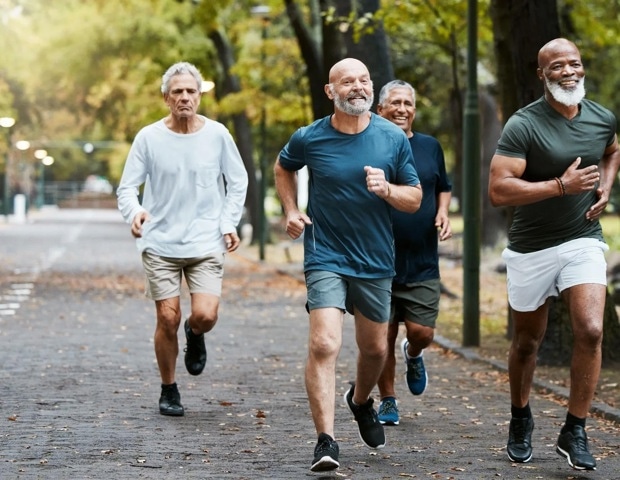
High-intensity interval training (HIIT) is proving to be a game-changer for individuals diagnosed with idiopathic inflammatory myopathies (IIM), a group of rare autoimmune diseases that lead to muscle weakness and fatigue. A new study conducted by researchers at Karolinska Institutet and published in eBioMedicine reveals that HIIT significantly enhances both fitness and muscle endurance compared to traditional home exercise programs.
Typically, patients with IIM undergo a combination of medication and light to moderate home exercise. However, the gains in aerobic fitness from these conventional methods have been limited. The latest research sought to determine whether HIIT could offer a more effective solution for individuals recently diagnosed with these debilitating conditions.
The study involved 23 patients from Karolinska University Hospital in Stockholm and Uppsala University Hospital, Sweden, who had recently developed IIM. Participants were randomly assigned to two groups: one engaged in HIIT on a stationary bike three times per week for a duration of twelve weeks, while the other followed a moderate-intensity home exercise program. Researchers assessed aerobic capacity, muscle endurance, and markers of disease activity before and after the training period.
Remarkable Results with HIIT
The findings were compelling. The HIIT group saw an impressive average improvement in aerobic capacity of 16 percent, in stark contrast to just 1.8 percent improvement in the home exercise group. Furthermore, muscle endurance increased significantly more among those participating in HIIT. Analysis of muscle samples indicated signs of improved mitochondrial function—a critical factor for energy production in cells. Notably, disease activity remained stable in both groups, suggesting that engaging in intensive training is safe; there were no indications that exercising exacerbated inflammation or muscle damage.
“Common symptoms of IIM include muscle weakness and reduced endurance. Our study shows that high-intensity interval training is safe and markedly improves muscle function and aerobic capacity. Better fitness can lower the risk of cardiovascular disease, while patients gain more stamina and independence. This could become an important complement to medication in improving physical capacity and quality of life,”
Kristofer Andreasson, researcher at the Department of Medicine, Solna, Karolinska Institutet
Although the results are promising, the researchers stress that the study is small and that further investigation is necessary to validate these findings and assess long-term effects of HIIT on patients with IIM.
This research was primarily funded by the Swedish Research Council, Region Stockholm (ALF), the Swedish Rheumatism Association, King Gustaf V's 80-Year Fund, and the Swedish Heart Lung Foundation.
The implications of this study resonate well beyond the confines of the research labs. For individuals living with IIM, the opportunity to improve endurance and aerobic capacity through HIIT could translate into enhanced quality of life and greater independence in daily activities. Moreover, integrating HIIT into their rehabilitation could potentially reduce the risk of associated cardiovascular diseases, which are often a concern for patients with chronic conditions.
As this area of study continues to evolve, healthcare providers may soon have a more robust toolkit for supporting individuals battling inflammatory muscle diseases. The promising results of HIIT could pave the way for more comprehensive treatment plans that prioritize both physical health and overall well-being.
For more details, refer to the journal article by Andreasson et al. (2025) titled “High-intensity interval training outperforms moderate exercise to improve aerobic capacity in patients with recent-onset idiopathic inflammatory myopathies: a multicentre randomised controlled trial” published in eBioMedicine.
You Won't Believe What Happens When You Try Indoor Climbing—Your Fitness Routine Will Never Be the Same!

Are We Losing the Climate Change Battle? Discover the Shocking Truth Behind the Numbers!
Your Browser is Blocking This Shocking Hack: 7 Critical Upgrades You Can’t Afford to Miss!

How One Startup Is Revolutionizing Green Building—And Why You Could Miss Out on Huge Savings!

You Won't Believe the Jaw-Dropping Discounts on 2025's Hottest TVs: Samsung, LG, TCL & Hisense at Unprecedented Prices!

Are You Ignoring These 5 Bitcoin Signals? Discover How They Could Cost You Thousands!
You might also like: