
Vaccination Rates Soar: Are We Ignoring a Hidden Measles Crisis? You Won't Believe the Numbers!

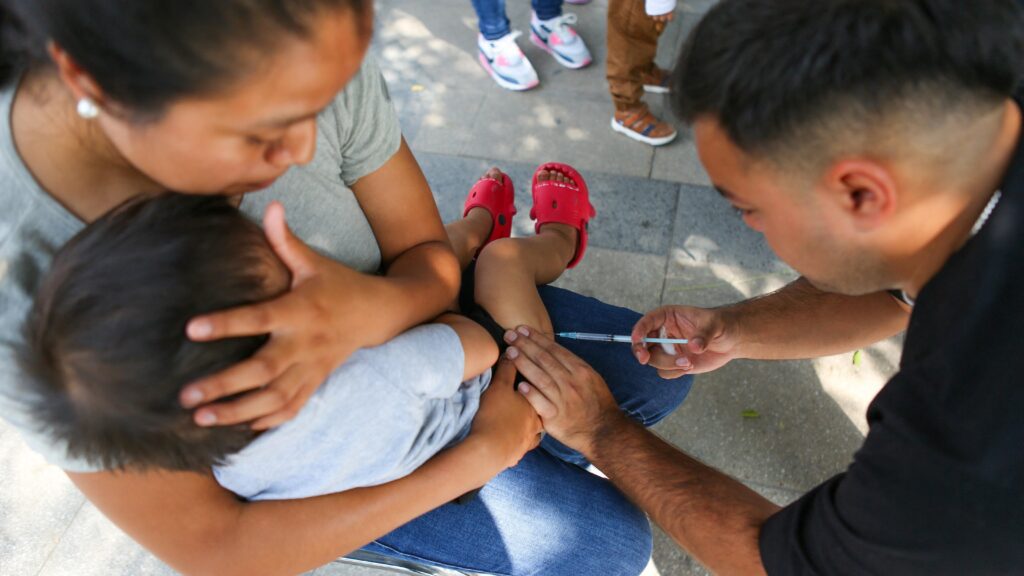
A new report from the World Health Organization (WHO) indicates that the global vaccination rate for measles among children is nearing pre-pandemic levels following a decline during the COVID-19 pandemic. However, despite this positive development, the number of measles cases has surged, surpassing pre-COVID figures by 2024. This alarming trend raises critical questions about vaccination efforts and public health in countries like the United States and Canada, both of which are currently grappling with significant outbreaks.
The WHO's annual measles assessment, released in their Weekly Epidemiological Record, covers the previous year but does not address the ongoing outbreaks affecting North America. Notably, Canada has lost its measles-free status, and the U.S.'s own status of measles elimination is now in jeopardy. As Kate O’Brien, director of WHO’s Department of Immunization, Vaccines, and Biologicals, pointed out during a recent news conference, these outbreaks serve as an "early warning system" indicating that immunization programs are faltering.
O’Brien emphasized the impact of measles vaccination efforts globally, which have helped avert nearly 59 million deaths from 2000 to 2024. "The measles vaccine has saved more lives than any other childhood immunization in the past 50 years," she stated, noting that this achievement reflects what coordinated global action can accomplish.
However, the new report presents a mixed picture; while there were approximately 11 million measles cases reported in 2024—an 8% increase over 2019—the number of deaths attributed to the disease declined. The report estimates that there were about 95,000 deaths from measles last year, an 11% drop since 2019. This paradox, of rising cases but falling deaths, underscores the geographical disparities in measles outbreaks. The death rates remain highest in low-income countries, where vaccination efforts have seen less progress, while many cases are now occurring in middle-income countries.
As of 2024, an estimated 84% of the world's children had received at least one dose of the measles vaccine, but only 76% had received the recommended two doses. This highlights a significant gap in achieving the herd immunity necessary to prevent the spread of this highly contagious disease. O’Brien warns that when immunization gaps occur for measles, it is indicative of broader issues affecting vaccinations for various diseases. “Unfortunately, for much of the world, alarms are ringing. Measles cases are surging. Outbreaks are increasing, and too many children remain unprotected,” she said.
The resurgence of measles in both the U.S. and Canada serves as a timely reminder of the critical importance of vaccination. The WHO's findings are a stark call to action, urging countries to reinforce their immunization programs. The unprecedented global health challenges posed by the COVID-19 pandemic have highlighted vulnerabilities in public health systems, and this rising trend in measles cases is a troubling sign that these challenges are far from over.
In conclusion, while global vaccination rates for measles are inching back to where they once were, the increase in cases signals a pressing need for renewed efforts in immunization. The data from the WHO demonstrates that the fight against measles is not merely about one disease; it reveals the overall health of immunization programs worldwide. Ensuring robust vaccination coverage is essential not only for controlling measles but also for safeguarding public health from a variety of vaccine-preventable diseases.
You Won't Believe These Jaw-Dropping Amazon Black Friday Deals—Smartphones Up to 75% Off! Act Fast!

Morocco’s Shocking $269M Investment Fund: Will Your Startup Miss Out on This Game-Changer?

Is Your Job at Risk? Discover the Shocking Worker-Centred Agenda That Could Change Everything!

These 3 Female Founders Are Disrupting Healthcare—And You Won't Believe the Results!
Measles Deaths Plummeted 88%, Yet Why Are Cases Skyrocketing Again? Find Out Now!

Is the iPhone Air's Shocking Failure the Final Nail in the Coffin for Ultra-Thin Xiaomi and Vivo Phones?
You might also like: