
Are We Too Late? Shocking AI Innovations in Climate Change That Could Save Us All!

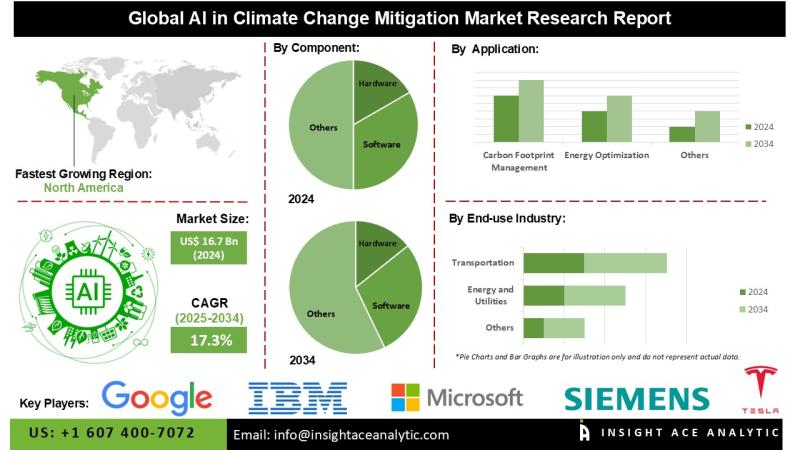
The fight against climate change is intensifying, and a new report from InsightAce Analytic Pvt. Ltd. reveals a promising avenue: the integration of artificial intelligence (AI) in climate change mitigation. The "Global AI in Climate Change Mitigation Market" report outlines a market poised for significant growth, projected to reach USD 80.6 billion by 2034, up from USD 16.7 billion in 2024, with a remarkable compound annual growth rate (CAGR) of 17.3% during the forecast period from 2025 to 2034.
At its core, the report emphasizes how AI can play a crucial role in combating climate change by analyzing vast amounts of data related to carbon emissions, energy consumption, and the efficiency of renewable energy sources. These capabilities enable businesses and governments to optimize their operations, making strides toward more sustainable practices and environmental responsibility.
As the demand for effective climate solutions grows, especially in regions like North America and Europe, the AI in climate change mitigation market is experiencing robust expansion. This growth is driven by increasing investments in clean energy and sustainability projects, strong government policies, and the growing adoption of AI technologies to tackle climate-related challenges.
Key Players and Market Dynamics
Several major players are shaping the landscape of the AI in climate change mitigation market. Companies such as Amazon Web Services, Google, IBM Corporation, Siemens, DeepMind, and Tesla are at the forefront, leveraging their technological expertise to innovate and provide solutions that address climate change effectively.
However, the market faces significant challenges. One of the primary concerns is the availability and quality of data. Though there is a wealth of information related to climate change, much of it is fragmented or incomplete. This lack of consistency poses hurdles for AI algorithms that require accurate data to generate reliable outcomes. Consequently, the efficiency and scalability of AI models are hampered, which complicates their ability to offer actionable insights for climate adaptation and mitigation.
Despite these challenges, the potential benefits of AI in climate change mitigation are vast. The market's dynamics indicate that as governments and businesses increasingly lean on AI technologies to address the complexities of climate change, the global application of AI in this sector is expected to expand significantly. This reflects a broader commitment to sustainability and regulatory frameworks that prioritize environmental health.
Looking at regional trends, North America is projected to hold a significant share of the AI in climate change mitigation market. In particular, investments in AI technology designed to reduce the environmental impacts of industrial processes are on the rise. Resolutions enacted by the U.S. and Canadian governments are also encouraging the adoption of AI solutions, particularly in areas such as carbon capture and renewable energy generation.
Meanwhile, Asia Pacific is anticipated to experience the fastest growth rate in this market. Nations like Germany, France, and the United Kingdom are making significant investments in AI technologies aimed at enhancing sustainability in energy, agriculture, and disaster relief operations. This commitment to reducing emissions and advancing cutting-edge infrastructure supports the expansion of the AI in climate change mitigation sector.
As the landscape evolves, the segmentation of the market by component—services, hardware, and software—will continue to play a vital role in shaping strategies for addressing climate change. The deployment modes, whether cloud-based or on-premises, also reflect the flexibility and adaptability required to meet different organizational needs across various sectors, including construction, energy and utilities, agriculture, transportation, and government.
The integration of AI in these sectors not only aids in carbon footprint management and energy optimization but also enhances climate risk assessments and promotes sustainable agriculture practices. As the world grapples with the urgent need for climate action, the convergence of technology and environmental responsibility is a beacon of hope.
In conclusion, the AI in climate change mitigation market stands at a critical juncture, offering innovative solutions to one of the most pressing challenges of our time. With its projected growth and the involvement of prominent players, this market embodies the potential to revolutionize how society tackles environmental issues moving forward.
How Greg Olson's Shocking Move Could Save the Raiders (Or Doom Them Forever!)
This Shocking College Football Playoff Bracket Will Leave You Speechless – Are Your Favorites in Danger?

Country Star’s Shocking Cancer Revelation at 40: You Won't Believe His Major Life Decision!

Ancient Air Samples EXPOSE Shocking Truth About Climate Change – Is Your City Next?

Shocking ICE Arrest: White House Aide's Hidden Alien Relative Exposed - What Happens Next?

Is the Healthy Snacks Market Really Booming? Shocking $78.71B Growth Reveals Hidden Trends!
You might also like: