
Is the iPhone Air's Struggle in Vietnam Hiding a Shocking Secret Behind Its Android Domination?

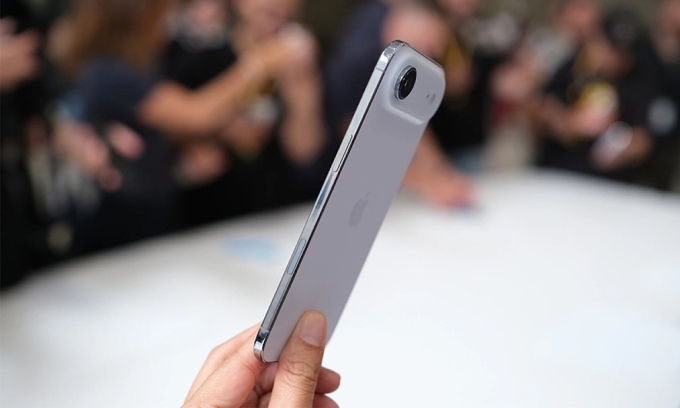
In a world where smartphone choices abound, the launch of Apple’s latest device, the iPhone Air, has drawn both attention and critique. Launched amidst a lineup that includes the popular iPhone 17 series, the iPhone Air stands out for its sleek, lightweight design and unique titanium frame, a feature not found in its competitors. However, its single camera setup and lower battery capacity have raised eyebrows, particularly given its higher price point compared to the standard iPhone 17.
“The iPhone Air was expected to see a breakout in sales compared to the Plus series, but after two months, its performance has been similar to the previous model,” said Nguyen Thanh Chung, a spokesperson for a major retail chain. This statement underlines a troubling trend: the iPhone Air, despite its touted advantages, has not captured sales in the way Apple had anticipated.
A recent survey by VnExpress indicates that while the iPhone Air is readily available, other models in the iPhone 17 lineup, including the 17 Pro and 17 Pro Max, are facing supply constraints, causing prices to rise at smaller retail outlets and e-commerce platforms. Initially, the iPhone Air accounted for 7-8% of total iPhone sales upon its release in 2025, but this figure has since plummeted to just 2-3% as inventory of other models increased.
Chung estimates that major retail chains are selling over 1,000 iPhone Air units a month per store, but this number pales in comparison to the Pro Max series and even the discontinued Plus series. “Selling a thousand units per month may be considered a failure for the iPhone Air, but it still represents a target many Android models in the same price range can only aspire to,” he noted.
Consumer feedback has added another layer to the evaluation of the iPhone Air. Le Hieu, owner of a store specializing in Apple products in Hanoi, mentioned that while customers initially gravitated towards the iPhone Air for its design, many have since switched to the Pro series, citing superior camera quality and more stable network performance as key reasons for their change in preference.
In response to the sluggish sales, price adjustments have occurred; the iPhone Air has seen price cuts of up to VND1.5 million (approximately US$57) from its original price of VND32 million. Interestingly, while its U.S. version is available on the grey market for VND25-26 million, the iPhone Air still manages to outsell many high-end Android alternatives.
Retail data indicates that Android phones priced above VND30 million struggle to match the popularity of Apple devices. For instance, the Galaxy S25 Ultra, priced slightly higher than the standard iPhone 17 but cheaper than the iPhone Air, has been reported to sell 20-50% more than the iPhone Air. Conversely, the Galaxy S25 Edge, which was positioned to compete with the iPhone Air, has not garnered much interest.
Despite the underwhelming performance of the iPhone Air, it remains a noteworthy player in the market. Reports from Nikkei Asia suggest that Apple has reduced its production of the iPhone Air by 10% in November compared to September. Originally expected to account for 10-15% of total iPhone production in 2025, the iPhone Air has only managed to capture about 2% market share, failing to land among the top five models within Apple’s offerings. The iPhone 17 Pro Max leads with a commanding 33% market share, followed by the 17 Pro and the 17.
Demand for the iPhone 17 lineup remains robust, prompting Apple to increase its total orders from 88 million to 94 million units. This includes an additional one million units of the iPhone 17 Pro, two million of the iPhone 17, and four million of the iPhone 17 Pro Max, while orders for the iPhone Air were notably cut by one million units.
As consumers weigh their options, the smartphone landscape remains competitive and ever-evolving. The future of the iPhone Air will depend not only on its ability to meet consumer expectations but also on how it fares against a plethora of Android alternatives, highlighting the ongoing battle for supremacy in a saturated market.
Panthers' Star Tre'Von Moehrig Suspended—What He Did to Jauan Jennings Will Leave You Speechless!

Paxos Just Bought Fordefi: What This Shocking Move Means for Your Crypto Future!
The Shocking Smartphone Showdown: Why This Underdog Will Leave Giants in the Dust!

You Won’t Believe What Trump Just Did to Bring Back 'Rush Hour' - Is This the Comeback We Never Expected?

US Transportation Chief Unleashes Shocking Plan: Are Your Favorite Flight Snacks About to Disappear Forever?
You Won't Believe What This Celebrity Was Hiding — The Shocking Truth Revealed!
You might also like: