
This Insurance Crisis Could Cost You Thousands—Are You Prepared for the Shocking Truth?

As climate change continues to wreak havoc across the globe, its ramifications are increasingly visible in the insurance industry. In New England alone, there have been over 40 disasters in the past five years, each resulting in losses exceeding $1 billion, with the majority attributable to winter storms and severe weather. With nor’easter season upon us, residents face the looming threat of heavy rains and strong winds. Ali Hiple, a senior policy analyst at the Conservation Law Foundation, notes, “Rising premiums are the market’s response to what science has told us for decades.”
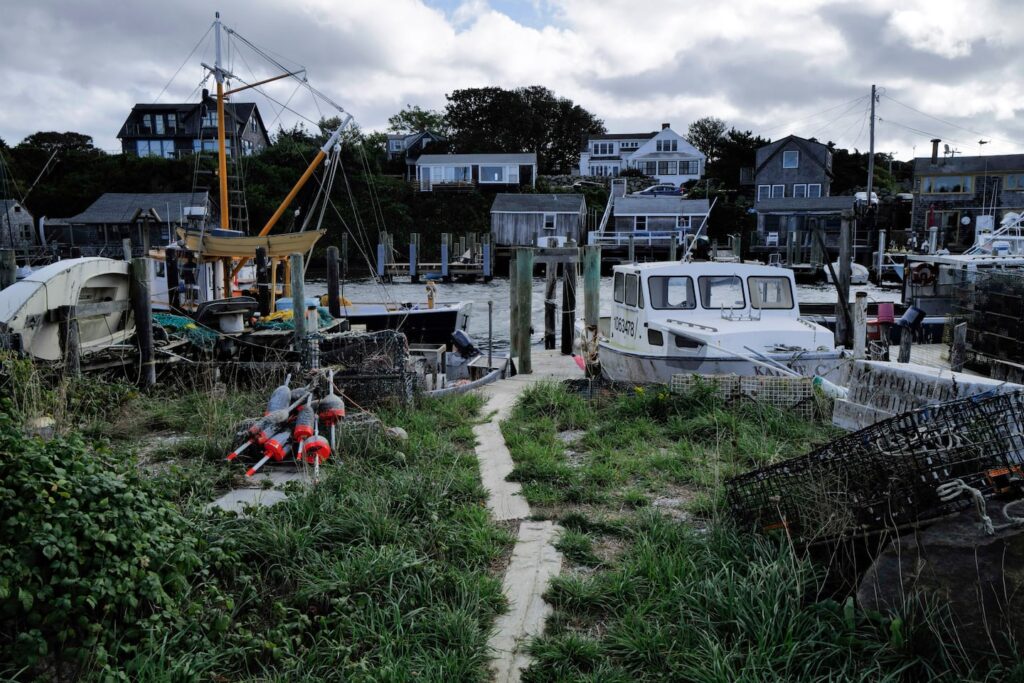
Residents in areas like Martha’s Vineyard are feeling the pinch of escalating insurance costs. For instance, Steven Feinsmith, 75, reports that the annual cost to insure his approximately 2,000-square-foot home has doubled in recent years to nearly $5,000. In a conversation with his insurance agent, he was told that the region is “due for a storm.” Despite having not been directly hit by a hurricane since 1991, the concern remains palpable.
“You have to insure your home,” Feinsmith said. “You’re caught.” His sentiment resonates with many who find themselves ensnared in a web of rising costs and uncertain futures. In fact, Jim Bishop, 77, who owns several properties on the Vineyard, states that insurance prices have skyrocketed “exponentially” since he moved there in 1997. While he feels fortunate not to be burdened by insurance expenses, he voices concern for younger generations attempting to become homeowners. “Insurance companies have lost their moral compass,” he asserts. “It’s greed.”
The stakes for homeowners are high. In a landscape where homeownership is often viewed as a cornerstone for building wealth, high insurance premiums can create significant financial strain. Increasing costs lead to higher monthly mortgage payments or compel families to settle for plans that provide inadequate coverage at a steeper price. As U.S. Senator Sheldon Whitehouse of Rhode Island warns, the climate challenges facing the insurance sector could lead to broader economic ramifications. He describes the early stages of “the great climate insurance collapse” as already being visible in his home state.
Properties that become uninsurable also become unmortgageable, drastically limiting the market for potential buyers and driving down home values. In parts of Florida, uninsurable homes are selling for deep discounts, leaving families in dire situations. Whitehouse states, “Climate change ain’t about polar bears any longer. It’s coming from people’s mailboxes in the form of insurance bills, nonrenewals, and serious mortgage difficulties.”
According to data from the Senate Budget Committee, insurers are discontinuing coverage for homeowners in Martha’s Vineyard, Nantucket, and Cape Cod at alarming rates, among the highest in the nation. For example, Dukes County—encompassing the Vineyard and nearby islands—had the third highest nonrenewal rate in the United States in 2023, with more than 10% of policies dropped. Just a few years ago, this rate was less than 1%. As Ishita Sen, an assistant professor at Harvard Business School, explains, “This is insurers wanting to cut their exposure to these areas. This is 100 percent a response to climate risk.”
Around one-third of residents on the Cape and nearby islands rely on the Massachusetts FAIR Plan, a state program designed as a safety net for those unable to find traditional insurance. However, these policies often come with higher costs and less coverage. For those still able to secure private insurance, premiums have surged, increasing by over 30% between 2018 and 2022 in parts of Massachusetts, Maine, and New Hampshire, according to recent data from the U.S. Department of the Treasury.
Sen notes that while climate risks play a significant role in these rising costs, other factors are also at play. Households taking on more extensive coverage and features built into contracts contribute to the overall increase. Furthermore, climate risks in other states have driven up premiums across New England, as tightly regulated states like California cause insurers to cross-subsidize their business by raising rates in less regulated areas.
On the Vineyard, insurance agency owners Rich and Libby Soo Hoo have found themselves explaining to frustrated clients that rising costs are a reflection of changing risk assessments. “The carriers pay hundreds of millions of dollars for these catastrophe models, and these models are indicating that our probability of loss in this area is high,” Rich Soo Hoo explains. “They are predicting we are due for a major Cat 4, Cat 5 storm.”
Hurricane Bob, a Category 2 hurricane that struck in 1991, is still fresh in the minds of many residents, including Libby Soo Hoo, who experienced the storm during her childhood. “It’s been a long time since we’ve had something big and bad like that,” she reflects, acknowledging that memories may fade, but the reality of climate change is becoming increasingly unavoidable.
Experts suggest that there are no quick fixes for these insurance challenges, although fortifying homes and communities against weather damage could help mitigate risks, albeit not necessarily reduce costs. In Massachusetts, several bills are currently in motion that aim to incorporate climate risk into state building codes and establish funds for climate adaptation. Meanwhile, Connecticut officials have developed a mapping tool to help residents assess their homes’ vulnerability to climate-related risks, allowing them to make informed decisions about where to live and what coverage to purchase. “Why should that information only be available to insurance companies?” asks Andrew Mais, Connecticut’s insurance commissioner.
Greta Thunberg’s Shocking Venice Ban: The Untold Truth Behind the Dying Green Canals!
NBA Scandal Erupts: Shocking Details of Player and Coach Betting Ring Exposed—What You Must Know Now!

You Won't Believe How This Women-Led Startup is Reshaping India's Future—#3 Will Shock You!

You Won't Believe Who Just Joined Kgsa's Real Estate Team—This Shocking Move Could Change Everything!

Is This the End for Bosnian Serb Strongman? Shocking Election Win Exposes Hidden Threats!

The Shocking Truth Behind Ultra Secure Smartphones: Are You Missing Out on THIS $50 Billion Market?
You might also like: