
Is Your Vote Safe? Shocking Security Risks Unearthed in SoCal's June Primary!

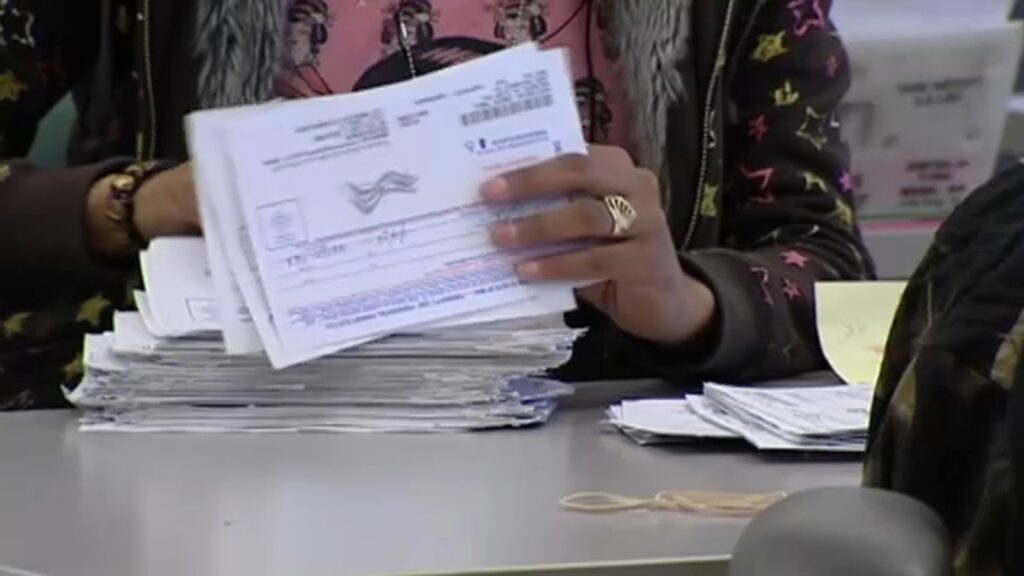
As the nation gears up for the June and November elections, political tensions surrounding voting rights, mail-in ballots, and voter identification laws have reached a critical juncture. Amid this charged atmosphere, President Donald Trump has amplified claims of widespread fraud, stating during his February State of the Union address, "The cheating is rampant in our elections. No more crooked mail-in ballots except for illness, disability, military or travel."
In response to these concerns, Trump and some congressional Republicans are advocating for the Safeguard American Voter Eligibility Act, known as the SAVE Act. This proposed legislation would mandate that all U.S. voters present documentary proof of citizenship to register and provide a photo ID to vote. Trump's criticisms of mail-in voting have been echoed across various platforms, despite a lack of evidence supporting claims of fraud. Meanwhile, the Supreme Court is set to decide on the legality of counting mail-in ballots that are postmarked by Election Day but received up to five business days later.
"What’s happening here is the political discourse is spilling into: 'How can we change the rules?'" said L.A. County Registrar Dean Logan. He emphasized that this ongoing turmoil largely stems from dissatisfaction with election outcomes, which in turn fuels legislative proposals at the federal level and executive orders currently facing litigation. Logan noted that California's election laws are designed to be inclusive, ensuring that every eligible voter has the opportunity to cast a ballot, whether in-person or by mail.
California Senator Alex Padilla has characterized the SAVE Act as a potential disenfranchisement tool for millions of eligible American citizens. "Your own driver's license wouldn't be sufficient to cast your ballot. We're talking passports or original birth certificates," he cautioned. Padilla also expressed concerns about potential voter intimidation at polling stations, including fears of ICE raids, despite the fact that such actions are illegal.
In response, election officials in counties like Orange County have taken proactive steps to train poll workers to manage tense situations. "Orange County election trainer Andrew Calloway noted, "We just tell them to remain calm. And that’s the most important part with any of these scenarios." This focus on de-escalation aims to ensure a positive and secure voting experience for all residents. The Orange County Registrar of Voters, Bob Page, reassured voters that "voting in Orange County is safe and secure."
Conversely, tensions are also evident in Riverside County, where Sheriff Chad Bianco, who is running for California governor, made headlines by seizing more than 500,000 ballots from a recent special election, citing alleged discrepancies as the reason. Bianco's investigation, however, has now been suspended due to mounting legal challenges and ethical concerns.
"What we're seeing play out in Riverside County... is unprecedented; we haven’t seen this before," Logan reflected, emphasizing the need for calm and a focus on providing accessible, secure voting processes. As officials prepare for the upcoming elections, they hope to reassure voters despite the noise surrounding election integrity.
Moreover, officials are aware that many voters who opt for mail-in ballots often wait until Election Day to finalize their decisions. This behavior makes the anticipated Supreme Court ruling on mail-in voting critical for the November election, as its implications could significantly influence voter participation and public confidence in the electoral process.
As the election season approaches, the dynamics of voting rights and election integrity will undoubtedly remain at the forefront of political discourse, carrying implications that resonate far beyond the ballot box.
Hemab’s Bold 2030 Strategy Unveiled: How It Could Change Your Investments Forever!

Packers' Shocking QB Move: Is This the Game-Changer Fans Never Expected?

You Won't Believe What 7,000 Years of Lake Mud Reveals About Kangaroo Island’s Fiery Secrets!

Is Vir Das' Shocking Election Post Exposing TMC's Dark Secrets? What You MUST Know Now!

Will This Shocking $96K Prediction Leave You in the Dust? The Squeeze Everyone's Talking About!

Former Governor vs. Ambitious Challenger: Will 2026 Change Everything? Discover the Shocking Truth!
You might also like: