
Massachusetts Governor's Race Takes Wild Turn: Is Abortion the Game-Changer Everyone's Ignoring?

A recent ruling from a federal appeals court in New Orleans has significantly impacted the Massachusetts governor's race, bringing the contentious issue of abortion to the forefront. The decision, handed down late on a Friday evening, introduces new restrictions on the abortion medication mifepristone, effectively halting its access for telehealth patients who wish to obtain it by mail.
In response to this ruling, current Massachusetts Governor Maura Healey issued a statement pledging to safeguard women's access to reproductive healthcare, including medication for abortions. Healey, a Democrat, emphasized her commitment by stating, "And we will keep standing up to efforts by President Trump and his allies to roll back reproductive rights."
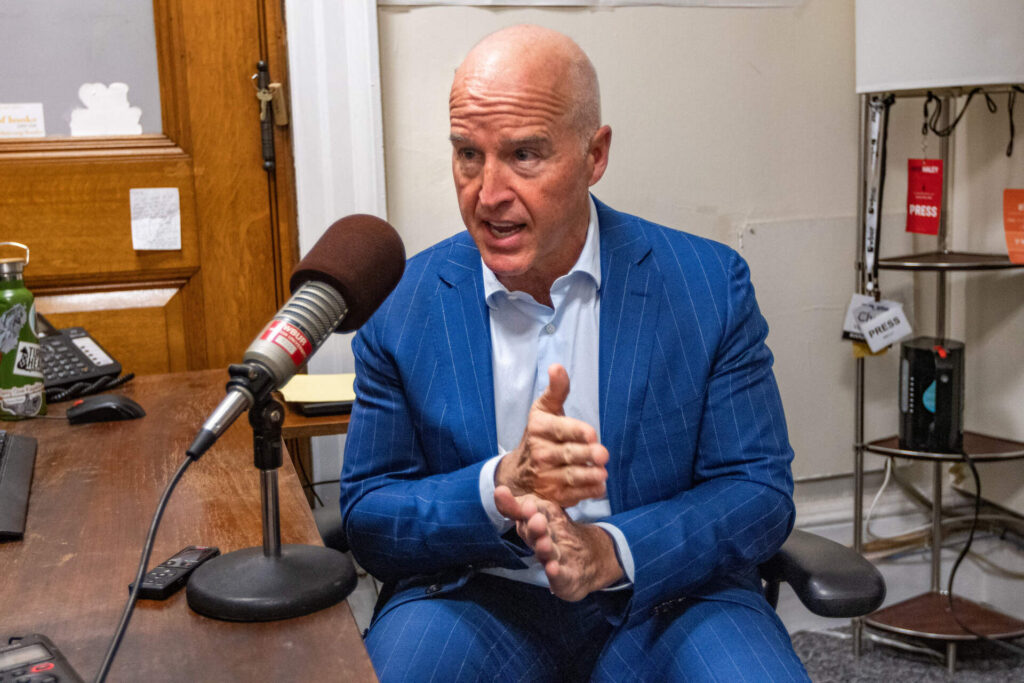
This case is expected to escalate to the Supreme Court, and in the meantime, the ruling adds pressure to Republican candidates in the race to challenge Healey. The leading contender, Mike Minogue, a conservative Catholic and former biotech executive, has publicly declared his "pro-life" stance, advocating for alternatives to abortion. In an interview with WBUR, he stated, "I'm a Catholic and I am pro-life," and reiterated his views on WCVB's "On the Record."
Minogue's spokesperson, Erin Maguire, commented on the ruling by asserting, "As governor, Mike Minogue cannot and will not change the law," although she provided no further details on how he would address the evolving legal landscape regarding abortion.
In contrast, his opponent, Brian Shortsleeve, a venture capitalist and former chief of the Massachusetts Bay Transportation Authority (MBTA), has criticized Minogue's position on abortion. Shortsleeve argues that Minogue's views could jeopardize the Republican Party's chances in the upcoming election. His campaign issued a release titled, "Minogue’s Anti-Choice Declaration Destroys GOP Chances in November," stressing that running an anti-choice campaign could be detrimental against an incumbent Democrat governor.
“In less than one minute in his first major appearance following the Republican convention, Mike Minogue gave Maura Healey all the ammunition she will need to defeat him in November,” said Shortsleeve's campaign spokesman, Patrick Nestor. He added, "Regardless of your personal opinion on the issue of abortion, one thing is crystal clear: you cannot beat an incumbent Democrat governor by being anti-choice."
The Supreme Court's 2022 decision to overturn the nationwide right to abortion has led to fluctuating regulations surrounding reproductive healthcare across the country. Although access to mifepristone was preserved at that time, the current ruling tightens its availability. Healey, along with other Democratic governors, had previously taken preemptive measures by stockpiling the drug amid fears of potential legal crackdowns. Demand from healthcare providers in Massachusetts has notably surged, largely driven by patients from states where abortion rights have been curtailed.
Under the recent ruling, patients seeking mifepristone will now be required to consult with doctors in person, disrupting the telehealth model that has become increasingly vital, especially during the COVID-19 pandemic. Governor Healey condemned the decision, characterizing mifepristone as a "safe, effective and essential medication" that has been prescribed via telehealth to tens of thousands of women in Massachusetts and beyond. She concluded her statement by asserting, "This decision will hurt the health and wellbeing of women and should be immediately reversed."
As the Massachusetts gubernatorial race unfolds, the implications of this court ruling are likely to resonate deeply among voters, shaping campaign strategies and potentially influencing the outcome in the November election.
You Won't Believe What Happens When 1,000 People Row Together for Cancer—$100K at Stake!

Breaking: Only 48 Hours Left to Vote in the Shocking 2026 Leadership Election – Who Will Transform SITC?

Your Doctor's Shocking Investment Secret: Are They Betting Against Your Health?

You Won't Believe How 'The Devil Wears Prada 2' Raked in $77 Million—Is This the End for Fashion?

Baker Mayfield’s Shocking Contract News: What the Bucs’ GM Revealed That Changes Everything!

Is Your Health at Risk? Discover Shocking Secrets at the 4th Annual Senior Health & Fitness Day!
You might also like: