Charles Leclerc's Shocking Apology: Did He Save Kimi Antonelli from a PR Nightmare in Miami?

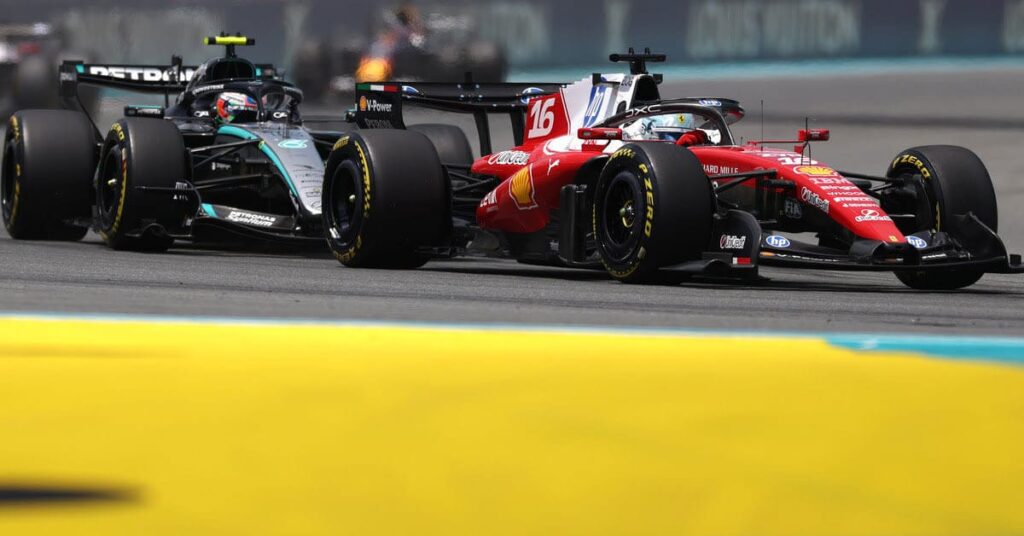
In the fast-paced world of Formula 1, where every word exchanged over team radio can spark controversy, the art of a timely apology has never been more critical. This was evident after the recent Sprint Race at the Miami Grand Prix, where a heated exchange between Ferrari driver Charles Leclerc and rising star Kimi Antonelli raised eyebrows and threatened to snowball into a social media backlash. By addressing the situation swiftly, Leclerc helped defuse potential criticism aimed at Antonelli, showcasing the importance of responsible communication in motorsport.
During the Miami Sprint Race, an intense wheel-to-wheel battle unfolded between Leclerc and Antonelli, creating palpable tension on the track. In the heat of competition, Leclerc vented his frustrations over team radio, expressing dissatisfaction with the behavior of Antonelli, who is currently leading the championship standings. While such emotional reactions are common in high-stakes racing, they can easily be amplified in today’s hyper-connected world, where comments can be taken out of context, fueling negative narratives that often target younger or less established drivers.
Antonelli, already facing scrutiny as one of Italy's most promising talents, could have found himself on the receiving end of harsh criticism and online abuse. There are numerous precedents in Formula 1 where drivers have faced undue backlash from fans, including notable incidents involving Max Verstappen in Austria and Lando Norris during the decisive race in Qatar last season. These examples underscore the swift escalation of online hostility that can occur in the sport.
Recognizing the potential repercussions, Leclerc took it upon himself to publicly address the situation after the race. His response was not just a generic apology but a thoughtfully crafted statement that acknowledged the pressures of the race while clarifying the context of his comments. This shift from an emotional outburst to a more reflective tone revealed a level of maturity and responsibility, demonstrating Leclerc's understanding of his influence as a senior driver in the paddock.
The immediate impact of Leclerc's apology was significant. Instead of allowing the narrative to spiral into negativity, his intervention reframed the incident as a typical racing occurrence between two competitive drivers. This decisive action helped curtail the potential for hostile reactions directed at Antonelli, showcasing how one driver’s accountability can create a ripple effect, contributing to a healthier competitive environment in the sport.
In an era where younger drivers often experience intense scrutiny and pressure, Leclerc’s gesture serves as a crucial reminder that Formula 1 is not solely about speed and technology; it is also about the individuals behind the wheel. The ability to recognize when emotions run high and to address them publicly fosters mutual respect among drivers and cultivates a supportive atmosphere, particularly for those just starting their careers.
For Antonelli, who is still at the beginning of his journey in Formula 1, the positive dynamics established through Leclerc’s words offer vital, if indirect, support. They illustrate that competitive clashes on the track can be navigated with integrity and professionalism, steering clear of personal attacks. Leclerc’s proactive communication ultimately did more than resolve a minor on-track incident; it provided a vital example of how responsible dialogue can preserve a driver’s reputation and enhance the integrity of the sport.
As the motorsport world watches closely, this incident underscores the evolving nature of competition in Formula 1, where every action and word holds weight. Leclerc’s approach not only safeguarded Antonelli from unnecessary backlash but also illustrated the commitment within the sport to foster a nurturing environment for emerging talents. In a landscape increasingly defined by social media dynamics, the importance of respectful and thoughtful communication in maintaining the spirit of racing cannot be overstated.
Is Tom Izzo Ready to Revolutionize the NCAA Tournament? Discover the Shocking Changes Coming!

Is Indonesia's Smartphone 3D Camera Market on the Verge of a $1 Billion Boom? Discover the Shocking Truth!
Historic Fed Shock: Will May 15 Leave Your Investments in Ruins? Find Out NOW!

Former Dolphins Star WR Chases NFL Dream AGAIN - You Won't Believe Which Team He’s Targeting!

Big Tech's Grip Tightens: Are 80% of Asian Journalists Losing Their Voice? Shocking Revelations Inside!
You Won't Believe Who's Predicted to Steal the Spotlight in Pistons vs Magic Game 7—Shocking Stats Inside!
You might also like: