
Google Cloud's Thomas Kurian Drops a Bombshell: How Two New Chips Could Topple Microsoft and Amazon—Are You Ready for the Shock?

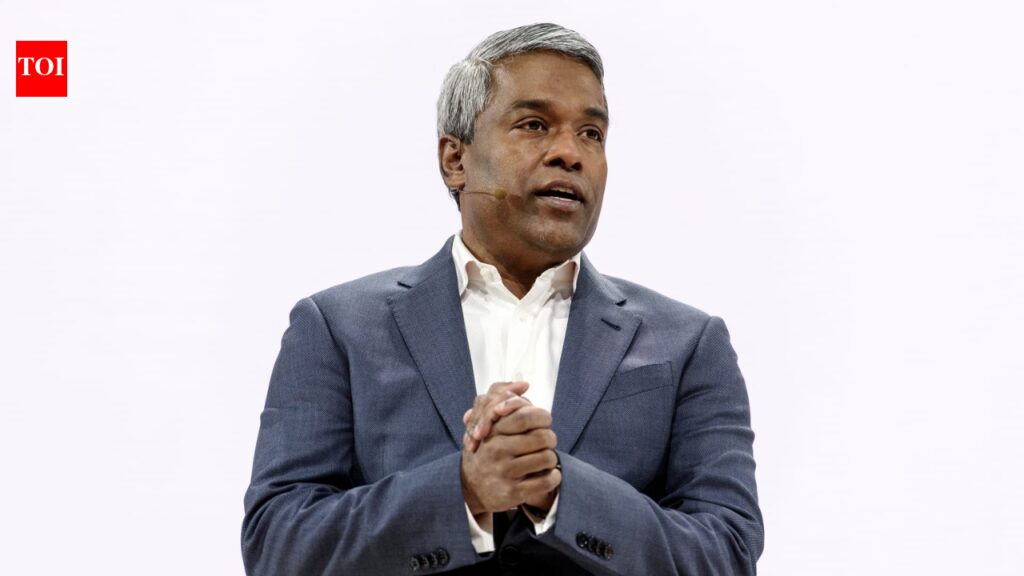
At the recent Google Cloud Next event, Thomas Kurian, the head of Google Cloud, announced the launch of two new chips: the TPU 8t and TPU 8i. With these advancements, Kurian made it clear in an interview with The Financial Times that Google is no longer just a "reseller" in the highly competitive cloud computing market. Instead, he asserts that Google aims to capture market share from industry giants Microsoft and Amazon with its proprietary technology. “We’re not just a hyperscaler reselling other people’s technology. Our differentiation comes down to the fact that we own the IP, the model and the chips are ours,” Kurian stated. This strategy allows Google to invest more into its offerings since it isn't allocating a significant portion of its revenue to external technology partners.
With the global cloud computing market valued at around $418 billion, Kurian's full-stack strategy is designed to close the gap with competitors. This involves building in-house chips, data centers, and AI models rather than relying on external partnerships, which is the approach taken by many of Google's competitors. He claims that Google’s Gemini models and TPU chips significantly outpace those of Amazon and Microsoft, including Amazon's Trainium chips and Nova AI system, as well as Microsoft’s Maia processors and MAI models.
Two New Chips to Power the Future of AI
During the Las Vegas event, Google showcased the eighth generation of its Tensor Processing Units (TPUs). The TPU 8t is specifically designed for training AI models, teaching them how to process and analyze data, while the TPU 8i features expanded memory capabilities to expedite the inference process of already trained AI systems. Kurian is confident in the superiority of Google’s offerings, remarking, "I don’t think the other players are building their own models, of any quality at least."
As Google solidifies its position in the chip-making arena, it appears to be creating a more competitive landscape for existing leaders like Nvidia. Although Google remains one of Nvidia's largest customers, the two companies are becoming direct competitors as well. Nvidia CEO Jensen Huang recently downplayed the quality of Google’s chips, suggesting their demand stems from Google’s partnership with the startup Anthropic. Kurian countered, noting that nine of the top ten AI labs globally utilize Google’s TPUs, underscoring their competitive pricing and performance. “You need a large lab in-house to really build an amazing chip [and] I don’t think the other players are building their own models, of any quality at least,” he added, highlighting the advantages of Google’s integrated approach to AI hardware and software.
Since Kurian's arrival from Oracle eight years ago, he has effectively doubled Google Cloud's market share from 7% to 14%. This consistent growth has not only established him as a formidable leader within Google but also positioned him as a potential candidate for future leadership roles within the company.
As the cloud computing landscape evolves, Google's aggressive strategy, marked by its unique technology and focus on proprietary models, may be the key to reshaping the competitive dynamics against established players like Amazon and Microsoft. The implications of these advancements are far-reaching, not just for Google but for the overall growth and innovation within the cloud services sector.
Ethereum’s Price Should Have Crashed—Why This Expert Warns You’re Missing a Major Red Flag!

Is Indiana on the brink of a marijuana revolution? Governor Mike Braun hints at shocking policy changes!

Atrium's Shocking $2B Power Move: How WakeMed Could Change Forever! Don't Miss Out!

Breaking: Shocking New Charges in WHCD Shooting! What They Discovered About ChatGPT Will Leave You Speechless!

Iradimed Stock Surges 150% Today—Here’s What Wall Street Doesn’t Want You to Know!

Alabama's Governor Shakes Up Politics: Will Your Vote Count After This Shocking Redistricting Move?
You might also like: