
Is the White House Hiding Shocking Details Behind Iran's 'Terminated' Hostilities? You Won't Believe What’s Next!

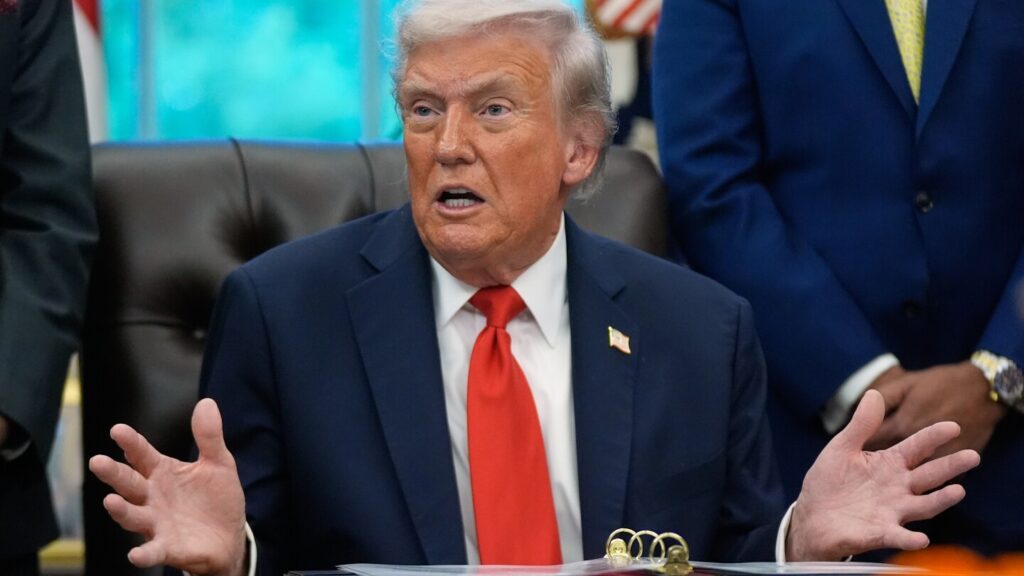
The White House officially informed Congress on Friday that U.S. hostilities with Iran have "terminated," citing a two-week ceasefire that began on April 7, 2026, and has since been extended. President Donald Trump stated in a letter to congressional leaders that there has been no exchange of fire between U.S. forces and Iran since the ceasefire commenced. He emphasized, “The hostilities that began on February 28, 2026, have terminated.”
This announcement comes as a significant moment in the ongoing conflict, but it does not indicate a withdrawal of U.S. forces from the region. American troops remain deployed, and the naval blockade of Iranian ports continues. Trump has also dismissed Iran's offer to reopen the Strait of Hormuz in exchange for lifting the blockade, signaling that while hostilities may have paused, tensions remain high.
The backdrop to this situation is the 1973 War Powers Resolution, designed to ensure that Congress maintains authority over military engagements. As of Friday, it has been 60 days since Trump notified Congress of the initiation of Operation Epic Fury. This is a pivotal threshold because according to the resolution, if the President has not received congressional authorization or an extension within 60 days, he is required to end U.S. military involvement.
Defense Secretary Pete Hegseth, during a Senate Armed Services Committee hearing, argued that the ceasefire effectively "stops" the 60-day war powers clock. This interpretation has drawn immediate scrutiny from Democrats, who argue that the U.S. is still engaged in hostilities, thereby invalidating Hegseth's claim. Senator Richard Blumenthal, a Connecticut Democrat, commented on the platform X, “There’s no pause button in the Constitution, or the War Powers Act. We’re at war. We’ve been at war for 60 days. The blockade alone is a continuing act of war.”
As midterm elections approach, Democrats are leveraging this deadline to challenge vulnerable Republicans, including Alaska Senator Dan Sullivan. The Democratic Senate Majority PAC accused him of supporting a conflict that has resulted in U.S. soldier casualties and economic disruptions. In the face of this political pressure, the White House's letter seems to be an attempt to preemptively counter a bipartisan push in Congress aimed at ending U.S. military involvement.
Support for a formal vote to end military actions has been gaining traction among lawmakers, including Senator Susan Collins, who has shifted her stance to support war powers resolutions. Senator John Curtis of Utah has also indicated that he may not back military action without congressional input after the 60-day deadline, highlighting a potential fracture in Republican unity on this issue.
Senator Todd Young expressed a desire for congressional authorization of military force, emphasizing the need for the public to have representation in military decisions. “This should not be controversial,” he stated. “Given the Administration’s stated position that the Iran conflict has ceased, there should be no hostilities moving forward.”
In response to the ongoing debate, Senator Chris Coons announced plans to introduce a new war powers resolution aimed at conclusively ending what he termed an "unauthorized war of choice." Previous attempts, including six Democratic resolutions—one co-sponsored by Republican Senator Rand Paul—have failed to make it through Congress since the conflict began.
Despite the administration's declaration of a ceasefire, Trump maintained in his letter that the threat from Iran “remains significant.” He asserted that the Defense Department will continually adjust U.S. military posture in the region as necessary to address threats from Iran and its proxies. The letter also indicated that Trump would keep Congress updated on “noteworthy changes” to the U.S. military presence.
As the situation continues to evolve, the implications of these developments will be closely monitored, both in terms of U.S. military strategy and the political ramifications leading into the upcoming elections. The balance between presidential authority and congressional oversight remains a contentious issue, underscoring the complexities of U.S. military engagement in foreign conflicts.
You Won't Believe Which 5 Startups Landed Millions Today—Find Out Before They Skyrocket!

Is College Sports Hiding a $15 Billion Scandal? You Won't Believe What They're Not Telling Us!

You Won't Believe This Game-Changer: Apotex's Generic Ozempic® Could Slash Diabetes Costs by 80%!

You Won't Believe Why NBA Ref Scott Foster is Called 'The Extender'—The Shocking Truth Revealed!

You Won't Believe What Pittsford's New Neighborhood Websites Reveal About Alan Wood and Local Real Estate!

You Won't Believe What Just Launched at Chambers Creek 55+ Community – Are You Missing Out?
You might also like: