
5 Shocking Reasons the UN Climate Summit Left Millions Disappointed—You Won't Believe the Last One!

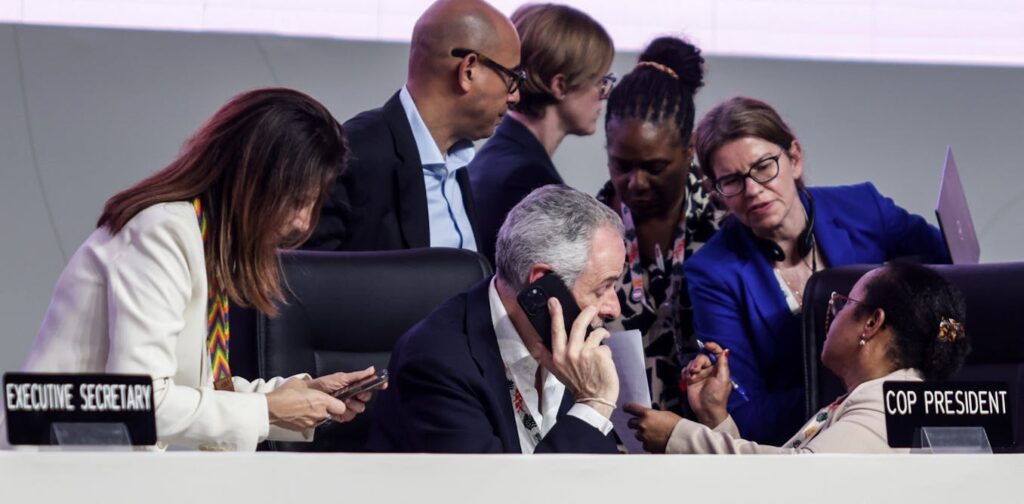
As the sun set on the Amazon, the promise of a “people’s COP” faded with it. The latest UN climate summit—known as COP30—was hosted in the Brazilian city of Belém and, as usual, came with its share of geopolitical maneuvering, alongside unexpected environmental crises, including a flood and a fire. While the summit saw unprecedented Indigenous protests, fossil fuel interests continued to dominate negotiations, leaving many disillusioned.
After a decade of climate inaction since the Paris Agreement, Brazil had positioned COP30 as an “implementation COP.” Yet, the summit ultimately failed to deliver effective action, despite a concerning record of global warming that reached 1.6˚C last year.
Here are five key observations from the summit:
📰 Table of Contents
Indigenous Groups: Present but Marginalized
Branded the summit for those on the frontlines of climate change, COP30 attracted over 5,000 Indigenous people. They made their voices heard, yet only 360 managed to secure passes to the main negotiating “blue zone,” compared to 1,600 representatives linked to the fossil fuel industry. Inside the negotiating rooms, it was business as usual, with Indigenous groups relegated to observers, unable to vote or participate in closed-door discussions.
The choice of location underscored a glaring inequality. Hosting the conference in the Amazon cost hundreds of millions of dollars, yet many locals still lack basic amenities. With hotel rooms fully booked, the Brazilian government even docked two cruise ships for delegates—emissions from which can be up to eight times that of a five-star hotel.
The Power of Protests
This summit was the second largest UN climate conference ever and the first since COP26 in 2021 held in a country that allows public protests. Daily demonstrations, including a notable Indigenous-led “great people’s march,” brought visibility to the plight of Indigenous communities. The sheer scale of these protests led to the recognition of four new Indigenous territories in Brazil, illustrating that civil society pressure can yield tangible outcomes, even if they do not influence the main negotiations.
US Absence Creates a Vacuum and Opportunity
In a historic first, the United States did not send an official delegation to COP30. Under the leadership of Donald Trump, who has labeled climate change as “the greatest con job ever perpetrated on the world,” the US has rolled back its climate ambitions, allowing oil-producing countries, particularly Saudi Arabia, to ignore their climate commitments and undermine others. Conversely, the absence of the US was a relief for many delegates, allowing for a more focused dialogue on global warming without the distraction of contentious US positions.
Implementation Through Side Deals
While COP30 aimed for significant agreements, actual implementation came through voluntary pledges rather than binding commitments. The “Belém Pledge,” supported by Japan, India, and Brazil, committed signatories to quadruple sustainable fuel production and use by 2035. Additionally, Brazil launched a $6 billion trust fund for forest protection, with the EU promising new funding for the Congo Basin, the world’s second-largest rainforest. These steps are important, though they often occur outside the main negotiations, which failed to address the pressing issue of fossil fuels directly. Notably, the final agreement omitted any mention of “fossil fuels,” a term that had been central to previous discussions.
A Missed Opportunity with the Global Mutirão Text
A potential breakthrough known as the Global Mutirão text proposed a roadmap for transitioning away from fossil fuels, garnering support from over 80 countries, including EU members and climate-vulnerable Pacific island states. Tina Stege, climate envoy for the Marshall Islands, urged delegates to back a fossil fuel roadmap. However, opposition from major fossil fuel producers diluted its strength, resulting in a final deal that lacked key references to phasing out fossil fuels.
This summit reinforced a widening gulf between oil-producing countries, particularly in the Middle East, and the rest of the world. While organized civil society and Indigenous groups made their voices heard, their influence wasn’t reflected in the final outcomes. With next year’s summit scheduled for Turkey—a nation where protests are typically banned—the future of these annual meetings appears increasingly uncertain. As leaders continue to claim that time is running out, the negotiations seem stuck in a cycle of delays, leaving many to question the effectiveness of such summits in combating climate change.
You Won't Believe the Shocking Truth: Why 78% of News Audiences Still Trust Humans Over AI!
Dow, S&P 500, Nasdaq Futures Surge 5%—Is This the Rebound You Can’t Afford to Miss?

You Won't Believe What Happened at the 59th Annual Carolighting—The Shocking Twist Everyone's Talking About!

Bakersfield's Thanksgiving Turkey Giveaway: You Won't Believe How Many Families Will Benefit!

City's Jaw-Dropping $1.3M Drone Upgrade: What They’re Not Telling YOU!

You Won't Believe What Happened When MWHS-1 Took on the Toughest Combat Fitness Test—Shocking Results!
You might also like: