Heisman Finalist Shockingly Undrafted: What Went Wrong? Find Out the Jaw-Dropping Truth!

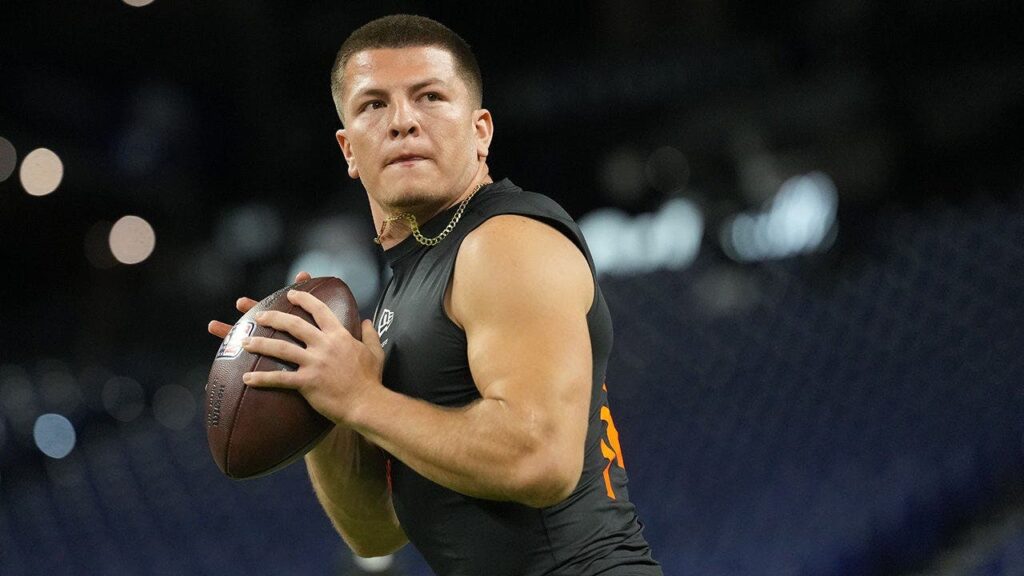
Diego Pavia's remarkable journey through college football reached a pinnacle in 2025 when he emerged as a Heisman Trophy finalist during his last season at Vanderbilt University. The quarterback not only showcased his skills on the field but also became a beacon of hope for a program long overshadowed in the competitive Southeastern Conference (SEC).
Pavia's statistics tell the story of a player who excelled under pressure. He racked up an impressive 3,539 passing yards and threw 29 touchdowns, leading the Commodores to a 10-3 record and bringing them tantalizingly close to the College Football Playoff. His performance earned him the title of SEC Offensive Player of the Year, a recognition that underscores his significant impact on the team's success.
Despite these accolades, Pavia found himself on the sidelines during the NFL Draft when he failed to be selected, marking a troubling trend. He became the first Heisman Trophy finalist not drafted since 2014, a dubious distinction shared with former Northern Illinois quarterback Jordan Lynch, who also went undrafted after finishing third in the voting in 2013. This anomaly raises questions about how players are evaluated in today’s football landscape.
Height appeared to be a pivotal factor in the teams' decisions. Pavia stands at 5-foot-10, notably shorter than the average NFL quarterback, who measures approximately 6-foot-2. Concerns about height have historically shadowed shorter quarterbacks, despite notable exceptions like Kyler Murray, who at 5-foot-10 was selected as the No. 1 overall pick in 2019 by the Arizona Cardinals. Pavia's height could have weighed heavily on evaluators despite his proven talent and leadership.
In January, while participating in the Senior Bowl, Pavia addressed the height concerns head-on. “Yeah, my size has been doubted my whole life,” he said, as reported by AL.com. “I feel like the only thing the NFL cares about is can you win, and I view myself as a winner.” His confidence in his abilities and a history of success—including never having a losing season—reflects a mindset that champions not just personal achievement but also team unity.
Pavia's philosophy about football centers on connection and teamwork, which he articulated in another quote: “I feel like God has blessed me in so many ways to be a connector... once you unite, you want to play for one another, and once you give 120% effort, there’s no one that can stop your team.” This commitment to fostering relationships on and off the field could be essential in an NFL culture that prioritizes leadership and collaboration.
As Pavia transitions from college star to aspiring professional, the question remains: how will teams reconcile traditional evaluations with the emerging evidence that talent can come in various forms, including smaller packages? His journey is not just about statistics and accolades; it highlights the evolving narrative of what it means to be an effective quarterback in an increasingly competitive league.
The implications of Pavia’s story reach beyond his personal aspirations. They touch on broader issues of inclusivity and how talent is perceived within the NFL. As teams continue to evaluate potential candidates, Pavia serves as a case study that challenges conventional wisdom about the requirements for success.
While Diego Pavia may have faced setbacks in the draft process, his determination and unique perspective on leadership and teamwork could pave the way for future players who also find themselves on the shorter side of the height spectrum. As the football landscape evolves, so too does the understanding of what makes a quarterback truly great—a narrative that American football fans will continue to follow closely.
You Won't Believe Which Channel is Airing the Crucial 76ers vs. Celtics Game 4 Today! Don't Miss This Epic Showdown!

Uncovering Louisiana's Shocking Reproductive Rights Secrets: What You NEED to Know NOW!

Trump’s Shocking Claim: What Really Happened at the White House Correspondents' Dinner? You Won't Believe It!

SHOCKING Incident at White House Dinner: What Trump Did NEXT Will Leave You Speechless!

Shocking Flu Shot Findings in U.S. Military: What Moderna and Protein Snacks Reveal About Your Health!

Is Tokenmaxxing the Future of Startups or Just a Fad? Discover Which Companies Are Cashing In—Shocking Stats Inside!
You might also like: