
Sam Altman's Startup Demands Eye-Scanning Loyalty—Is Your Job at Risk? Find Out Now!

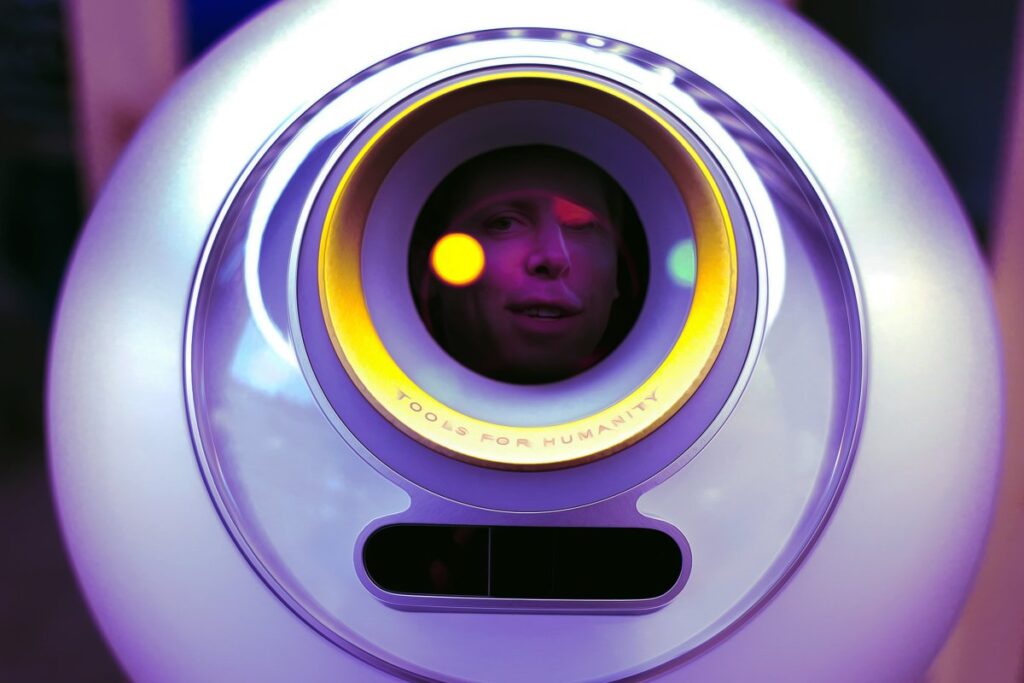
If you thought the tales of OpenAI’s demanding work culture were troubling, Sam Altman's blockchain startup, Tools for Humanity, offers a glimpse into a potentially harsher reality. This company is not only developing technology but also a controversial workplace ethos that raises questions about employee welfare in the tech sector.
At the heart of Tools for Humanity is its flagship project, known as the Orb. This spherical device, designed to act as an eyeball scanner, aims to address the issue of “verifying humanness” through the Worldcoin platform. While the concept may seem bizarre, what’s even more striking is the corporate culture that surrounds its creation.
According to a report by Business Insider, employees at Tools for Humanity are expected to demonstrate unwavering commitment, often working weekends “for the good of humanity.” The company’s CEO, Alex Blania, emphasized this mindset during an all-hands meeting, where he stated, “We will neither fail, nor will we be an average outcome...nothing else should matter.” This stark demand for loyalty raises ethical questions about workplace expectations in the tech industry, especially as it pertains to mental health and work-life balance.
In a video reviewed by Business Insider, a screen in the company’s former San Francisco office proclaimed, “We are very (very) hard working,” and insisted that the team should always be on call. Blania further reiterated that the mission of building a global digital identity system supersedes all other concerns, stating, “We don’t care about politics, we don’t care about DEI [Diversity, Equity, and Inclusion], we just care about how can we achieve the mission through merit, performance, and excellence.” This singular focus raises eyebrows in an era when many companies are attempting to balance performance with a more compassionate approach to employee engagement.
However, the ambitious goals of Tools for Humanity are facing significant challenges. Since the Orb's launch, the company aimed for a staggering two billion sign-ups, yet by November 2025, it had only managed to attract approximately 17.5 million users, which is less than 1% of its target. This shortfall suggests that the “humanitarian mission” touted by the company may serve as a veneer for the intense exploitation of its workforce.
The demands for weekend work and constant availability not only lead to an increase in unpaid labor but also create an environment where employees may feel pressured to sacrifice their personal lives. As the Orb struggles to gain traction, the expectation of relentless devotion to a project that some may consider dubious appears to prioritize corporate ambitions over the well-being of its workforce.
The narrative surrounding Tools for Humanity is emblematic of broader trends in the tech industry, where the glorification of hustle culture often clashes with the need for sustainable work environments. As companies like Tools for Humanity pursue groundbreaking technologies, they must also reckon with the ethical implications of their corporate practices. The prevailing question is whether the drive for innovation justifies the cost to employee health and well-being.
In a world increasingly shaped by technology, the balance between ambition and humanity remains precarious. As we watch the developments of the Orb and similar projects unfold, it is crucial to consider the human cost behind the scenes. Will the pursuit of a digital identity system truly benefit humanity, or does it merely exploit the very individuals tasked with its creation?
U.S. Job Surge SHOCKS Experts: What Trump’s Secret Semiconductor Delay Means for Your Wallet!
You Won't Believe How This Brooklyn Start-Up Just Snagged a $1M AgTech Prize—Here’s What’s Next!

Residents of Saratoga Uncover $2 Million Real Estate Scam – You Won't Believe How They Did It!

You Won't Believe What This $500K Windsor Terrace Co-op Has That Other Brooklyn Listings Don't!

What Happens to Your Body When You Snack on Peanuts Every Night This Winter? Shocking Truth Revealed!

White House REVEALS explosive secrets behind South Africa's G20 snub—You won't believe the fallout!
You might also like: