
Is Bond the Secret Weapon Against Your 8-Hour Doomscrolling Addiction? Find Out How!

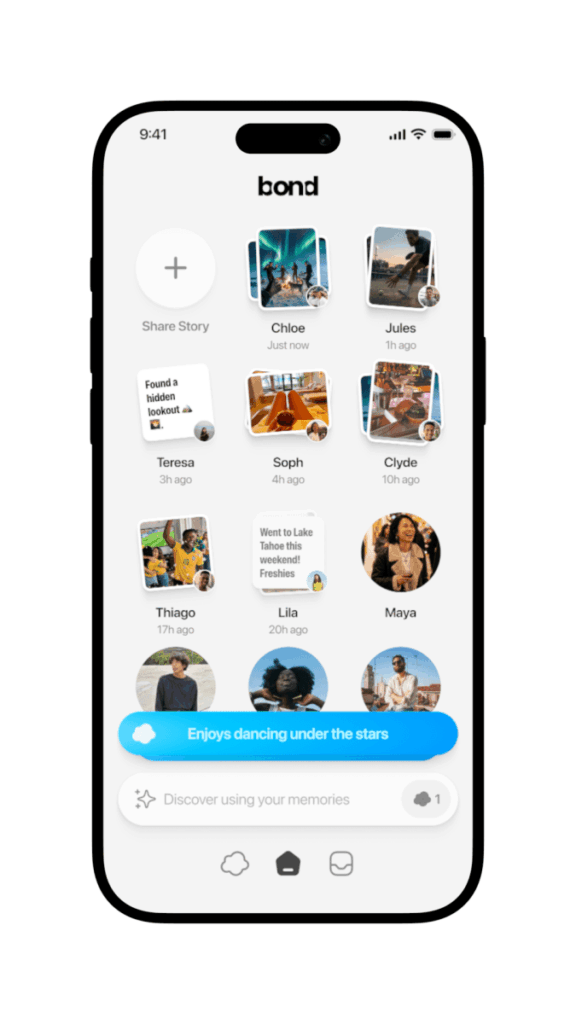
In an age where social media platforms seem designed to keep users endlessly scrolling through feeds of memes and videos, a new contender aims to break this cycle of screen addiction. **Bond**, launched officially on Tuesday, is positioned as an antidote to digital burnout, encouraging users to engage in real-world experiences rather than becoming entrenched in their devices. Co-founder and CEO **Dino Becirovic** describes it as an **AI-powered solution** to America's growing screen addiction.
So how does Bond work? The platform allows users to post updates about their lives through various formats, including pictures, videos, and audio files. These updates, termed "memories," serve not only as a personal archive but as data for Bond's AI system. This AI learns from users’ experiences to generate personalized recommendations for activities that align with their interests. For example, if a user frequently shares their love for pho, the app might suggest a highly-rated Vietnamese restaurant nearby. Similarly, a heavy metal enthusiast might be notified that **Iron Maiden** is performing in their city next week.
The design of Bond is intentionally different from conventional social media sites. Instead of an infinite scrolling feed, profiles are showcased in clusters, and stories posted by users disappear after 24 hours, encouraging a focus on present experiences rather than past ones. However, these stories remain accessible in each user's private memory archive, allowing for easy reflection and revisiting of past adventures.
Becirovic’s team includes former developers from major platforms like **TikTok**, **Twitter**, and **Facebook**, contributing to a rich background in social media innovation. While the platform aims to foster face-to-face interaction and engagement, questions arise regarding its revenue model. Traditional social media platforms largely generate income through advertising, but Bond opts for a different approach.
Becirovic envisions a future where users can license their data accrued on Bond, allowing companies to use it for training AI models. In this scenario, Bond would take a small commission from these transactions. He elaborates, “The idea behind this licensing model is that you can monetize your memories. If we become this platform with the right incentive structure to get billions of people to create about their daily lives, we will naturally become a really attractive place for people to want to train GPT six and seven, all the other variants that are going to come in the future.”
Additionally, there are plans to integrate Bond with e-commerce platforms, enabling product recommendations based on users' memories. This would allow users to opt into a shopping experience that feels more personalized and less intrusive. “If we are able to do this, we believe we could capture some value from the transaction with merchants by enabling a better user experience,” Becirovic stated.
Privacy is a priority for Bond, according to Becirovic, who reassures users that they can delete their memories at any time either through the Memory tab or by using natural language in the Memory chat. “We will introduce more privacy control features to our users for them to manage their data,” he promised. Although he acknowledges that **end-to-end encryption** is a goal for the future, he emphasizes that user data is currently stored securely.
For now, Bond is focused on creating a platform that resonates with users. “Monetization is not a short-term priority,” Becirovic noted, suggesting that the app's immediate goal is providing value through meaningful engagement with real-world experiences. As **Bond** strives to shift the narrative around social media from passive consumption to active living, it highlights a growing awareness of the need for balance in our digital and physical lives.
You Won't Believe What These 4 Ontario Tech Students Did to Earn Prestigious Hydro One Awards!

You Won't Believe What the New True Grit Trail Law Could Mean for Your Summer Adventures!

Stocks Surge Amid Iran Peace Talks: What Netflix's Shocking Move Means for YOUR Wallet!

Apple's CEO Shakeup Fuels Dow & S&P Surge: What You Must Know Before It’s Too Late!

Shocking Secrets: How Former Professor Gesche Würfel's Photography Reveals Climate Truths You Can't Ignore!
Jaden McDaniels Drops a BOMBSHELL on Nuggets – You Won’t Believe His Shocking Claims!
You might also like: