
Could Bulgaria's Pro-Russian Ex-President Steal the Election? Shocking Poll Results Inside!

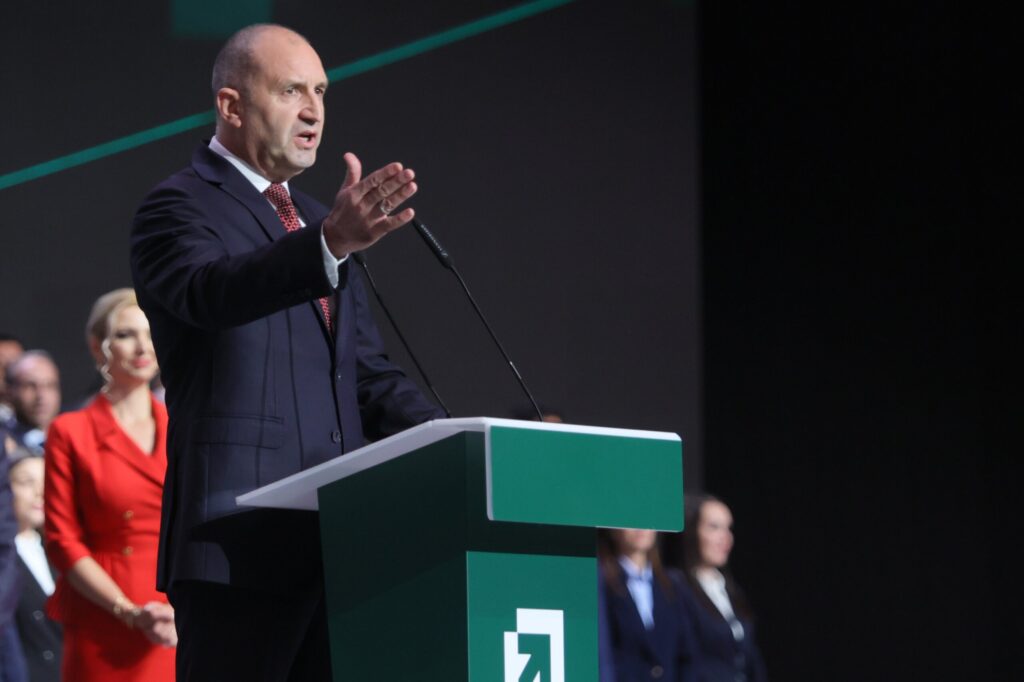
As Bulgaria gears up for a new early election on April 19, the political landscape is shifting dramatically. This election may pave the way for the left-leaning ex-president Rumen Radev to reclaim a significant role in governance, just days after Hungarian voters expressed their discontent with the authoritarian policies of Viktor Orbán.
Radev, who resigned from his largely ceremonial presidency in January 2026, is leading a coalition known as Progressive Bulgaria. Polls indicate that this coalition is favored to secure the majority of votes, with many voters expressing hope that Radev can curb the country’s long-standing issues of oligarchic corruption. However, his Eurosceptic and pro-Russian stance has also attracted a different segment of the electorate.
The upcoming election follows the resignation of a conservative-led government amid widespread anti-corruption protests in December 2025, which drew hundreds of thousands of mainly young people into the streets. This surge of activism reflects a broader discontent with the political status quo, as Bulgaria, a member of the European Union and NATO, has been grappling with political instability since 2021. The country has witnessed seven inconclusive early elections in just five years, fueled by protests and political maneuvering, leading to increased voter apathy and declining participation in elections, which averaged around 35% voter turnout.
In a bid to bolster public confidence in the voting process, the interim government has launched nationwide police raids, arrests, and pre-trial proceedings for vote-buying. These efforts appear to be paying off, with recent opinion polls suggesting that Sunday’s turnout could exceed 50% for the first time in years. Current projections indicate that Radev’s coalition could capture more than 30% of the votes, putting him nearly 10% ahead of his closest rival, Boyko Borissov, leader of the center-right GERB party, whose tenure was cut short by the December protests.
At a recent rally, Radev positioned himself as an adversary to the entrenched corruption and mafia ties that have plagued Bulgarian politics. He declared his intention to “remove the corrupt, oligarchic model of governance from political power.” Despite his popularity, Radev will need to forge a coalition to govern effectively, ruling out partnerships with Borissov’s GERB or the Movement for Rights and Freedoms, a party whose leader, Delyan Peevski, has faced corruption sanctions from both the United States and the UK.
Potential partners for a reformative coalition could be the pro-Western bloc We Continue the Change, predicted to secure 12% to 14% of the votes. However, significant foreign policy concerns loom large, particularly regarding the ongoing Russian invasion of Ukraine. While Radev has officially condemned Moscow’s aggression, he has also voiced opposition to military aid for Ukraine and has called for renewed dialogue with Russia as a potential resolution to the conflict.
Evelina Slavkova, a researcher at Trend, expressed skepticism about Radev’s ability to pivot Bulgaria towards Russia, emphasizing that the nation has established crucial ties with NATO and the EU, along with its recent entry into the eurozone and the Schengen Area. During the campaign, Radev has been cautious in his responses, avoiding definitive stances, a strategy that may be acceptable in a campaign but could prove problematic in governance. “When you’re running the country, you’ll certainly have to provide clear, definitive answers,” Slavkova noted.
This election is critical for Bulgaria, as it navigates through a tumultuous political climate marked by corruption, public disillusionment, and shifting alliances. As the nation approaches the polls, the outcomes will not only determine its domestic policies but also its positioning on the international stage, particularly concerning its relations with Russia and its commitments to the EU and NATO.
Is Malaysia Really Banning Social Media for Under-16s? Shocking Survey Reveals Startling Support!
Swedish Startup AlixLabs Raises €15M: Is This the Future of Game-Changing Tech or a Risky Gamble?

Ex-NBA Star's Shocking Confession: Will His Guilt Sink the League's Integrity? Find Out NOW!
You Won't Believe What Happens When This Request Is Denied – Shocking Consequences Revealed!
Shocking Real Estate Moves in Italy: Covivio's $100M Gamble You Can't Afford to Miss!

This Smartphone App Could Save Your Life: Discover the Shocking Truth Behind LifesaverSIM!
You might also like: