
New Law Could Make Your Teen's Smartphone a Thing of the Past—Find Out What’s at Stake!

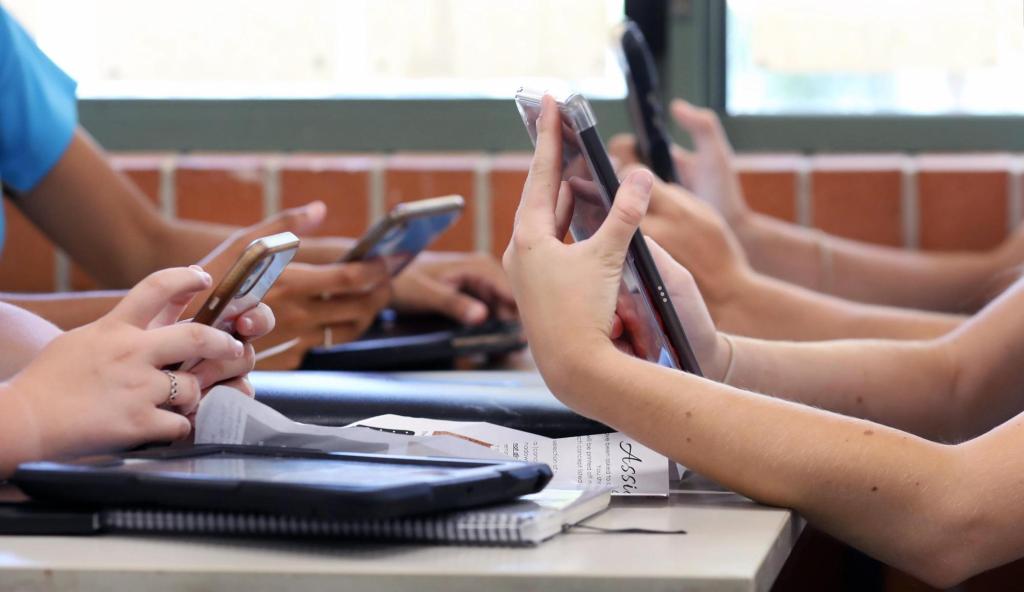
A proposed bipartisan bill, AB 1644, could lead to a statewide ban on students using cellphones in California schools by as early as July 1, 2027. This legislation, introduced this week, would require all TK-12 public schools and charter schools to implement a “bell-to-bell” policy that prohibits the use of smartphones from the first bell in the morning until the final bell at the end of the school day. There would be exceptions for safety, health, and educational purposes, particularly with teacher permission.
The bill was co-authored by a diverse group of legislators: Josh Hoover, a Republican from Folsom; Al Muratsuchi, a Democrat from Torrance; Josh Lowenthal, a Democrat from Long Beach; and Buffy Wicks, a Democrat from Oakland. Assemblymember Wicks articulated the rationale behind the bill, stating, “Smartphones are incredible devices that can be helpful in so many ways. But they are also incredibly disruptive, distracting and addictive — and we know that children’s mental health, attention span, and social wellbeing are being impacted.” She emphasized that the bill aims to ensure that “school time is for learning.”
If passed, California would join at least 10 other states that have enacted similar bans on cellphone use in schools, including Texas, New York, Virginia, Oregon, Arkansas, North Dakota, Nebraska, Alabama, Louisiana, and Georgia. The push for such legislation is backed by research suggesting that excessive smartphone use can lead to negative academic outcomes and mental health issues. Assemblymember Muratsuchi remarked, “Research clearly shows that excessive smartphone use leads to negative academic and mental health outcomes, including reduced focus, increased depression and anxiety and lower overall social and emotional well-being.” He noted that schools adopting phone bans report improved academic performance, particularly in disadvantaged communities, as well as a decrease in cyberbullying and other disciplinary issues.
The introduction of AB 1644 follows the enactment of Assembly Bill 3216, also known as the Phone-Free School Act, signed into law by Governor Gavin Newsom in 2024. This previous legislation allowed local school districts to determine their own policies regarding smartphone use, giving them the autonomy to tailor rules based on their specific needs and circumstances. However, AB 1644 seeks to replace this more flexible framework with a mandated statewide ban.
Governor Newsom has been vocal about the need for smartphone restrictions in schools since the signing of AB 3216, highlighting concerns that high levels of phone use among young people can contribute to increased anxiety, depression, and other mental health challenges. Notably, the response among school districts in the Bay Area has been mixed, with some choosing to enforce bans while others prefer retaining local control over such policies.
The California Teachers Association (CTA) has yet to publicly comment on AB 1644, although they supported the previous legislation aimed at limiting smartphone use. They had previously stated, “Mobile device use in the classroom can be both distracting and harmful based on students’ urge to text or check notifications as they pop up on the screen,” and emphasized the correlation between mobile device use and poorer academic performance.
Conversely, the California School Boards Association (CSBA) has expressed opposition to the previous legislation, claiming it undermines local decision-making. “These decisions are best made at the local level by people who understand, reside, are invested in and accountable in the communities they serve,” a CSBA representative said in response to AB 3216. They have not yet taken an official stance on AB 1644, as the bill is still under consideration.
Research from the University of California, Los Angeles cautions that blanket bans on smartphones in schools may inadvertently exacerbate inequities among students. Lead researcher Kathy Do stated, “There’s no one-size-fits-all answer and the goal shouldn’t be just about restriction, but helping young people build those balanced, digital habits.” This perspective highlights the complexity of addressing smartphone use in educational settings, underscoring the need for a balanced approach rather than strict limitations.
The next legislative step for AB 1644 involves a hearing by the Assembly Education Committee scheduled for April 22. As discussions continue, the future of smartphone use in California schools remains a contentious issue with various stakeholders advocating for their perspectives on the matter.
Batesville Police's Shocking Tribute to Dispatchers: You Won't Believe What Happened Next!
You Won’t Believe What Happens When You Try to Access This Restricted Page—Shocking Truth Revealed!

Knicks’ Shocking Clutch Stats: Can They Really Survive the Playoffs? Find Out Now!

You Won't Believe Which Smartphone Brand is Thriving Amid the 25% Global Sales Drop!

White House in Panic: 12 Top Scientists Mysteriously Disappear—What Are They Hiding?
Illinois House Passes Shocking Social Media Bill—What This Means for Your Privacy!
You might also like: