
White House Ballroom Construction Approved—What Shocking Revelations Could Follow?

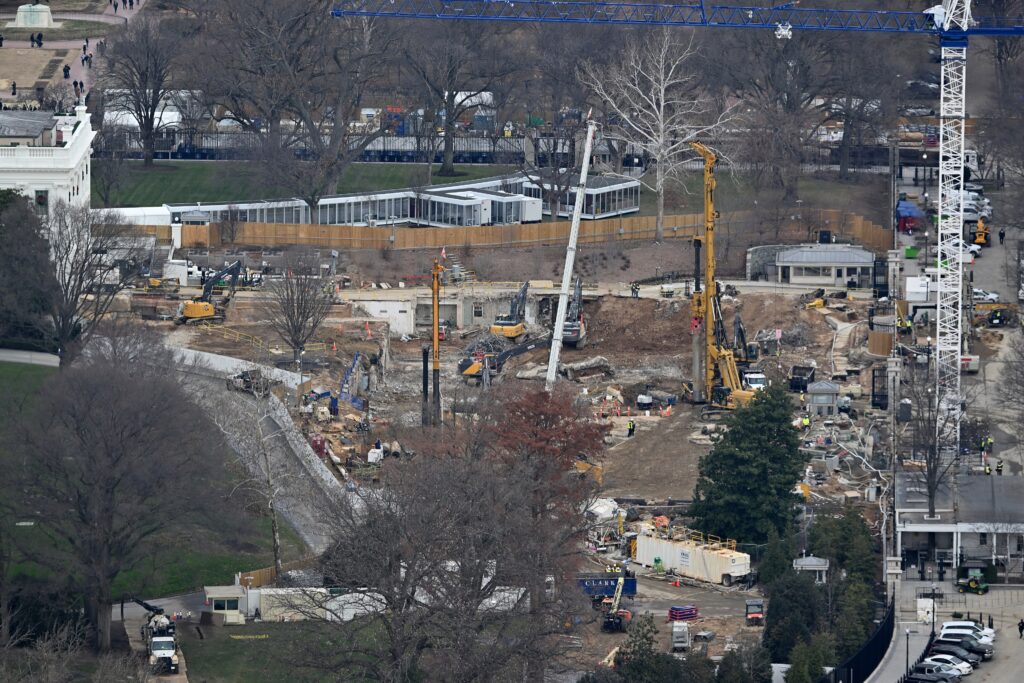
The US Court of Appeals for the District of Columbia Circuit recently extended a lower court's freeze on a partial preliminary injunction that had halted construction of the White House's proposed ballroom, allowing the project to proceed until April 17, 2025. This decision arises amidst ongoing scrutiny and controversy surrounding the project, which has been challenged by the National Trust for Historic Preservation (NTHP).
In December 2025, the NTHP filed a lawsuit against the White House, contesting plans for a 90,000 square foot ballroom to be built on the site of the former East Wing. The organization argued that the project was initiated without appropriate review and that President Donald Trump lacked the necessary statutory authority to commence construction unilaterally. The NTHP claimed the demolition of the East Wing infringed on Congress's authority, raising concerns about the preservation of historic sites in Washington, D.C.
The legal battle began in late March when a federal district court granted an injunction to halt ballroom construction, suggesting that the president likely acted outside his statutory authority. However, this injunction was limited to the ballroom itself and did not affect "actions strictly necessary to ensure the safety and security of the White House," which the court recognized as a significant concern.
White House officials have emphasized that security risks primarily originate from the proposed underground construction, which is said to involve "bomb shelters, a hospital and medical area, protective partitioning, and Top Secret Military installations." These underground facilities have led to the courts permitting a stay on the injunction until April 14, citing potential safety and security risks for the president and White House personnel.
The appellate court highlighted "serious factual questions" regarding the relationship between the proposed underground and above-ground plans. Initially, White House officials claimed that the underground and ballroom constructions were independent projects, but they later argued that the "national security upgrades are inseparable from the rest of the Project." This shift in narrative raised eyebrows, particularly as the court noted that the project's three-year timeline means a temporary pause would minimally impact long-term construction risks.
Dissenting Judge Neomi Rao argued that the NTHP lacked standing to sue the White House, asserting that the president had statutory authorization under 3 U.S.C. § 105(d)(1), which allocates funds necessary for the "care, maintenance, repair, alteration, refurnishing, improvement…of the Executive Residence at the White House."
This case is not an isolated event; it coincides with other contentious renovation projects proposed by President Trump for historically significant buildings in Washington, D.C. Just last month, the NTHP filed another lawsuit contesting plans to overhaul the John F. Kennedy Center for the Performing Arts, indicating a pattern of legal challenges centered around the preservation of iconic American landmarks.
As the legal battle unfolds, the implications extend beyond the immediate project at hand. The ongoing discussions highlight a broader conversation about the balance between national security, historical preservation, and the authority of the executive branch. With the construction timeline now set until April 17, 2025, the resolution of this case may have lasting repercussions for future renovation projects of historic significance.
Shocking Upsets and Star Players: You Won't Believe the Wyoming High School Soccer Scores from April 14-18!

The Shocking Truth: Which NBA Teams Face Elimination Nightmare This Postseason? Find Out NOW!
Nebraska Governor Race Just Got CRAZY: Walz Trails Pillen by Only 5 Points—What Happens Next?

Giants’ Shocking 2026 Draft Strategy: Are They About to Ditch Their Star QB for a Game-Changer?

You Won't Believe These Mind-Blowing NBA Odds! Could This 3-Way Parlay Make You $600 Tonight?

How One Little-Known Tool is Helping Agents Close Deals in a Market Where 70% Fail!
You might also like: