Trump’s Shocking Second Executive Order on College Sports: What This Means for Thousands of Athletes!

On April 3, 2026, President Donald Trump signed an executive order titled “Urgent National Action to Save College Sports”. This initiative aims to address several pressing issues impacting intercollegiate athletics, particularly in light of the growing concerns regarding the financial sustainability of college sports. This order follows Executive Order 14322, known as “Saving College Sports,” which was signed on July 24, 2025, and directed federal agencies to take regulatory, enforcement, and litigation actions to protect opportunities for educational, athletic, and scholarship access, especially in women’s and non-revenue sports.
The new executive order includes six primary objectives: first, to establish more consistent rules and standards regarding Name, Image, and Likeness (NIL) activities and pay-for-play schemes; second, to limit a student-athlete's eligibility for participation in athletics to no more than five years; third, to curb student-athlete transfer activity; fourth, to address financial threats to women's and Olympic sports; fifth, to preempt court rulings and state laws that restrict the NCAA's ability to create and enforce rules; and sixth, to prohibit educational institutions from using federal funds to support NIL, revenue-sharing payments, or coaches’ salaries.
This executive order responds to what President Trump describes as an “out-of-control financial arms race” in college football and basketball, which has driven many universities into significant debt. This financial strain threatens to divert resources from other sports and compromise student-athletes’ educational opportunities and graduation rates. The order emphasizes that the health of the university system is integral to the federal government’s basic functioning, and thus, requires immediate attention.
Set to take effect on August 1, 2026, the order targets all higher education institutions that reported athletics revenues of at least $20 million in the previous year. However, questions remain regarding how these objectives will be realized without federal legislation, especially given the numerous judicial rulings and state laws that currently limit the NCAA's authority. The order employs several terms and phrases that will require further clarification regarding their scope and intent, and stakeholders are anticipating additional guidance as developments unfold.
The NCAA is tasked with updating and clarifying its rules to include:
- Establishing age-based eligibility limits that cap athletics participation at five years, with exceptions for military service or public interest absences;
- Prohibiting professional athletes from returning to college athletics;
- Restricting student-athletes to a one-time transfer with immediate eligibility during their five-year eligibility window (plus an additional transfer for those obtaining a four-year degree);
- Creating transfer windows that do not conflict with the athletic season or academic calendar;
- Mandating medical care for student-athletes during their enrollment period and for a reasonable time thereafter;
- Implementing a revenue-sharing framework that preserves or expands scholarship opportunities in women's and Olympic sports, ensuring that revenue-sharing funds do not detract from these opportunities;
- Restricting the use of federal funds for NIL and revenue-sharing payments, or for compensating coaches and certain athletics staff;
- Prohibiting institutions from engaging in “improper financial activities,” such as fraudulent NIL schemes or using federal funds for unauthorized payments;
- Establishing a national registry of student-athlete agents and instituting rules to shield athletes from excessive agent commissions.
The Attorney General will also play a role in this initiative, with instructions to invalidate state laws that conflict with NCAA rules or hinder interstate commerce. Furthermore, other federal agencies, including the Office of Management and Budget and the Department of Education, are directed to support these initiatives by ensuring compliance and enforcing existing federal laws related to student-athlete agents.
Concerns about Title IX regulations are woven into this discussion as well. Previously, the U.S. Department of Education’s Office of Civil Rights had rescinded guidance relating to NIL payments, arguing that Title IX does not dictate how colleges should allocate compensation among student-athletes based on gender equity. This aspect of the ongoing discourse around college sports funding and equity remains contentious, particularly as institutions navigate compliance with federal regulations.
As this executive order unfolds, stakeholders in college athletics, students, and educational institutions will be closely monitoring the implications of these new measures. The balance between maintaining competitive integrity and ensuring financial sustainability in college sports is crucial, and how these new rules will be implemented remains to be seen.
Discover the Shocking New Rules for Indiana's 2026 Primary Absentee Voting—You Could Lose Your Vote!
Oil Hits $100 Again – What This Shocking Shift Means for Your Wallet and US-Iran Talks!
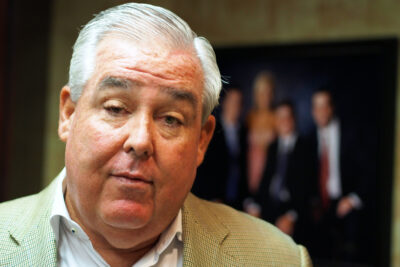
John Morgan’s Shocking Announcement: Name His Party and Snag $100K Before It's Too Late!

You Won't Believe Which Top 25 College Baseball Team Just Crumbled in Week 9!

You Won't Believe What Happens When Magic Takes on 76ers—Shocking Odds Revealed!
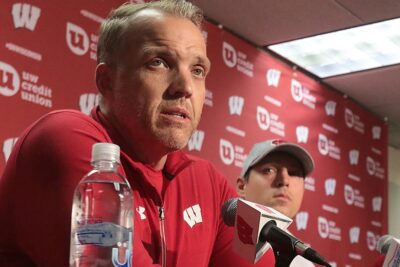
Wisconsin AD Chris McIntosh's Shocking Move: What This Means for the Big Ten and YOU!
You might also like: