
Apple's Shocking Lead in Smartphone Sales—Is Samsung in Danger of Losing Its Edge? Find Out Now!

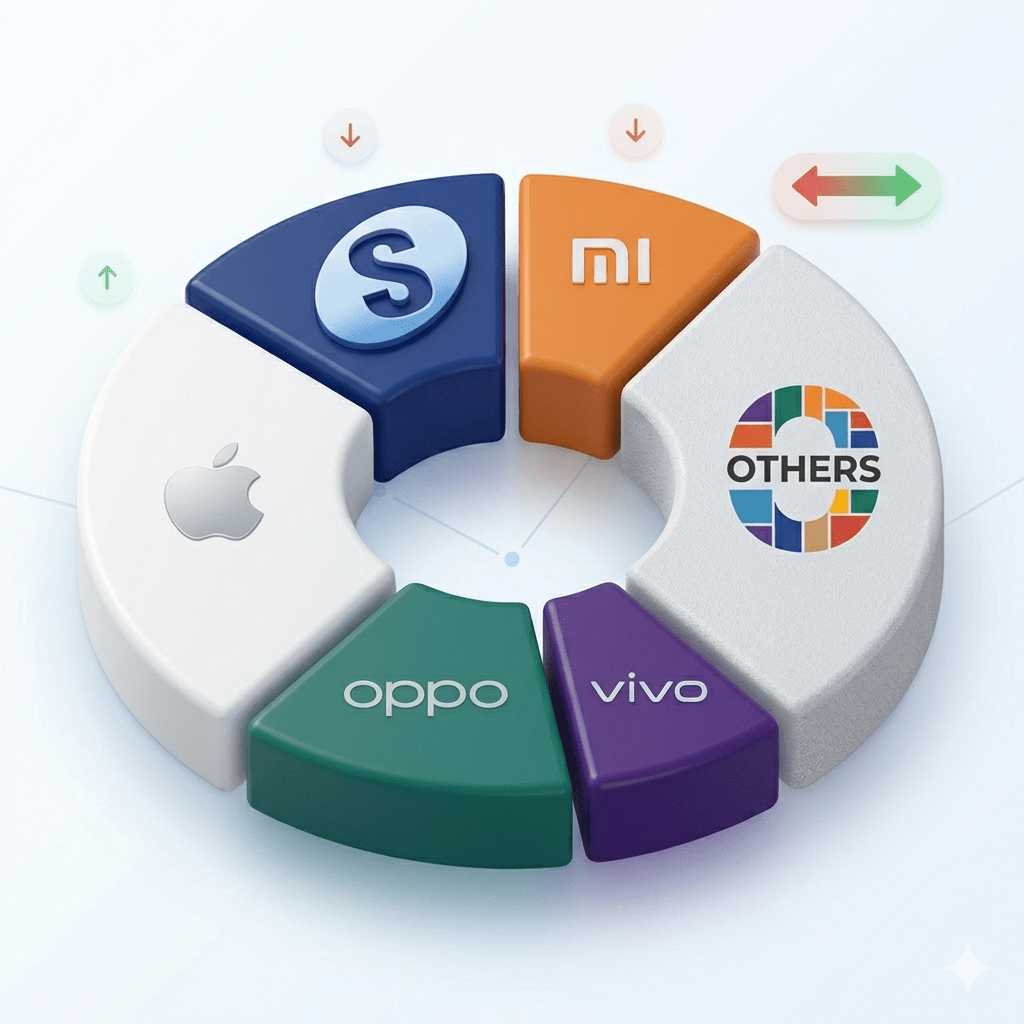
The global smartphone market has kicked off early 2026 with Apple successfully maintaining its leading position. The continued commercial success of the iPhone 17 series has allowed the American tech giant to fend off increasing competition from Samsung, despite a challenging macroeconomic environment.
Recent data from Counterpoint Research reveals the current market distribution among the top smartphone manufacturers:
| Brand | Market Share | Year-over-Year (YoY) Status |
| Apple | 21% | Growth fueled by iPhone 17 & trade-ins |
| Samsung | 20% | 6% decline in shipments |
| Xiaomi | 12% | 19% decline due to supply issues |
| OPPO (including realme/OnePlus) | 11% | Facing sales pressure |
| Vivo | 8% | Facing sales pressure |
📰 Table of Contents
Analysis of Key Players
Apple's dominance can largely be attributed to its aggressive trade-in programs and robust ecosystem loyalty. With a market share of 21%, the company has effectively leveraged consumer relationships to drive sales. In comparison, Samsung, with a market share of 20%, has reported a 6% annual decline in shipments. Analysts attribute this decline to a delayed launch of the Galaxy S26 series and weaker performance in the entry-level market segment. However, early reports of record-breaking sales for the S26 indicate a potential rebound for Samsung as the second quarter approaches.
Xiaomi, holding steady in third place with a 12% market share, is experiencing significant challenges. A staggering 19% annual drop in sales underscores the brand’s vulnerability to the ongoing semiconductor and memory chip shortages. Given Xiaomi's focus on price-sensitive, entry-level devices, escalating component costs have adversely affected its profit margins and inventory levels more than those of its premium-focused rivals.
Further down the list, OPPO and Vivo are both facing sales pressures, with market shares of 11% and 8%, respectively. The competition remains fierce as these brands attempt to navigate the current climate.
2026 Market Outlook
Looking ahead, the remainder of 2026 is expected to be a challenging year for the smartphone industry. Persistently high prices for memory components are compelling Original Equipment Manufacturers (OEMs) to adjust their strategies. Rather than aiming for high shipment volumes, companies are increasingly prioritizing value over volume. This strategic pivot includes streamlining product portfolios, phasing out low-margin models, and emphasizing the refurbished device market to attract cost-conscious consumers. Enhancing efficiency and implementing hardware configuration updates will be critical for maintaining profitability in an increasingly constrained market.
As competition intensifies and economic pressures mount, every player in the smartphone market will need to adapt swiftly to survive and thrive. How these companies navigate the evolving landscape will undoubtedly shape the future of mobile technology.
What Shocking Vaccine Secrets Were Uncovered in September 2025? You Won't Believe the Consequences!

This Shocking Analysis Reveals the ONE Thing You Must Do Now—Or Risk Losing Everything!

BTC Plummets Again! Is Trump's New Order About to Wreck Your Investments? Find Out NOW!
Is Your Smartphone About to Demand Your Age? 3 Shocking Reasons You Can't Ignore!

Teddy Swims Takes the Stage at Tallahassee Gala – What’s the Shocking Surprise in Store?

Trump’s Shocking Victory: Court Decision Could Change Everything in 7 Days!
You might also like: