
Young Gamers Are Teaming Up to Save the Planet—Will They Succeed Before It’s Too Late?

You might think that teaching the next generation about climate change would require a visit to the forest or the ocean, but a new initiative is taking a different approach. The Petitcodiac Watershed Alliance, an environmental group based in New Brunswick, has recently launched two online educational games in collaboration with Nanomonx, a learning platform development company. This innovative strategy aims to engage children in Moncton and surrounding areas by teaching them how they can contribute to fighting climate change and reducing pollution.
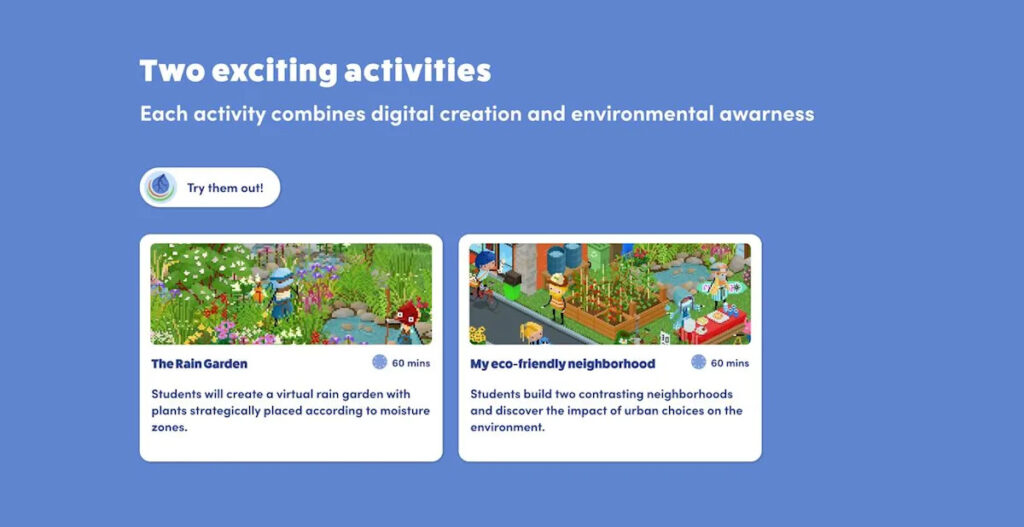
Vanessa Leclair, project leader for the Petitcodiac Watershed Alliance, emphasized the urgency of climate education, stating, “People are asking … ‘Why is it so hot? Why are the rivers so low?’” This growing awareness of climate changes has inspired the development of the games, which encourage students to build eco-friendly neighborhoods and create their own rain gardens—structures designed to absorb storm-water runoff from rooftops and driveways.
The games are hosted on a platform called Troubadour, created by Nanomonx, and are based on research conducted by the Petitcodiac Watershed Alliance. One of the games, titled the Great Green Neighborhood Showdown, invites students to independently design two contrasting neighborhoods: one that is eco-friendly and another that incorporates unsustainable practices.
Players begin with an empty neighborhood and aim to construct an eco-friendly community equipped with features like solar panels, green roofs, vegetable gardens, public transportation options, and parks. Conversely, they can populate the other neighborhood with detrimental elements such as litter, oil spills, and expansive parking lots. A comprehensive guide provided by the Petitcodiac Watershed Alliance explains the environmental impacts of various choices.
In another module of the game, students learn to build their own rain gardens, starting with a blank canvas where they can select which plants to include. The guide details the optimal arrangement for plant placement, recommending moisture-loving plants like swamp milkweed and various ferns be positioned in the center, while drought-resistant options like marsh marigold and creeping juniper are placed at the front.
Leclair hopes that these games will empower students. “A lot of the time you can feel kind of helpless in climate change, like, 'What am I going to do on my own?'” she noted. “It can give them a little bit more hope and certainty that what they're doing can actually make an impact.” Although the games currently target students in the Moncton area, there are aspirations for broader outreach in the future.
Joseph Baril, president and co-founder of Nanomonx, remarked on the significance of the Troubadour platform, which boasts around 37,000 users from over 500 schools, primarily located in Quebec, New Brunswick, and Nova Scotia. He explained, “They provided all the knowledge and their expertise, and we provided the platform.” The game employs pixel art to create a visually engaging learning environment.
While the games do not feature a built-in scoring system, there are resources available for teachers, ensuring that students not only have fun but also gain essential knowledge about environmental issues. For example, rain gardens are particularly advantageous, as they facilitate storm-water absorption, preventing contaminants like salt and oil from flowing into waterways, which can adversely affect fish habitats.
The free games are available in both French and English, further broadening access for diverse students. By merging education with interactive play, the Petitcodiac Watershed Alliance and Nanomonx are paving the way for a new generation of environmentally conscious individuals. As climate change becomes an increasingly pressing issue, initiatives like these could be vital in equipping children with the knowledge and tools they need to make a tangible impact in their communities.
You Won't Believe What This Celebrity Did—Legal Troubles Could Change Everything!
The Shocking Truth: Who Was the Browns’ Most Controversial First-Round Draft Pick Ever? You Won’t Believe the Consequences!

Is Bitcoin on the Verge of a Catastrophic Plunge? One Trader Reveals a Shocking Prediction!

You Won't Believe What Startup Jobs Will Look Like in 2028—5 Scenarios That Will Shock You!

Is the White House’s Misinformation Endangering 30 Million American Kids? Shocking Truth Revealed!

Who Will Steal the Spotlight? Shocking Showdown: Jaime Jaquez Jr. vs. Keldon Johnson for NBA Sixth Man of the Year!
You might also like: