
Massachusetts On the Brink: Could 30,000 Students Lose School Access Over Vaccine Exemptions?

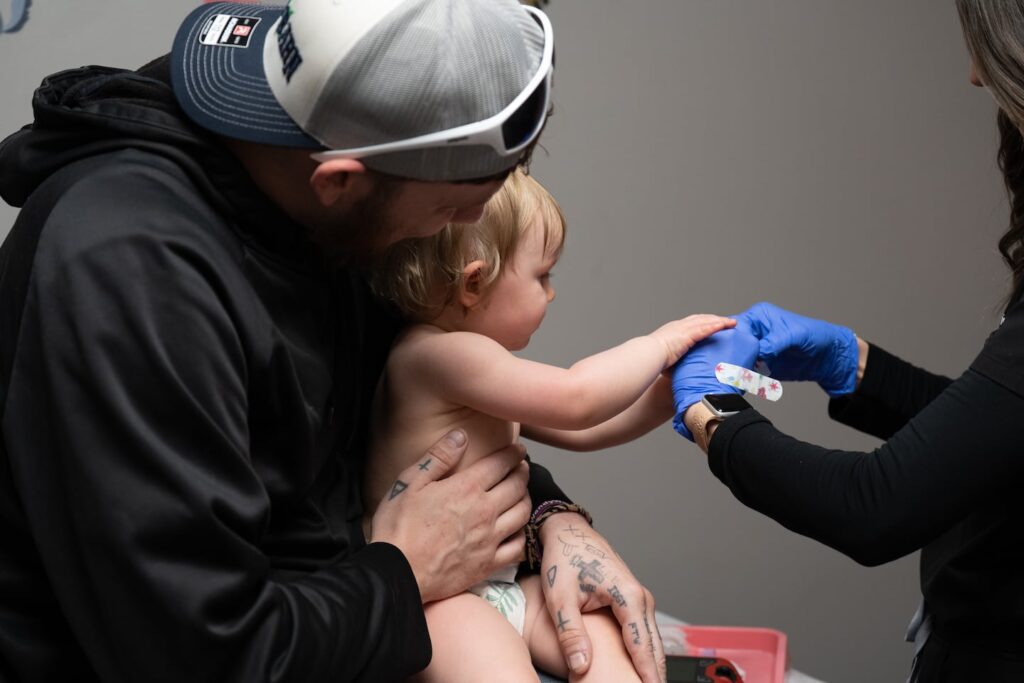
I contracted measles in medical school in 1991 while caring for a patient who ultimately died from the disease. Despite being vaccinated—at the time, only one dose was recommended—I developed pneumonia and endured days of high fever and relentless coughing. I was fortunate to survive, but the experience deepened my understanding of how devastating vaccine-preventable diseases can be.
As a pediatrician in western Massachusetts, I have observed a concerning trend: an increase in parental vaccine exemptions for some or all of the vaccines recommended by leading experts in infectious disease and public health. Recent state immunization data reveals that while Massachusetts maintains a generally healthy immunization rate, the prevalence of religious exemptions has risen from 0.9 percent of kindergartners in the 2021-22 school year to 1.63 percent in 2025-26. This steady rise over recent years is alarming.
In Massachusetts, several “hot zones” of under-vaccination have emerged, where exemption rates exceed levels necessary to achieve herd immunity. In some counties and schools, vaccination rates have dipped well below the critical threshold required to contain outbreaks, making these areas vulnerable to the spread of diseases that could affect the wider community.
Despite Massachusetts no longer permitting philosophical exemptions based on personal beliefs, it continues to allow religious exemptions. Notably, no organized world religion opposes vaccination. A bill currently in the state Legislature aims to eliminate all nonmedical vaccine exemptions, a move that many health advocates support.
The debate around vaccine exemptions is not new. In the landmark 1972 Supreme Court case Wisconsin v. Yoder, the court ruled in favor of Amish parents who wanted to keep their children home after eighth grade, citing religious rights. However, Chief Justice Warren Burger noted, “the very concept of ordered liberty precludes allowing every person to make his own standards on matters of conduct in which the society as a whole has important interests.” This statement underscores the balance between individual freedoms and community health.
Chief Justice Burger’s reasoning distinguished between deeply held religious beliefs and personal or philosophical preferences, advocating for a shared framework of conduct. This perspective has led multiple states, including Maine, Connecticut, and New York, to follow the scientific consensus by eliminating nonmedical exemptions to childhood vaccination.
Decades of scientific research confirm that vaccines provide the best defense against deadly diseases. Recently, a federal judge in Boston temporarily blocked dangerous changes made by the Trump administration to the childhood vaccine schedule, marking a significant victory for public health. Unsurprisingly, the administration has pledged to challenge this ruling, as it has consistently sought to undermine policies grounded in rigorous science.
The troubling wave of vaccine misinformation stemming from the previous administration has compelled my practice to reinforce our commitment to vaccination. We emphasize why we adhere to guidelines supported by the American Academy of Pediatrics and other reputable, science-based organizations. To further this mission, I collaborated with public health leaders in western Massachusetts to launch ValleyVax.org, a website dedicated to providing reliable, science-based vaccine information for our community.
In light of these developments, I wholeheartedly support the proposed bill to eliminate nonmedical vaccine exemptions in Massachusetts. If passed, this legislation will serve to protect entire communities from the rising threat of vaccine-preventable diseases. We must prioritize the health of our children and our society as a whole.
You Won't Believe How Your Favorite Foods Are Sabotaging Your Happiness—Find Out Why!

Is This Women's Soccer Coach Hiding a Shocking Secret That Could Change Everything?

You Won't Believe What Happens as Prosper Walnut Grove's Unbeaten Streak Hits a Shocking 58 Games!

Unveiled: Scientists Discover 25 Hidden Lakes Under Arctic Glaciers—What This Means for Our Future!

Colin Cowherd’s SHOCKING Titans Pick in NFL Mock Draft Could Change Everything – Are You Ready?
Unlock the Future: 5 Shocking Startup Scenarios You Won't Believe Are Coming by 2028!
You might also like: