Why Thousands of Babies in Measles Hotbeds Are Sitting Ducks – Shocking Truth Revealed!

As measles cases surge across the United States, parents like John Otwell are feeling the weight of worry as they navigate daily life with young children. With their baby, Arthur, too young for the measles vaccine and a sibling due in June, the Otwells have become increasingly anxious about the highly contagious virus. “We go to the Costco that was kind of a hotbed,” Otwell noted, referencing the state health department’s warnings of public exposure at the store. “A lot of people just don’t get it; they think it’s just a cold. It’s not.”
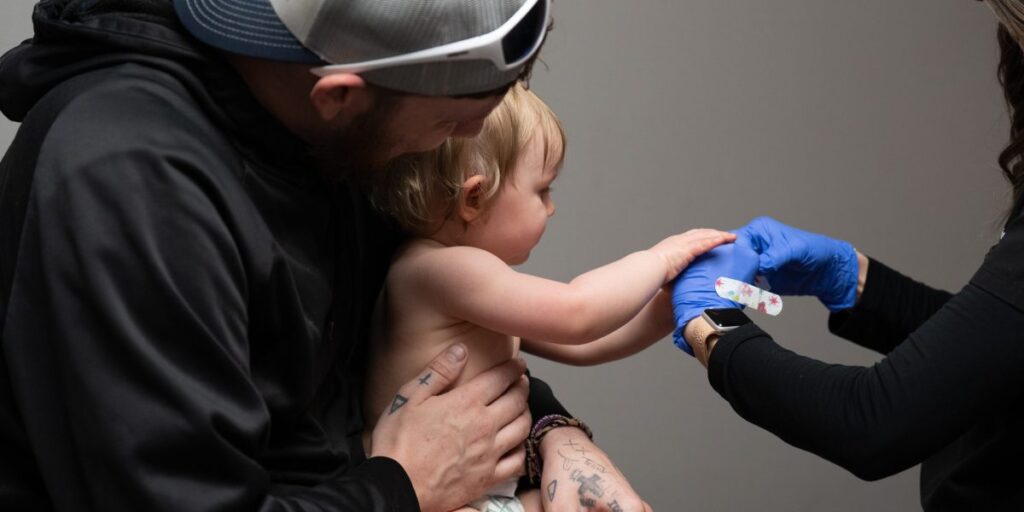
The situation in South Carolina has become alarming, with the state experiencing its worst measles outbreak in over 35 years, totaling about 1,000 cases. This surge has surpassed the previous year's outbreak in Texas. By the time of Arthur's 9-month checkup, new state guidelines allowed him to receive his first dose of the MMR (measles, mumps, and rubella) vaccine earlier than the usual 12 to 15 months, but concerns remain high. Their new baby won’t be eligible for the shot until at least 6 months old, a fact that unsettles parents of infants, particularly in regions where measles is prevalent.
Infants who are not yet vaccinated are among the most vulnerable during a measles outbreak. The disease can cause severe complications, such as pneumonia and brain swelling, sometimes leading to death. Dr. Deborah Greenhouse, a pediatrician in Columbia, emphasized the importance of herd immunity, noting that at least 95% of a community must be vaccinated to effectively prevent outbreaks. Yet, vaccination rates have been declining, eroding this crucial protection across South Carolina and the broader United States. In Spartanburg County, the outbreak's epicenter, less than 90% of students have received their required vaccines.
“Babies become sitting ducks,” Dr. Greenhouse warned. “The burden is on all of us to protect all of us.” However, some policymakers are framing vaccination as an issue of personal freedom rather than a public health necessity. At the federal level, Health Secretary Robert F. Kennedy Jr., a prominent anti-vaccine advocate, has sought to reshape vaccine policy while overseeing significant cuts to public health funding. Although a temporary federal ruling has slowed his efforts, numerous bills are being introduced in states like South Carolina that could further lower vaccination rates.
While the South Carolina outbreak has shown signs of slowing, measles is still spreading across the nation, with 17 outbreaks reported this year and 48 last year. The U.S. is at risk of losing its status as a country that has eliminated measles.
Doctors Work to Protect the Youngest Against Measles
Dr. Jessica Early, a pediatrician in Greer, never anticipated the return of measles to her community. Alarmed by the outbreak, she and her colleagues began offering the MMR vaccine to infants as young as 6 months and administering the second dose earlier than usual, typically given at ages 4 to 6. Despite the urgency, data on how many infants have contracted measles or been hospitalized due to the virus remains unclear, as state officials only report that 253 of the 997 cases involved children aged 4 and younger, citing confidentiality concerns.
Many doctors are fielding questions from concerned parents about the safety of bringing infants to waiting rooms or daycare. Thomas Compton, regional director of Miss Tammy’s Little Learning Center, reported that 18 parents withdrew their children from his facilities even though there were no confirmed cases. “A lot of parents were really stressed out,” Compton said, noting that the uncertainty surrounding measles heightened anxiety over any illness.
South Carolina law requires vaccines for children in licensed daycares, yet many families easily obtain religious exemptions. Currently, around 20% of the 300 children in Compton’s daycare have vaccine waivers. Amid the outbreak, state officials provided little guidance, prompting daycare staff to disinfect surfaces and track local cases through social media.
As the legislative landscape shifts, alarming proposals are surfacing. An Associated Press investigation last year revealed that numerous anti-vaccine bills were being pushed in statehouses nationwide, including at least eight in South Carolina. One proposed bill would prohibit requiring vaccines for children under 2, effectively eliminating daycare vaccination requirements. Pediatricians like Greenhouse find such proposals distressing. “For people like me, that is a gut punch that is terrifying,” she stated.
Senator Carlisle Kennedy, a Republican who supports the bill, argues that it aims to protect parental rights, sharing that his child was born without working kidneys and received vaccines on a personalized schedule. However, opponents argue that maintaining herd immunity is essential for protecting children in similar situations.
As vaccination rates continue to falter, doctors fear the repercussions could be dire. In the first quarter of 2026, the U.S. logged 1,671 measles cases—73% of the total for 2025, a year marked by the worst outbreak in decades. National MMR vaccination rates have dropped to 92.5% among kindergartners in the 2024-25 school year, down from 95.2% in 2019-20. Communities are experiencing even lower rates; in one Spartanburg County school, only 21% of children received all required vaccines.
Dr. Greenhouse lamented, “To see that we are actually going backwards is just confounding,” emphasizing the critical role of immunization in public health. Helen Kaiser, a resident in the outbreak area, took proactive measures by vaccinating her twin 2-year-old sons early to protect them and their community. “I would never forgive myself,” she said, “if I knew that my son had gotten another baby very sick and it was something I could have prevented.”
White House Issues Urgent Warning: Is Insider Trading on Prediction Markets More Common Than You Think?
This Shocking Secret Behind "Unavailable for Legal Reasons" Will Leave You Speechless! Discover What They’re Hiding!

Apple's Shocking Q1 2026 Victory: You Won't Believe How They Beat Samsung by 30%!

Swedish Outdoor Groups Launch SHOCKING Strategy to Influence 2026 Election—Are You Ready?

Apple’s Shocking Smartphone Dominance: Why Their Market Share is Surging While Others Plummet!

Social Media Giants Face $1 Billion Lawsuits! Is Your Freedom of Speech at Risk?
You might also like: