
Is the U.S. Ignoring a Hepatitis B Time Bomb? Babies at Risk Amid Vaccine Confusion!

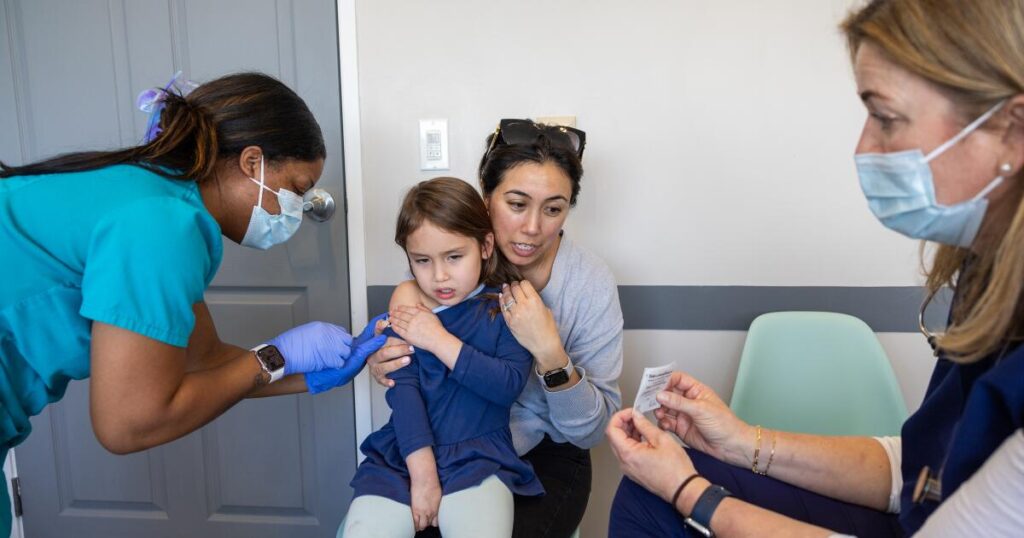
Measles is making a significant comeback in the United States, with over 1,500 cases reported in the first months of 2026. This alarming trend puts the nation on track to surpass last year’s total of more than 2,200 cases, which marked the highest number of infections in decades. Public health officials are raising concerns about the potential loss of the country's “measles-free” status, a situation exacerbated by declining childhood vaccination rates.
Measles isn’t the only disease that could be poised for a resurgence. Recent research conducted by colleagues and me found that hepatitis B vaccination rates among newborns declined by more than 10% between 2023 and August 2025. At first glance, hepatitis B may not appear to be a significant threat to infants; the virus typically spreads through infected blood or bodily fluids—exposures that many parents might believe are rare for newborns. However, prior to the introduction of routine vaccination, hepatitis B infected approximately 18,000 children under the age of 10 each year in the U.S., with about half of those infections transmitted from mother to child during birth.
The remaining infections often stemmed from everyday household exposure—such as contact with a caregiver or family member who was unknowingly infected. The long-term consequences of hepatitis B can be severe. Although acute infections are often mild or asymptomatic, as many as 90% of infants infected during their first year of life can develop chronic hepatitis B. Over time, this chronic infection may lead to cirrhosis, liver cancer, and even liver failure.
The push for prevention began in 1988 with a recommendation for universal hepatitis B testing during pregnancy. This initiative aimed to promptly protect infants born to infected mothers. While the strategy did help identify many high-risk cases, it did not eliminate all infections. Each year, between 50 and 100 infants continued to develop hepatitis B. To address this gap, the recommendation for universal newborn vaccination was introduced in 1991. Following this, hepatitis B infections in children fell to fewer than 20 annually.
However, many physicians were taken aback when, in December 2025, the federal government’s Advisory Committee on Immunization Practices revised its guidance on hepatitis B vaccination for newborns. The new recommendation allows babies born to mothers who test negative for hepatitis B to receive the vaccine based on individual clinical decision-making rather than a universal mandate. While this approach may seem logical—considering the low immediate risk to newborns from negative-tested mothers—it raises questions about the historical necessity of universal vaccination.
Today, approximately 660,000 Americans live with chronic hepatitis B, and about half of them are unaware of their infection. The risks of exposure haven’t disappeared; they have merely been managed through vaccination and screening. This evolving guidance is creating a confusing landscape for parents. Earlier this year, the Centers for Disease Control and Prevention (CDC) revised its childhood immunization schedule, moving several vaccines from universally recommended status to merely suggested discussions between parents and healthcare providers. These changes came without new supporting evidence, prompting the American Academy of Pediatrics to create its own immunization schedule that retains many previous recommendations.
Recent legal developments have added to this confusion. A federal judge has temporarily blocked the CDC’s changes, invalidating actions taken by the advisory committee. As a result, many parents now find themselves asking questions that were previously uncommon: Which vaccine schedule should we follow? Is this the schedule with all the vaccines or only some? Vaccination decisions are deeply influenced by trust and consistency. When parents receive mixed messages, they may begin to question the necessity of vaccines entirely—an issue that has already led to the resurgence of measles.
For decades, hepatitis B vaccination has protected American children from a virus that previously infected thousands annually. As the disease has become rare, many parents and younger physicians have never witnessed its severe consequences firsthand. If the rise in measles cases serves as a warning, hepatitis B could be on a similar trajectory.
The lesson from the past is clear: When we cease to utilize effective vaccines, the diseases they prevent return. The importance of maintaining vaccination programs cannot be overstated if we are to safeguard the health of future generations.
Joshua Rothman is a pediatrician at UC San Diego Health and a clinical assistant professor of pediatrics at the UC San Diego School of Medicine.
This Startup Just Scored $4.1M for a Surprising Solution to AI Panic – What They Discovered Will Shock You!

Mortgage Rates Skyrocket to 7%—Will You Be Priced Out of Your Dream Home This Spring?

UBS Just Slashed Planet Fitness Target Price—Is Your Investment at Risk? Shocking Details Inside!

You Won’t Believe What the Pasteur Institute of Iran Just Discovered About Global Health!

Should Your Grandparents Get the Vaccine First? Shocking Data Reveals Surprising Risks!

Thunder Secure No. 1 Seed for 3rd Year - Are They Destined for NBA Glory or Heartbreak?
You might also like: