
Mortgage Rates Skyrocket to 7%—Will You Be Priced Out of Your Dream Home This Spring?

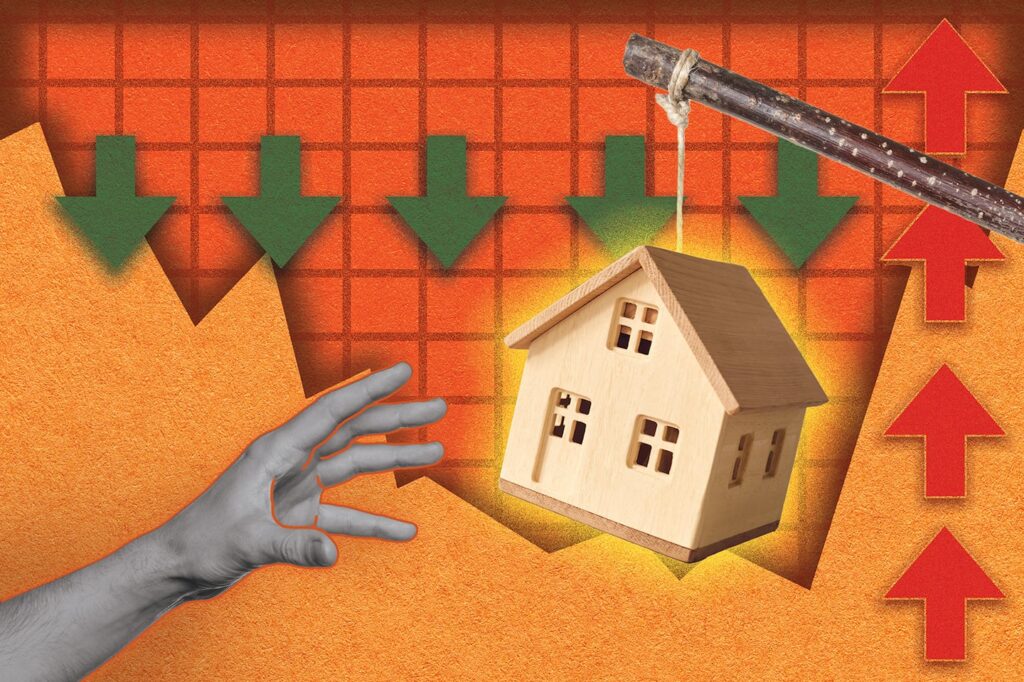
Just a few weeks ago, Greater Boston’s housing market seemed poised for a revival. After a prolonged four-year freeze characterized by a lack of interested buyers and sellers, mortgage rates were on a steady decline, offering hope to many who had been shut out by high borrowing costs. Real estate agents and economists were optimistic about a bustling spring, anticipating a surge in home sales.
However, this optimism was short-lived. In March, mortgage rates surged again amid global instability and rising oil prices linked to the war in Iran, pushing potential buyers back into a familiar state of limbo. "It has certainly had an impact," said Melvin Vieira Jr., a real estate agent at RE/MAX Real Estate Center in Boston. "You have a pool of buyers who were looking very seriously at buying this year ... who are looking at interest rates now compared to a few weeks ago and saying, ‘I don’t think I can make this work anymore.’”
As spring—the peak home-buying season for Greater Boston—approaches, the outlook has shifted dramatically. Economists and real estate professionals are now forecasting a milder sales environment than previously expected.
To put the current situation into perspective, only 388 single-family homes sold in the region in February, according to the Greater Boston Association of Realtors, and a mere 643 homes were put up for sale. Both figures are lower than the same month in 2025, a year already marked by sluggish home sales. These numbers were recorded before mortgage rates spiked again.
The crux of the issue lies in the dynamics that have kept the housing market stagnant since mortgage rates began climbing in 2022. Home prices in Greater Boston have been exorbitantly high for decades, and they have reached new heights over the past decade. This surge in home prices has coincided with historically low mortgage rates, which dipped below 3 percent in 2021. As a result, middle-income families found themselves able to afford homes despite the high price tags.
However, mortgage rates more than doubled in 2022 and have remained elevated, forcing prospective homebuyers to navigate both high prices and steep monthly payments. An estimated 100,000 people who could afford an entry-level home in the region in 2021 can no longer do so as of 2025. This situation has also discouraged many homeowners from selling, as most have locked in lower mortgage rates on their current homes compared to the prevailing rates for new mortgages.
The average on a 30-year fixed-rate mortgage peaked near 8 percent in October 2023, but began to trend downwards through 2025, which fueled a belief among real estate agents that spring could finally see a rebound in the market. The optimism crescendoed in early March when the 30-year fixed-rate average dipped below 6 percent for the first time since 2022. “We were seeing more inventory, modest price increases, and decreasing rates, which meant that housing affordability was improving,” remarked Brad Case, chief residential economist at Homes.com.
Yet, the optimism has been dampened sharply with rates climbing back up to 6.46 percent following the U.S. conflict in Iran. While this won’t completely halt the spring season, it will likely slow activity. “Buying and selling will continue to happen,” said Case, “But lots of people who had been putting off their buying or selling for a couple of years now in hopes of things starting to get more affordable are going to think to themselves, ‘Well, maybe I can put this off for one more year.’”
Despite the challenges, some real estate agents remain hopeful for a bustling spring. Sage Jankowitz, a real estate agent based in Cambridge who owns Cambridge Sage Real Estate, is already witnessing signs of heightened competition among buyers. Recently, a simple house in Arlington attracted multiple offers; Jankowitz noted that it had seven interested buyers. “I was definitely feeling pessimistic going into this year,” he admitted. “But from what I’ve seen so far, it feels like buyers are more serious about going out and getting a home than they have been the last few years.”
Furthermore, Joselin Malkhasian, a realtor at Lammachia in Waltham and president of GBAR, reported seeing intense competition and bustling open houses in the suburbs of Boston, especially in affluent towns west of the city. Economists have long speculated that buyers and sellers who have been holding out for lower mortgage rates might eventually tire of waiting. Historically, mortgage rates hovered above 6 percent for decades leading up to the Great Recession, and yet people still purchased homes.
“It’s actually more affordable to buy a home right now because rates are still lower than they were last year,” noted Orphe Divounguy, a senior economist at Zillow. Accordingly, modest increases in activity this spring could be expected. However, the overarching sense of uncertainty about the economy and global instability, particularly the ongoing war in Iran, may continue to weigh on the housing market. Vieira Jr. reflected on this sentiment: “It’s difficult for people to feel confident making the biggest purchase of their lives when they don’t know which way the economy is going to go. You don’t want to be on the hook for a mortgage when you don’t know if you’re going to have a job next week.”
As Greater Boston navigates these turbulent waters, the interplay of mortgage rates, home prices, and global events continues to shape the outlook for the housing market.
UBS Just Slashed Planet Fitness Target Price—Is Your Investment at Risk? Shocking Details Inside!

You Won’t Believe What the Pasteur Institute of Iran Just Discovered About Global Health!

Should Your Grandparents Get the Vaccine First? Shocking Data Reveals Surprising Risks!

Thunder Secure No. 1 Seed for 3rd Year - Are They Destined for NBA Glory or Heartbreak?

Bhutan's Shocking Move: 320 Bitcoin Sold—What This Means for Your Wallet!
Ohio's Bold AI Move: Will Your Degree Become Obsolete? Shocking Updates Inside!
You might also like: