
Iran's Shocking Move to Close Strait of Hormuz: What the White House Fears Most!

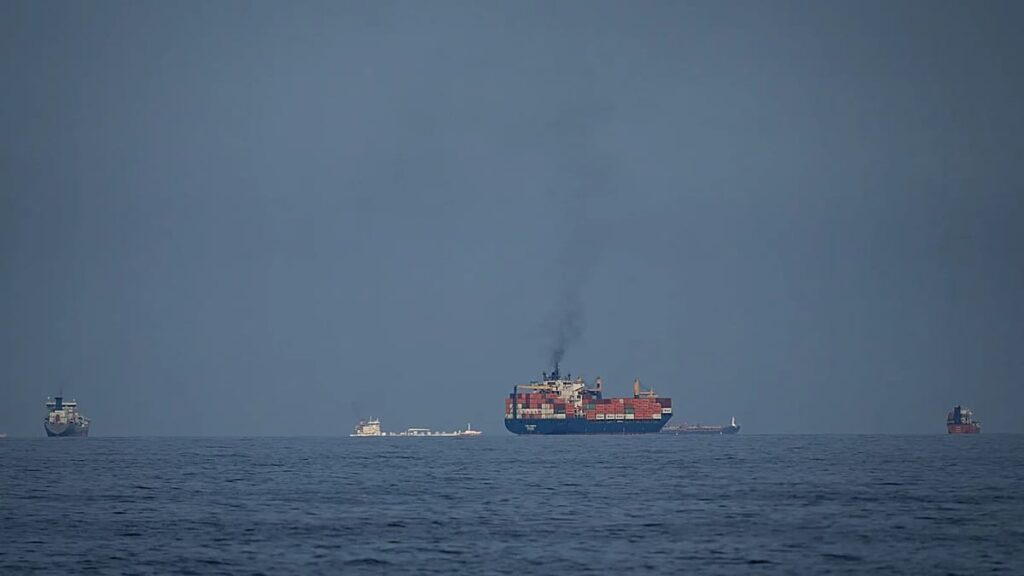
The United States has issued a firm demand for Iran to immediately reopen the Strait of Hormuz, a vital maritime corridor, following reports that it was closed despite a two-week ceasefire agreement between the two nations. White House Press Secretary Karoline Leavitt stated, “Any closure is completely unacceptable,” emphasizing that the strait must be accessible “quickly and safely.”
The call for reopening the strait comes in the wake of heightened tensions, particularly after Iranian state media reported that Tehran had closed the waterway in response to recent Israeli attacks on Lebanon. This closure raises significant concerns, as the Strait of Hormuz is crucial for global oil and gas shipments, with about 20% of the world's oil supply passing through this narrow passage.
Leavitt reiterated President Donald Trump’s expectation for unrestricted access for tankers, stating, “The immediate priority of the president is the reopening of the strait without any limitations, whether in the form of tolls or otherwise.” This sentiment reflects broader global apprehensions regarding fluctuating oil prices, which have surged amid ongoing geopolitical conflicts.
The closure of the Strait of Hormuz comes just as the ceasefire agreement was set to take effect, marking a temporary halt in hostilities that have persisted for over a month. The ceasefire was mediated by Pakistan, although both Trump and Israeli Prime Minister Benjamin Netanyahu contended that it did not encompass Lebanon, a claim that Pakistan has denied.
Amid these developments, General Seyed Majid Mousavi, aerospace commander of Iran's Revolutionary Guard, warned of a “heavy response” to aggression towards Lebanon, suggesting that Iranian forces are preparing for potential escalation. This rhetoric underscores the fragility of the ceasefire, which U.S. Vice President JD Vance described as a tenuous arrangement.
The conflict has already had devastating human costs. Lebanon’s health ministry reported that at least 112 individuals have been killed and 837 wounded due to a recent wave of Israeli airstrikes, which Israel's military branded as the largest coordinated attack in the ongoing war. These strikes targeted over 100 Hezbollah positions within a swift ten-minute window, covering areas in Beirut, southern Lebanon, and the eastern Bekaa valley.
Israel has accused Hezbollah of using civilian areas to shield its operations and asserted that the Lebanese state must reject the group’s military entrenchment. The Israeli military stated, “The State of Lebanon and its civilians must refuse Hezbollah's entrenchment in civilian areas and its weapons build-up capabilities.”
Before the recent escalation, Hezbollah representatives indicated a willingness to explore a ceasefire but had not officially committed to it, citing Israel's ongoing military actions as a barrier to peace. The situation remains precarious, with the potential for further violence threatening not only regional stability but also the global oil market.
The closure of the Strait of Hormuz has far-reaching implications. As nations closely monitor the situation, the pressure on Iran to comply with international demands intensifies. The U.S. has made it clear that any disruption in this critical waterway will not be tolerated, highlighting the interconnectedness of geopolitical conflicts and global energy stability.
As the world watches, the reopening of the Strait of Hormuz stands as a litmus test for diplomatic efforts and the broader regional power dynamics. With both sides bracing for potential conflict, the coming days could be pivotal in shaping not just U.S.-Iran relations, but also the future of Middle Eastern stability and global oil prices.
Microsoft Employee's Shocking Rs 1.36 Lakh Monthly Budget Reveals One Expense That Has Everyone Talking!

March 2023 Shatters Heat Records! Are We Unprepared for the Climate Crisis? You Won't Believe the Shocking Stats!

Is Francis Mauigoa's NFL Future in Jeopardy? Shocking Medical Recheck Results Revealed!

Massachusetts Just Approved a Shocking New Bill: Will Your Child's Social Media Access End Before Age 14?

West Virginia's Shocking Vaccination Law Upheld—What This Means for Your Kids' Schools!

Is Your Startup Missing Out? Discover the Shocking Truth About the Best Dating App Development Company!
You might also like: