
Is Social Media Destroying Our Youth? Mottley's Shocking Warning You Can't Ignore!

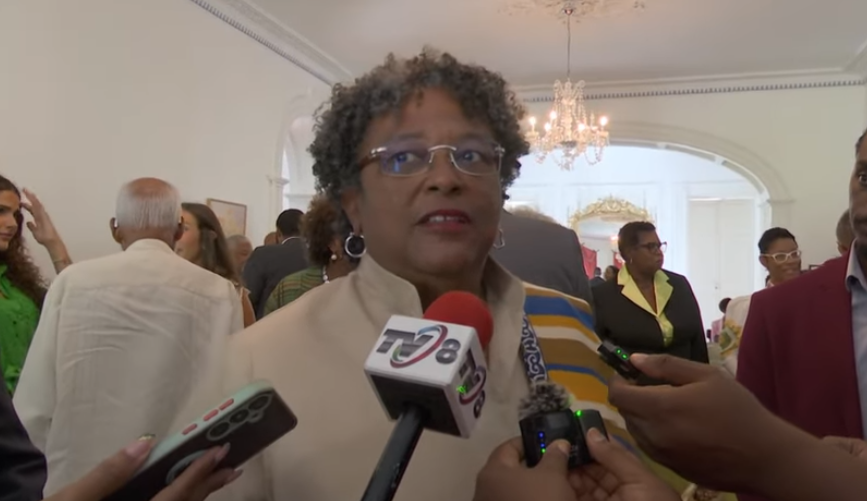
During the opening of a state-of-the-art residential facility for youth aged 12 to 18 in Holders Hill, St. James, on Saturday, Prime Minister Mia Mottley issued a stark warning about the growing influence of social media and emerging technologies like artificial intelligence. She articulated a concern that these advancements have significantly weakened communication between adults and the younger generation, a trend she attributes to what she termed "15 years of social media addiction."
Mottley emphasized that the digital landscape often distorts reality through "perfected images," which has left many young people feeling "rudderless and not rooted." This pervasive influence is impacting their self-perception and overall mental health, creating a challenging environment for meaningful conversation. The Prime Minister remarked on how technology has evolved to a point where it can make many experiences feel "unreal," complicating genuine interactions and discussions.
To address these challenges, Mottley called for a return to core values, discipline, and responsibility within the home. Drawing from her own structured upbringing, she presented it as a template for accountability. "Children need guardrails. Children need examples. Children need opportunities," she stated. The Prime Minister underscored that raising the next generation requires active parenting grounded in "firm love," suggesting that parental involvement is more essential than ever.
Critically, Mottley argued that the responsibility for youth development cannot rest solely on government institutions. Instead, she advocated for a collective approach that includes families and communities in shaping the behavior and values of young people. "Children will not go to Sunday school on their own. Children need to be carried there," she noted, highlighting adolescence as a critical "bridge to adulthood" that can either empower or hinder youth development.
This multifaceted approach to youth development raises significant questions about the roles of various societal stakeholders, including schools, community organizations, and families. As digital media continues to evolve, the implications for mental health and social skills are profound, prompting discussions on how best to prepare young people for adulthood in a tech-driven world.
Mottley concluded her remarks by urging society to provide mentorship and targeted support necessary to ensure better outcomes for the next generation. Her call to action serves as a reminder that in an age dominated by social media and artificial intelligence, the values instilled at home and in communities play a pivotal role in guiding youth through the complexities of modern life.
You Won't Believe What Just Happened to This $58.5M Flatiron Home—Is It Too Late to Snag a Deal?

Vinicius Jr. Drops BOMBSHELL Statement: Why He's Choosing Real Madrid Over Shocking Offers!
Why Climate-Tech Startup Satellites on Fire's Shocking $2.7M Funding Could Change Everything—Don't Miss Out!

This Adorable Zoo Cat Went Viral—But Why Can't He Find Love? You Won't Believe the Reason!

You Won't Believe How Trump's Admin Ignored 5 Major Health Crises—Find Out What You Need to Know Now!
S&P 500 Surges Amid Tensions: What Investors Are NOT Telling You About Iran's Next Move!
You might also like: